Prioritising Wellbeing and Retention in a Tight Job Market

I’ve been focused on research around the Future of HR recently as I prepared for two International keynote sessions and whilst most of my writing and research has been around employee experience and the link with retention and engagement, it has become clear that HR has a major role to play in how our people are hired, developed, supported, enabled, rewarded and cared for in the ever evolving world of work.

I have written a few times that ‘Retention Is The New Recruitment’. Whilst AI may be the new kid on the block for HR to get their heads round and integrate into the way we work and the output we produce, there will doubtless be more.

For example, with layoffs in the Talent Acquisition sector will TA “Move into higher-value HR work” (as suggested by an RL100 member in this interesting post from Jamie Leonard)?

Will HR stop fretting over digital narrative trends like ‘Great Resignation’ and ‘Work from Home’ and get back to improving work for their people with initiatives like Living Wage, Safe Environments,Improving Social Mobility and Diversity, as Neil Morrison suggests?

Or what about Perry TimmsMosaic of the New as a new way to ‘do’ HR? Or Jeanne C M.‘s 13 HR jobs for the future?

I recently delivered a keynote and a masterclass at the Global HR Summit & Exhibition in Istanbul – and in August will be doing the same at the HRInnovation & TechFest in Johannesburg – so I have been trying to collect my thoughts on how exactly work is changing and what HR’s ongoing role will be.

Here’s my take:

Prioritising Wellbeing and Retention in a Tight Job Market

HR has clearly undergone significant transformations over recent years. From being staunch advocates for employees and their development, to overseeing potential cost-cutting and adopting more agile approaches, and now an increasing focus on prioritising employee wellbeing, ensuring retention and preventing burnout, whilst helping to support leadership through increasing digitisation.

Here’s a few ideas how HR can navigate current challenges and reshape its future role.

Strengthen Employee Advocacy

In the late 20th century, HR’s primary role was to advocate for employees, ensuring fair pay, benefits, and development opportunities. However, economic downturns shifted focus towards cost-cutting and streamlining. The job market is tightening, and the need to fill positions and retain skills, knowledge and talent within the business is paramount. HR must re-shift focus to advocating for better compensation, more comprehensive up-skilling, and enhanced career development. This shift supports employee well-being and also enhances job satisfaction and loyalty.

Transparency of True Costs

One of HR’s critical tasks is to reveal the hidden costs of current practices. Creating detailed dashboards that showcase turnover rates, absenteeism, reasons for quitting, and engagement levels can provide compelling evidence to management. These metrics highlight the financial impact of poor employee management and underscore the value of investing in people. Showing the true cost of employee turnover – which often exceeds simplistic figures once training costs, decreased performance, and recruitment efforts are factored in —can drive management to reconsider existing policies.

Addressing Employee Stress

Workplace stress is growing for both frontline and clerical/professional workforce, fuelled by overwork, fear of layoffs, potential lack of advancement opportunities and, more recently, anxiety about the extent to which AI may start replacing tasks and jobs. HR can mitigate this stress by fostering open communication and addressing uncertainties head-on. Reassuring employees about the gradual integration of AI and involving them in the process can help alleviate concerns. Transparent communication about restructuring and development plans can also prevent the spread of speculation and rumour, reducing overall stress and maintaining productivity.

Decentralised Restructuring

Traditional restructuring often disrupts employees’ lives and raises stress levels, negatively impacting mental health and performance. A decentralised approach, where companies create smaller, more flexible units, can help mitigate the negative effects. This model also allows organisations to adapt to changing market demands and expectations without organisational shifts or layoffs – avoiding disruption by compartmentalising change.

Building Talent Labour Markets

Establishing proper internal mobility within organisations enhances flexibility and can provide clear pathways for career advancement. Internal job mobility had been underutilised for several years, although with the advent of improved talent intelligence and AI driven internal platforms is again boosting the number of roles filled from within, significantly reduce turnover and training costs. Retraining initiatives that allow employees whose roles are under threat to train for new roles, repay investment and can help build resilience in the workforce.

Strengthening DEI Efforts

Diversity, equity, and inclusion initiatives are more critical than ever in fostering a sense of belonging and loyalty – even if recent anecdotal trends indicate that they are not as prevalent. By ramping up DEI efforts, HR creates a more inclusive workplace that values diverse perspectives and experiences, which boosts morale, innovation and problem-solving capabilities, and ensures employees feel valued and supported. Which in turn boosts engagement and retention rates.

The future of HR may lie in a balanced approach that prioritises employee wellbeing while meeting organisational goals. By returning to employee advocacy, providing transparent cost analyses, addressing workplace stress, adopting decentralised restructuring, building internal talent markets, and strengthening DEI efforts, HR can navigate the challenges of a tight job market. This holistic approach will not only enhance employee satisfaction and retention but also drive organisational success in the evolving landscape of work.

(A version of this post originally appeared in my HR Means Business newsletter – subscribe here to receive regular updates)

Preserving the Humanity in Human Resources

The growing presence of AI in our day to day working lives may be creating an increased range of opportunities for the world of work, but is also triggering a number of shifts in how we think and act. In 2023 there was a lot of consternation over the potential impact of ‘Recruiterless Recruiting’ and how it might change the way we attract and hire the talent we need. For Human Resources I think it’s less a case of ‘Humanless’ Human Resources and more about increased humanity within ‘Human Resources’, acknowledging and supporting personal choices, preferences and goals.

Looking at the emerging HR trends currently shaping the employee lifecycle in 2024 I see a number of areas where a compassionate, supportive approach to the employer/worker relationship is evolving. The debate around remote, flexible, hybrid and asynchronous working which has overwhelmed us for a couple of years now, will continue to play out – although as far back as 2017 I was involved in a research study that found these flexible approaches to working was what our people wanted, and would inform their decisions over which organisations to join.

We live increasingly busy lives in which the digital, commercial and personal elements need to be juggled and prioritised. Personalisation – a trend myself and co-author Matt Alder have been writing and talking about for a couple of years now – is key to how our people manage to juggle and prioritise, at work as well as in their leisure time.

Managers are feeling the strain. Research from Gartner last year found 77% of employees placing increased importance on manager support, with  51% of the managers themselves saying they now have more responsibilities than they can manage.

For me, there are 5 key areas for organisations – particularly their HR and Talent Acquisition teams, and leaders and managers – to focus on in 2024 and beyond as we move towards adopting a more human, compassionate and supportive approach to work that should be very much on the corporate agenda.

From Management and Direction to Support and Enablement

Our historic approach to our workforce has been what I often refer to as management and direction. We manage processes, people, their careers, their performance and day to day involvement. We direct people. In fact, we have ‘directors’ for most parts of their career lifecycle. It’s all a bit autocratic. Yet our digital talent are keen to learn and figure things out for themselves. A phrase I often use is ‘Digital talent has intellectual curiosity’.

They know their roles are evolving and changing and want the opportunity to discover and explore the opportunities. They don’t want training courses, but access to self-directed learning. Our role is to support them, to create an environment where our people feel empowered to perform, learn, develop and achieve their best results.

Multifaceted Nature of Engagement

Engagement is a much used term for a myriad of things. Engagement isn’t something we can create. It isn’t a management directive. It’s the outcome of treating people well and with respect, recognising them, giving them opportunities to learn, grow and reach their full potential. Helping to create positive work experiences.

Key to this is recognising the importance of our workforce’s wellbeing. All of it. Mental, physical, intellectual, emotional, physical, digital and,  particularly in 2024, financial. Is ours a culture where people can ask for help? Without being judged? Do we have managers and leaders trained to help and understand when they might be needed? Can people raise a concern in private and know that it will remain private?

Flexibility and Recognition

Our people want agency in how, when and where they work. As I mentioned earlier, this isn’t really new – but it’s something that is now top of mind. For many, whose job is location specific or are part of our frontline workforce, this will manifest itself in flexibility of hours and communication, balancing personal needs and career priorities. These workers can often feel left out of engagement initiatives.

For others, it will centre on the flexible, remote, hybrid and asynchronous working debate. Flexibility itself is a crucial aspect of supporting employees in the modern workplace.

Managers need to perfect a number of different approaches that can give their people access to what they need, and input to the way they work. Not least when it comes to support and recognition – the latter playing a key role in creating a positive, diverse, engaged, happy and productive workforce. Personalised recognition, at an individual level, fosters a positive work environment for everyone.

Evolution of the Employee Lifecycle

I write and talk about the evolving nature of the employee lifecycle, which is now accelerated by technological advancement. Anyone familiar with my co-authored books – Digital Talent and Exceptional Talent – will know I believe in the growing concept of a seamless talent journey. This journey emphasises the need for positive experiences all the way through the key touchpoints – from recruitment, through onboarding, development and right throughout the employee journey. The emergence of career experience managers and talent experience managers within organisations highlights a growing focus on overseeing the holistic career experience for all employees.

Delivering a Personalised Candidate Experience

Central to a successful attraction and recruitment strategy is delivering a personalised candidate experience that resonates with individuals on a personal level. This relies on consistency in interactions and information flow throughout the recruitment journey. By understanding candidates’ preferences and needs, organisations can create engaging experiences that leave a lasting impression.

Social media continues to a powerful tool for employer branding and candidate engagement. By using this to share authentic stories from existing (and former) employees, and also showcasing positive experiences that illustrate culture, organisations can attract top talent more effectively.

A common challenge in attraction and hiring is being able to align the efforts of talent acquisition and recruitment teams with the experience candidates get from hiring managers. This can be addressed by educating hiring managers about market trends, best practices and candidate expectations to ensure a seamless recruitment process. By fostering collaboration and communication between recruitment and hiring teams, organisations can enhance the overall candidate experience and drive successful hires.

As all HR and Talent professionals embrace these opportunities in 2024 and beyond, I hope these insights can provide a compass for navigating the evolving landscape. I believe that by prioritising a human-centric approach, embracing technological advancements, and ensuring continuous support and enablement throughout the employee lifecycle, we can foster a thriving, profitable workplace for years to come.

(You can hear me talk more about these ideas on podcast interviews with Adam WeberKeeping the Humanity in a Humanless HR World – and Bill BanhamThe Impact of AI on HR – and I try to explore them on my own HR Means Business podcast too)

How HR Can Help Unlock and Support Employee Productivity

The US economist Paul Krugman famously said “Productivity isn’t everything, but in the long run, it’s almost everything” when talking about rebuilding the US economy. Certainly in our digitally enabled, always on, modern work culture, productivity is also a priority. In the post pandemic years the focus around how, when and where people work has always had productivity at its heart and research from analysts such as Gartner show a heightened focus on businesses trying to measure employee productivity. And there’s a good reason – productive workers are usually engaged workers – and employee engagement and retention is a key business and HR driver for 2024.

But how can you support employee productivity?

I recently had an enlightening podcast conversation with Zena Everett MSc best-selling author of the book ‘The Crazy Busy Cure’ which was a Business Book of the Year winner in 2022. Zena has done a lot of research into productivity and the systemic factors that reduce productivity and therefore profitability per head within organisations and asks ‘Why is it that we hire the best talent but then waste the time and energy of our talent?

Four key insights emerged from our conversation:

Understanding Productivity Drag

The expression ‘productivity drag’ relates to anything gets in the way of the efficient and effective completion of work tasks. There are a range of drags, from excessive meetings and digital distractions to bureaucratic processes and over-servicing clients. HR needs to identify areas of productivity drag within their organisations and understand the barriers their people face. That way they can implement targeted strategies to streamline processes, minimise distractions, thereby optimising workflow. Common examples of overcoming drag are reducing the number of unnecessary meetings, and implementing digital tools to manage tasks and communication, all of which are shown to significantly improve employee productivity.

The Role of Leadership

Leadership plays a critical role in managing productivity within organisations. Zena emphasises the importance of clarity in organisational purpose and individual roles. HR professionals can work closely with leaders to ensure clear expectations are set, tasks are prioritised effectively, and innovative thinking is encouraged among teams.

Moreover, HR can support leadership development initiatives that empower managers with the skills and tools needed to foster a culture of productivity and accountability. By nurturing strong leadership, organisations can create an environment where employees feel motivated and empowered to excel in their roles.

Practical Strategies

Leaders and managers need to take time out to focus on their priorities and challenges. Zena talked about one of her clients that establishes designated ‘jury service’ periods when they can take a period of time out to focus on something specific that can help the organisation, and their people, improve performance and results. Taking time away from daily commitments to focus on improving an area or areas of operation that could run more smoothly.

Ultimately, it’s about creating a culture that values focused work time – and efficient and effective meetings – enabling HR to help employees stay on track and accomplish their goals more effectively, leveraging technology and automation to streamline processes and eliminate unnecessary tasks, which can further enhance productivity across the organisation.

‘Jury service’ can be a period of days that leaders take away from their day-to-day responsibilities, or shutting off distractions for a period of hours, allowing them to focus on specific areas of operation and how they can become more streamlined.

Future Focused

As workplaces continue to evolve, HR professionals must anticipate future challenges and proactively address them. During the conversation Zena emphasises the importance of continuous adaptation and learning, as well as fostering a culture of innovation within businesses. HR can play a pivotal role in driving this cultural shift by promoting learning and development initiatives, encouraging knowledge sharing, and creating opportunities for employees to contribute ideas and solutions. By staying ahead of emerging trends and technologies, HR can help their organisations navigate change more effectively and position themselves for long-term success.

The roadmap for HR professionals looking to improve employee productivity within their organisations is straightforward. By understanding what productivity drag is and how it can be addressed, by supporting effective leadership and implementing targeted strategies, and by embracing a culture of innovation they can unlock their workers’ full potential and drive business success.

With the business landscape continuing to evolve quickly, HR professionals must remain proactive and adaptable to create thriving workplaces for the future.

You can listen to my full conversation with Zena Everett MSc on this episode the HR Means Business podcast.

(A version of this post originally appeared on my HR Means Business Newsletter. You can subscribe here and follow my latest conversations and insights)

Navigating HR Trends in 2024: A Holistic Approach to Employee Lifecycle

I was recently invited on to the HR Superstars podcast by Adam Weber of 15Five. He called our podcast chat “Keeping the Humanity in a Humanless HR World” which chimed with the parallels I drew between the much discussed AI driven concept from 2023 of ‘Recruiterless Recruiting’ and why the increasing use of AI in our day to day HR operations would create the need for much more humanity in our organisations, rather than usher in an era of ‘Humanless Human Resources’.

We talked about the emerging HR trends shaping the employee lifecycle in 2024. Our discussion covered a range of topics, and I think we shared  some valuable insights into the evolving landscape of HR practices. I was certainly keen to share some of the latest research I’d been involved with and particularly summarise the key trends and conversations that I’d had during last Autumn’s busy conference and expo season.

For me, there are 4 key areas for HR to focus on in 2024 and beyond. Over the last couple of years we’ve been overwhelmed by conversations around remote, flexible, hybrid and asynchronous working, not to mention the relentless progress of AI into our daily interactions, so the adoption of a more human, compassionate and supportive approach to work should be very much on the corporate agenda.

The four key points we discussed were: 

From Management and Direction to Support and Enablement

Our historic approach to our workforce has been what I often refer to as management and direction. We manage processes, people, their careers, their performance and day to day involvement. We direct people. In fact, we have directors of most parts of their career lifecycle. It’s all a bit autocratic. Yet our digital talent are keen to learn and figure things out for themselves. A phrase I often use is ‘Digital talent has intellectual curiosity’. 

They know their roles are evolving and changing and want the opportunity to discover and explore the opportunities. They don’t want training courses, but access to self-directed learning. Our role is to support them, to create an environment where our people feel empowered to perform, learn, develop and achieve their best results.

Multifaceted Nature of Engagement

Engagement is a much used term for a myriad of things. Engagement isn’t something we can create. It isn’t a management directive. It’s the outcome of treating people well and with respect, recognising them, giving them opportunities to learn, grow and reach their full potential. Creating positive work experiences. 

Key to this is recognising the importance of our workforce’s wellbeing. All of it. Mental, physical, intellectual, emotional, physical, digital, and in particular right now – financial. Is ours a culture where people can ask for help? Without being judged? Do we have managers and leaders trained to help and understand when they might be needed? Can people raise a concern in private and know that it will remain private?

Flexibility and Recognition

Our people want agency in how, when and where they work. For many, whose job is location specific, this will manifest itself in flexibility of hours and communication. For the others, it will centre on the flexible, remote, hybrid and asynchronous working debate. Flexibility itself is a crucial aspect of supporting employees in the modern workplace. 

Managers need to perfect a number of different approaches that can give their people access to what they need and input to the way they work. Not least when it comes to support and recognition – the latter playing a key role in creating a positive, diverse, engaged, happy and productive workforce. Personalised recognition, at an individual level, fosters a positive work environment for everyone.

Evolution of the Employee Lifecycle 

We had a good conversation on the evolving nature of the employee lifecycle, which is now accelerated by technological advancement. Anyone familiar with my co-authored books – Digital Talent and Exceptional Talent – will know I believe in the growing concept of a seamless talent journey. This journey emphasises the need for positive experiences all the way through the key touchpoints – from recruitment, through onboarding, development and right throughout the employee journey. The emergence of career experience managers and talent experience managers within organisations highlights a growing focus on overseeing the holistic career experience for all employees.

As all HR professionals embrace 2024, I hope the podcast conversation and the insights I’ve shared can provide a compass for navigating the evolving landscape. I believe that by prioritising a human-centric approach, embracing technological advancements, and ensuring continuous support and enablement throughout the employee lifecycle, we can foster a thriving, profitable workplace for years to come.

Hope you enjoy the chat!

8 Ways to Improve Hiring and Retention

Almost every piece of research covering the priorities of business leaders and senior HR professionals will conclude that recruiting and retaining the people they need is the top priority and main challenge. Research covering aspirations of employees and jobseekers will usually find opportunities for personal growth and professional development as the main drivers behind the decisions on whether to join a company and if to stay.

Over the last two years – whilst researching the book Exceptional Talent, and collaborating with HR and recruitment technology businesses and suppliers on a range of qualitative and quantitative research projects – myself and co-collaborator Matt Alder have seen how many of the traditional ways we approach hiring, development and retention are being overhauled.

Not by every business, obviously. The lived work and job hunting experiences of most employees can still leave a lot to be desired. However with more jobseekers now basing their application and joining decisions on what they perceive a company is like to work for, how they are treated during the hiring process, and what opportunities they have for growth, it will become increasingly important for every business to look at the way they approach hiring and development.

There are 8 areas that we particularly need to transform:

Workforce planning and skills forecasting

Businesses must know the skills and capabilities they will need. HR and recruitment teams should think like curators of skills, not just acquirers and developers of skills, and to do that they must understand what skills are likely to be needed and when. This calls for a more integrated approach to forecasting and planning with each area of the business encouraged to look at what they will need over future business periods. Without this it will be hard to break away from a reactive, transactional approach to hiring. This will involve looking at potential contingent solutions too — a common observation we hear from procurement and strategic workforce professionals is that HR show little or no interest in this area.

Define what you mean by talent

What makes for a successful person within the business? Forget job descriptions that are no more than lists of skills and duties that someone thought necessary years ago. Find the answers to questions like, what is the job? What will someone do? What support will they have? Is there another way for the role to be covered within the organisation? What is the growth potential?

And then look at what ‘potential’ means within the organisation. Attraction and assessment approaches need to reflect the type of business you are, and be able to identify the people who can grow within the business.

Be a place where people want to work

One thing that recent research has shown us is that over 90% jobseekers look for some form online validation of what you are like to work for. This mainly comes from looking at what employees have said on sites like Glassdoor or more general searching through Google and Facebook. Over half said the main factor in deciding if to apply for role is how the business treats its staff, which ranked higher than any other factor.

This means looking at your employee experience. Are you a place where people want to be? This is more important than engagement initiatives and having an active social scene, it’s how people feel about working for you. Do they feel supported and valued? No employee demographic is hardwired to change jobs on a regular basis. Increasingly though they do want be in organisations that are good companies to work for, and that treat them well.

Improve your recruitment process

Whether the design of your application and interview process was based on the Labours of Hercules or a less violent version of Game of Thrones, it should be a way of identifying potential rather than finding the last person standing.

Lack of feedback, too many steps, and under-prepared or disinterested interviewers all registered highly in recent research on jobseekers’ biggest frustrations. As did a feeling of being undervalued and not having their experience recognised. Three quarters drop out of application processes either because of the way they are treated, or it is too long. How a business hires is the first key component in its approach to employee experience, so design an approach that really reflects the values and culture that the business does.

Integrate effectively

Probably the most important part of the employee cycle is the on-boarding phase. Some find the expression clunky, but whatever you call it, the journey from interested applicant to successful and productive employee is one that businesses are increasingly investing in.

The main reasons why people leave jobs within first 6 to 12 months can all be traced back to how they are on-boarded or integrated. Some of it is quite simple, and again should be the outcome of treating people well rather than trying to test them. Start early, make sure that everyone has all the information they need so they don’t feel either overwhelmed or uninformed when they start, give them clear goals and milestones in their first few months, and make sure managers spend time talking to them and talking through how they are settling in.

The period between accepting a role and starting is often the time when a new hire feels they get the least information, yet it’s also the time when they need most reassurance.

Enable people to grow and develop

Increasingly becoming the most important part of employee experience, 70% of employees say that learning opportunities are essential when choosing where to work and 98% that they’re key in deciding if to stay. Many also say they need more learning to help them do their jobs. And a third don’t think they skills they already have are being utilised properly!  Business leaders are regularly worried about the skills base and knowledge in their organisation, in fact two-thirds say learning is key for business performance, so it stands to reason that supporting employee growth should be a major priority.

One way to help people develop is through internal mobility. The best new hire that one of your teams may make is likely to be someone already in the business. Help the people you already have to find new roles within the business. Futurestep found 87% of companies believing that having a strong internal mobility programme helps with attraction and retention, and OC Tanner’s research showed 3 out of 4 employees who work on special projects, outside their core role and teams, feel they grow in ways that their day to day jobs cannot offer.

Create a learning culture

A learning culture is essential. Employees expect to be able to access information and knowledge as and when they need it, to help them do their jobs well, and reach performance expectations. Make learning available across platforms and at all times – only 1 in 6 favour face to face learning with a tutor. 60% want to learn in company time, at their own direction, and 24% in their own time. Different approaches to performance management are well documented, though its apparent that outside of the case studies, conference presentations and business magazine articles, many organisations still struggle to do this effectively, leaving employees feeling that their employers don’t value employee development. 25% of employees see no value in performance reviews in the format their employers conduct them.

Rethink retention

There are several reasons why retaining relationships with ex-employees makes good sense for the business, but none of them will happen unless we get better at exiting people from the business. If it’s a performance issue then address performance and don’t make it about the person. If we don’t want to lose them then we need to leave the door open rather than sour the relationship.

Ex-employees are validators and ambassadors of the employee experience, advocates for the business itself and part of our extended knowledge network. Alumni networks play a key role in sharing product information and company news, referring and recommending prospective employees and future customers, and may well return to work for us in some capacity again.

Many companies now look to formalise these relationships through what is increasingly known as off-boarding* with tech solutions to support managing the relationship and sharing information.

More than three quarters of employees say the reputation of the company where they work impacts their job satisfaction, and 85% that how they were treated during the application and interview process determines if they decide to accept an offer.

The way you attract, hire and develop people will go a long way to determining if you retain them. Workers believe they need more learning to help them perform their jobs better. This boost to performance will help improve rewards, satisfaction and engagement. Which means they are more likely to stay, and their managers better placed to achieve successful commercial results

(Our two most recent research projects, which provided many of the statistics quoted, were with Kelly Services – involving 14,100 job seekers across 10 European countries – and with Bridge, with whom we researched a population of both HR and Learning & Development professionals, and employees)

*(and yes, I know, if you don’t like the term on-boarding you won’t like this one either)


Thoughts From Jobseekers on How Work is Changing

It seems that barely an hour passes on digital communication channels without predictions, opinions and discussions appearing about the future of work. Those last three words alone now appear on bios and as individual specialisms. The battle is often between a dystopian view of the future where AI-powered robots have made all jobs obsolete and a more optimistic view where technology creates huge opportunities to bring more meaning, fulfilment and improved well-being to working lives. And amongst the unknown there are many commentators, bloggers and analysts who see certainty.

But how is work changing now, and what issues do employees face? We need to look more closely at the world of work as it is now and understand the trends, attitudes, and, behaviours that are currently driving change and that will continue to drive change.

To find out more about this reality, and rely less on the myth, Matt Alder and I partnered with Kelly Services to research more than 14,000 jobseekers across 10 European countries, capturing their experiences, hopes and opinions. The findings from this extensive quantitive research will be captured in a series of reports.

The first one has just been published. There were three key topics that jobseekers seem focused on – the quality of their work experience, the capabilities of their leaders, and the opportunity for some flexibility within their work.

A few of our findings:

  • How a company treats their employees is the main factor influencing someone on whether to apply for a job.
  • How they are treated during the application process will impact the decision on whether to join for 86%.
  • The number one thing people are looking for from their employers is the opportunity to learn new skills, which is ranked more important than salary increases.
  • There are no clear cut preferences on flexibility. For some it is location and for others hours. Whilst 58% felt working from home would improve their work/life balance, 48% believe that working from an office helps to keep work and home life separate.
  • The option to work from home wasn’t available to 61% in our survey, although 70% believed they had the technology to enable it.
  • The most important leadership qualities are accountability and honesty (except the UK where its awareness and decisiveness)
  • 53% of respondents had considered self-employment, but only 18% have any plans to become self-employed

One of our main conclusions was that for employees and jobseekers the reality is more about how they do their day to day job, and the ways technology may make their daily routines easier and more engaging whilst offering greater choice over how and where they work. Certainly the way they are treated and supported is much more important to them than working for businesses who embrace the latest fads and trends.

You can download a copy of the report here – hope you find it interesting.

I’ll write about some more findings when the next report is available.

Technology, People, Recruitment and The Tipping Point

The recruitment ecosystem is constantly shifting shapes and dynamics, and ameliorating in new and different ways. Technology is driving much of this. The simple days of agencies, internal and advertising platforms (be they print or digital) have changed. Consolidation and collaboration is now happening on an almost weekly basis. Recruit Holdings can buy Indeed and Glassdoor, and have a significant foothold in the way people search for jobs. Although the search more often than not starts on Google.

How are we responding to jobseeker behaviour? Research I have recently been involved with from 14,000 European jobseekers showed 63% saying that online reviews are influential when deciding to apply for a job, 55% that the main thing they want to know about a company when applying is how it treats its staff, and 24% dropping out of an interview process after the first interview because they saw negative online reviews.

External reviews are now an integral part of the job hunt. So is automation. And after years of debate about whether recruiters should think and act like marketers, or be a part of marketing, how do we now connect and engage with potential candidates? How do we find, develop  and retain the people we need? Will technology replace people in the recruitment process?  And is it conceivable that data will replace people as an organisation’s ‘greatest asset’?

I’m looking forward to finding out more on June 20th when I’ll be co-chairing the first Talent Tipping Point Conference.

Across 8 hours internal talent teams, recruitment agencies, HR, tech suppliers and RPOs will come together from all corners of the Talent Acquisition and Recruitment community, to talk and debate about the impact of technology on talent acquisition. How are we responding, how are we collaborating and how can technology help us to create better talent outcomes for businesses, workers and jobseekers. Opening keynote is from Lord Chris Holmes and during the day we’ll have views and insight from many industry leaders including Robert Walters, Fleur Bothwick, Kelly Griffith, Kevin Blair, Adrian Thomas and Janine Chidlow.

As part of the event preparation, research was conducted across a large range of employers, recruitment agencies, RPOs and hr/recruitment tech companies to gain an overall feel for how they felt about technology, employment models, diversity and whether the future was in collaboration. There were some interesting findings:

  • 44% of in-house recruiters think that technology will become more important than people in recruitment within the next 5 years; for agency recruiters and RPO the figure is 27%
  • Half of all recruiters do not see permanent employment as the default option for workers in future
  • 53% believe technology to be more effective than humans in the unbiased assessment of candidate’s, although only 7% think it more effective for determining culture fit
  • Almost 40% don’t believe that their current recruitment (whether direct, though agency or RPO) is as effective as it should be, with over two thirds believing that recruitment suppliers (tech vendors, agency, RPO) need to be better at collaborating

The pace of digitisation in recruitment is quite varied, governed by size, needs, budget and management capability. Yet cognitive solutions and AI are now being used all the way through the hiring process. With technology becoming increasingly integral to how we live, and the way we consume and do business, its impact on the way we attract, hire, develop and retain our people can’t be denied.

Want to join me at Talent Tipping Point? Recruitment International UK has a limited number of half-price tickets remaining for the event. Simply enter the code RITP when you register to save £250 on the regular price. Order yours today – https://lnkd.in/eUdSjNG

Be Courageous, Be Human, #WorkHuman

Do the internal systems and structures within your company work against people reporting harassment or bullying, or are there ‘safe spaces’ or non-judgmental support for those who need to tell their story? Can HR create these? And if not, then is the hard truth that HR are complicit in the pain of people who are subjected to this in the workplace?

I’ve just come back from Globoforce’s 2018 WorkHuman conference, and these  were some of the many questions raised during the #MeToo panel, chaired by Adam Grant, in which Ashley Judd, Tarana Burke and Ronan Farrow were very moving as they shared stories and talked about their various experiences, calling for courage, respect, equality, and dignity in the workplace.

If there is someone in the organisation who is found to be harassing or bullying, then do we ever ask how we came to hire (and probably promote) someone who felt this behaviour was OK? Would an incident such as this trigger a review and overhaul of selection processes?

Some tough questions, but as Ronan Farrow put it “HR professionals are in an incredibly powerful position. You are a formal part of the chain of command. If you say something, it creates an opportunity for others to speak up. Don’t forget how powerful and important your role is

You can’t change policies after the fact. You have to create a culture where that behaviour is not ok” said Tarana Burke

You may have gathered that WorkHuman isn’t your average HR conference, in fact I’m not sure I would call it an HR conference. Its about humanity. Feelings and perceptions, and many personal qualities that aren’t often discussed at business conferences. Sure the attendees, and many speakers, were from the wider HR sector, but the many themes including courage, vulnerability, diversity, unacceptable behaviour, recognition, performance, humanising, happiness and creativity, were of more personal, and human concerns, even if they clearly they fall under the remit of most HR professionals.

Your ego is not your amigo

Leadership was to the fore and opening keynote Cy Wakeman was in no doubt that ego wasn’t part of it. “A leaders role isn’t to change the reality for employees – it is to change the negative energy focused on why we can’t on to how we can”. And as for ego? “Your ego is a filter on reality and corrupts your data. You’re making decisions based on corruptive data. Your ego is like wearing a pair of prescriptive glasses that are the wrong prescription

Ego leads to drama, and drama can be draining and demotivating, taking up too much time in the workplace.

Brene Brown spoke of vulnerability and the need for leaders to embrace it “There is zero evidence that vulnerability is a weakness. It is the courage to show up and be seen when you can’t control the outcome”. She also warned that “If you set up a culture within your organisation where there’s no tolerance for vulnerability, no tolerance for failure, then there’s no room for innovation, productivity, or creativity

She spoke of the importance of leaders showing accountability, which resonated with me – I’ve recently been involved with research conducted amongst 14,000 European jobseekers (published soon) and accountability came out as the top quality they look for in leaders. Maybe Brene knew why when she said “The opposite of accountability is blame. Accountability is a vulnerable process that takes courage and time. Blame is faster

Stop giving feedback, start encouraging people to ask for feedback

David Rock ran two sessions on feedback, particularly in relation to performance management. “Performance management becomes feedback management” he told us. We don’t like receiving feedback when its unsolicited, which too much is. Its also often negative. We need to start getting our people to ask for feedback, when it will be less threatening and more welcome. Ensure people have conversations and make them future focused. Manager capability is key here. They need to minimise the feeling of threat around candid and honest conversations, and help facilitate insights to help people positively embrace change.

In another session, author Shawn Achor said “most praise is just comparison”. And he had a point. When we praise people by comparison to their peers and colleagues, or competitors, we are linking their potential, and their happiness, to others. This can create competition, rather than support and enable personal growth and development. Which I know from my research mentioned earlier, is the main thing people look for when searching for a new role. Maybe there’s a link back here to David Rock’s sessions on feedback – with managers using comparisons (even if unwittingly) rather than focus on each individual’s potential and contribution.

Shawn Achor also talked about his research amongst Harvard students that found social connections were the best predictors of happiness, success, future job roles. The relationship people have to the ecosystem around them. We are often the product of formal and informal networks of relationships and connections. The original Star Wars manuscript showed the famous line as ‘May The Force of Others Be With You’ although this was changed. This flags up a big concern to me though, as it underlines the problems we face with social mobility and finding ways to understand and develop the potential in everyone, irrespective of background, trajectory and networks.

You can’t incentivise performance. You can only incentivise/reward/encourage behaviour

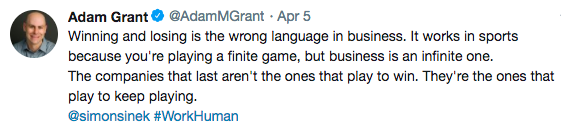
Simon Sinek has spoken before of how the way to influence human behaviour is to inspire it rather than trying to manipulate it. In his keynote session at Workhuman he was looking at business being an ‘infinite game’. He drew the parallel between sport – which is a finite game with a beginning, an end, and rules – and business which is infinite.

Winning and losing is the wrong language in business. It works in sports because you are playing a finite game, but business is an infinite one. Companies that last aren’t the ones that play to win, they’re the ones that play to keep playing”.

Great organisations have a have a fixed just cause and flexible strategy. But he told us that “too many don’t focus enough on the cause, and have an inflexible strategy. So many organisations have a new Just Cause after every offsite meeting.”  Worse yet, they have a fixed strategy.

Leaders ask ‘How do we get the best out of our people’. It sounds like they’re wringing out a towel. The question should beHow do we help our people to do their natural best

Courageous leadership is what business needs. But too often we promote leaders because they deliver on results, even if they are untrustworthy or lack respect from their teams. This can destroy the fabric of a company. As Simon put it “Promoting high performance-low trust team members will destroy your organisational culture. But its easy to identify these people. Ask team who the asshole is and everyone will point to the same person, so this is avoidable

The final takeaway from Simon’s session was that HR should be advancers of people, and not the last line of defence between the people and the executives. He suggested they stop being ‘executors of the executives’.

Ultimately it all comes down to culture. Being human, working human, and helping people to be their natural best requires a culture where ego, drama and blame have no place, and honesty, courage, vulnerability and openness can thrive. Where people feel able to speak up, and to be themselves. And can get the support they need to do the best they can.

And the next time you attend an HR conference and hear a series of sporting metaphors…remember…

Some more blogs on WorkHuman that I recommend you read:

What I Learned at WorkHuman 2018Jane Watson

Work Human 2018: A RecapVictorio Milian

Embracing the Ying and Yang of Human Experience at WorkJason Lauritsen

3 Ways to Begin Better Hiring

The way we recruit and onboard has to change. A run through of some recent research* tells us that:

  • 85% of HR decision makers admitting that their business had hired someone who proved to be a bad fit for the job
  • 1 in 5 of HR decision makers say that they don’t know how much a bad hire has cost them
  • Up to 25% of new starters leave within their first six months
  • 90% use their first 6 months experience to determine longer term commitment
  • Only 19% see a strong alignment between what their employer says about itself and their actual experience working there
  • 55% would consider changing jobs this year – 74% of them would stay for interesting work, 69% for recognition
  • 70% of unsuccessful senior hires give a poor grasp of how an organisation works as the main reason for their failure
  • Nearly half of experienced hires admit they failed to fully grasp the business model they were joining

Meanwhile qualitative research tells us that new hires are more likely to leave early if they don’t like the job or find that it wasn’t what they expected from the recruitment process. One senior manager from a large hospitality and leisure sector employer recently told me that almost half of their new trainee intake for this year had already left because the job wasn’t what they expected – not in terms of the actual duties but in the hours, dedication and working structures.

We need to get better at how we attract, hire and develop people. This all points towards the need for different approaches to the way that work is organised, employees are managed or directed, how retention is viewed and how we go about hiring. I can think of three ways we can immediately start changing. There are plenty more but these will do for a start…

Firstly, how we market jobs. I use the word market because I think we can accept that recruiters need to think like marketers. Rather than advertise for a perfect fit, or list a series of notional achievements and duties that we want someone to have already achieved, lets start talking to people who might be interested in our company and the type of role we are looking to fill. This requires an understanding of what the role is, the skills and knowledge that would help the role to be performed effectively, and the way that a new hire can grow and develop with us. And some proper market knowledge of how and where to connect potential candidates and of the kind of conversations we should be having with them and the content we should share.

Secondly, how we select the best person. Find out about the real person, what their strengths are, their character, durability and agility. Approaches to learning and development and how they tackle challenges and situations that might be new. This won’t be found by series of Q&A interviews, peppered with set-piece situational questions, trick questions or asking them to run through their CV for the umpteenth time. They all point to a lack of preparation from the hiring manager which can indicate a real lack of commitment to finding the best fit person or understanding of the role and how it can develop.

Thirdly, how we bring someone in to the business. Start the induction early, make them feel part of the organisation with clear objectives and timelines around roles and responsibilities. Make it a social experience, new hires who establish early social connections with their colleagues are more likely to settle quickly and feel part of a team. No one should start doing a new role and be unclear about what the job is, what it will take to be successful, who has input to the role and the formal and informal internal networks that will help support them in getting their work done.

There’s plenty more we can do to make hiring better but these will make a good start.

(* Findings taken from recent research published by REC, Korn Ferry, Egon Zehnder, IBM, Achievers, Weber Shandwick)

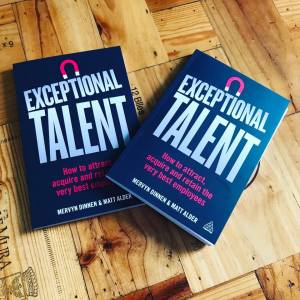
Exceptional Talent – the book I co-wrote with Matt Alder – is available now, published by Kogan Page. In it we look at the New Talent Journey and offer examples and case studies of how, and why, businesses are evolving the way they attract, hire, retain and develop the people they need. You can hear me talking about it on this podcast 

Time to Redefine What we Mean by Talent

The way we attract, hire, retain and develop the people our businesses need is changing. And so are the roles we want them to do and the way we operate. Yet too many organisations continue recruit as they always have, reporting skills shortages and costly unfilled vacancies. This needs to change.

Firstly we need to start redefining exactly what we mean by the word ‘talent’ – for too long the most overused and misleading word in the modern labour market. Many HR and recruitment professionals use it to describe a high skilled, high potential candidate who is in some way special. This narrow definition leads to poor recruitment practice, with recruiters chasing mythical candidates who tick all their boxes and seem ready made for their vacancy.

These people rarely exist, nor are they likely to be successful. When they are hired and identified as high potential they can fall into a ‘talent curse trap’, feeling trapped by others’ expectations and feeling a need to prove themselves worthy, attempting to live up to a perception of what a high performer should be like. This is rarely successful.

In an evolving commercial world where new jobs will often require skills that have not been hired before, these narrow definitions also fail to take into account the many ways that employees can develop and use their initiative and capabilities to help companies meet business challenges.

Most successful specialist hires step in to a role that will stretch them and help them grow and realise potential. Everyone has talent. It is finding the people right for the business and the role, irrespective of background and work trajectory, that organisations need to focus on.

Redefining what we mean by ‘talent’ also means we should select people for what they can achieve in the future rather than what they have done in the past. Previous performance is often an unreliable predictor of future potential and nowhere is this more prevalent than when looking at emerging roles and digital skills, which evolve and change at a rapid pace.

Selection processes have to change from a gladiatorial approach that resembles the Labours of Hercules, and seem designed to trip people up and exclude them from selection. These should only be used if they reflect what your culture is really like. Instead we should create opportunities for people to show what they can do and how they can contribute to the organisation’s future success.

Rip up job descriptions based around a previous incumbent’s profile, and stop drawing up wish-lists of ready made capabilities and achievements. Break vacancies down into tasks and rebuild them around what actually needs to be done. Some of these actions can probably be covered by people already in the organisation by either having their own roles re-imagined, or through secondments or stretch assignments.

Internal mobility – often the last resort for recruiters and HR practitioners – should to be the first strategy before trying to fill externally. The opportunities for development and skill enhancement is an important differentiator for talent looking to join, or remain, with a business, so lets start showing what we can offer.

Whilst retaining and retraining existing employees is valuable in helping to diversify the talent pool available, it is a focus on diversity itself when recruiting new people to the organisation that will help businesses really succeed in redefining talent.

Increasing the number of women in the workplace, attracting and supporting people with disabilities, finding a way to capitalise on the talents of neurodiverse people, and giving greater opportunities to graduates, apprentices and ex-offenders, will all help diversify and enrich the talent pool. And overcome those supposed skills gaps.


Exceptional Talent – the book I co-wrote with Matt Alder – is available now, published by Kogan Page. In it we look at the New Talent Journey and offer examples and case studies of how, and why, businesses are evolving the way they attract, hire, retain and develop the people they need.