Can We Talk About People Please?

Today started with a business leader on breakfast TV talking of how they had ‘tidied up’ a subsidiary that had made losses. There was something almost Hitlerian about this – part of this tidying up would have been restructuring and redundancies. That’s people – their expectations and ambitions, their commitments and responsibilities – being cleared away in the tidying up.

Then there were a couple of recruitment commentators in my timeline promoting the fact that more businesses were talking about increasing their use of flexible resources in the next 3 months. That’s people they’re talking about, now a flexible resource. People with dependants and responsibilities, plans and hopes, expectations and ambitions, people with full time commitments but now getting part time, flexible income.

A ray of sunshine appeared when Tim Oldman of Leesman Index talked of workplace design being a people business not a buildings business.

The language of business seems seriously skewed at the moment. It’s depersonalising and dehumanising jobs, driving a race to the bottom for the value and self-worth of those who do the work. And it’s self-defeating as those with precarious incomes live precarious lives, which benefits no-one in the long run.

Tomorrow I’ll be joining a bunch of fine HR folk in London for the 5th ConnectingHR unconference. The topic is Brave HR.

Maybe re-humanising and re-personalising the language of business would be a brave start.

Brave


(Image courtesy of Lessons From Fantasy)

Hey Gurus, Leave those C – Suites Alone

Evolution


(many thanks to the wonderful illustrator, animator and cartoonist Simon Heath for this graphic)

Q: What’s the biggest barrier to embedding social media in your business
A: Getting buy in from the C Level

How many times have you heard that over the last 3 or 4 years? Loads of times, and it’s still being trotted out. Last week I was at a Digital Shoreditch event where a distinguished panel (of suppliers who also happen to be industry commentators) said much the same thing.

You need to get buy in from the C Level. Make the business case. Show them ROI. They sign the cheques and need to see proof.

I call bullsh*t!

In my experience most of the C suite are just fine with this. A lot of them like the online celebrity status it brings them, the opportunity to talk about their business (and have it talked about) and they place trust in the managers they appoint to make the right calls on usage, content and guidelines. Social networking platforms are conversation channels – no-one ever called the C suite a barrier to putting in a phone system, did they?

Middle managers are another thing entirely. In common with a number of owner managers in smaller businesses, many that I have met see it as a hindrance. They don’t like the transparency and immediacy it brings, the hierarchical flattening that comes with it, and the fact that those they manage know more about it (and are more adept at it) than they are.

They often have no time and little inclination and wrongly fear that their charges will spend too much time on it and will therefore fail to deliver the outcomes for which the manager is accountable.

So what’s the main barrier then?

It’s the structure. If you’ve got a traditional post-industrial age corporate structure of owners/directors supported by the usual hierarchies of management (senior managers, middle managers, junior managers) then the line managers who have the responsibility and accountability for ensuring things get done inevitably like to manage processes. That’s why e-mail is so prevalent… it’s all about managing activity and giving direction, with its cc capability giving visibility to the managing and direction.

Not everyone likes to learn new tricks that take them out of their comfort zone, especially when they have a position of responsibility.

So if you want to influence them here are three points to take into account next time you need to jump the barrier.

If you make people use it they’ll use it badly. You can’t force it, mandate it or set KPIs for it else they will do it wrong. Its conversation and you want online conversationalists. Broadcast messages are the preserve of those who don’t understand conversation.

You can train people in how to best use the platforms but if they don’t naturally get it then it won’t happen for them. It starts with hiring people who are comfortable using them.

It’s evolution not revolution. From letter to phone to telegraph to fax to e-mail to mobile, business always adapts to shifting ways of communicating…particularly when their customers and clients start communicating with them using those ways.

What’s the cost of NOT doing it? How many times do you hear ‘we’re not ready for that?’ or ‘it’s a fad that won’t take off’? Most businesses learn the lesson when it hits them in the pocket…the question isn’t why should you use the platforms but what are you missing by not using them.

If you think you’re not ready then don’t bury your head in the sand, because I’ll tell you who are ready…current, former and lapsed customers/clients, and current, past and future employees. And no doubt a lot of your competitors too.

And remember, anyone who says ‘we pay people to work, not to play around on social media’ has little understanding of how the platforms work, how people use them, and how they can be used to positive effect in the business…so show them.

There’s no better way than to start with the following slides from Paul Taylor at Bromford Group, a business in the social housing sector that gets it. Maybe because they have a CEO who favours hiring people with a digital footprint because ‘all future leaders will need a positive digital footprint…without the ability to communicate across all platforms they won’t survive as credible leaders

As Paul says in his latest blogThe medium is irrelevant. The conversation is everything

With This Policy, I Thee Wed…it’s the Valentine’s Day #HRCarnival

Valentine

It’s my honour (you’ve got a Brit this time so it’s my blog, my spelling I’m afraid) to host the HRCarnival in this week of love, champagne, chocolates and…pancakes! OK…Mardi Gras 🙂

I put a call out for love themed blogs, but in amongst the incurable romantics some of you HR people just can’t leave the business alone…so I’ve some proper work ones too!

And there’s also a final section from me.

So here goes…

Spreading the Love!

First off I’m extending a warm HR Carnival welcome to first time contributor Jane Watson, an HR Manager from Toronto whose Talent Vanguard blog is a personal favourite of mine. Jane and HR are in a long-term relationship, though here she tells us about one or two things that she wished she’d known at the start!

Next we have Emily Jasper from The Starr Conspiracy telling us about the things she loves and why it’s important that Work Loves The Things You Love too. Even the moose!

Ian Welsh will get the pulses racing with his blog Love in the Filing Room – a cheeky Valentines look at his first job. OK, it’s not quite 50 Shades of Admin…but then I didn’t want to have a parental guidance sticker on this post!

From HR with Love is Shauna Moerke’s post. And our loveable, huggable HR Minion (without whom these carnivals wouldn’t happen!) doesn’t disappoint in this call out for all HRs hopeless romantics 🙂

Nancy Saperstone from Insight Performance offers us 5 tips for increasing the love in your company. ‘Engaged employees are happy employees, and happy employees feel the LOVE!

Do what you love, and do it often” says Anna Lettink. She’s spreading the love and in this blog – This Is Your Life – is talking about love for our place of work.

Ben Eubanks’ Upstart HR blog is sending thanks to the great managers who make our day special. He still hearts his last boss and in A Tribute to Great Managers he tells us why.

Here’s Steve Browne, an HR blogger and engager par excellence, and who gives us Eat. Sleep. Do HR. – do you do HR or rock it? I think we all know which one Steve does!

At TribeHR they’re bringing the love in to HR. Feline love. There’s a great visual on their HR and Open Lines of Cat Stories blog too!

Business as usual!

I’m sure not every reader wants to get slushy and lovey dovey just because its V*l*nt*n*s Day, so they can just skim through the last section and get down to business… Continue reading “With This Policy, I Thee Wed…it’s the Valentine’s Day #HRCarnival”

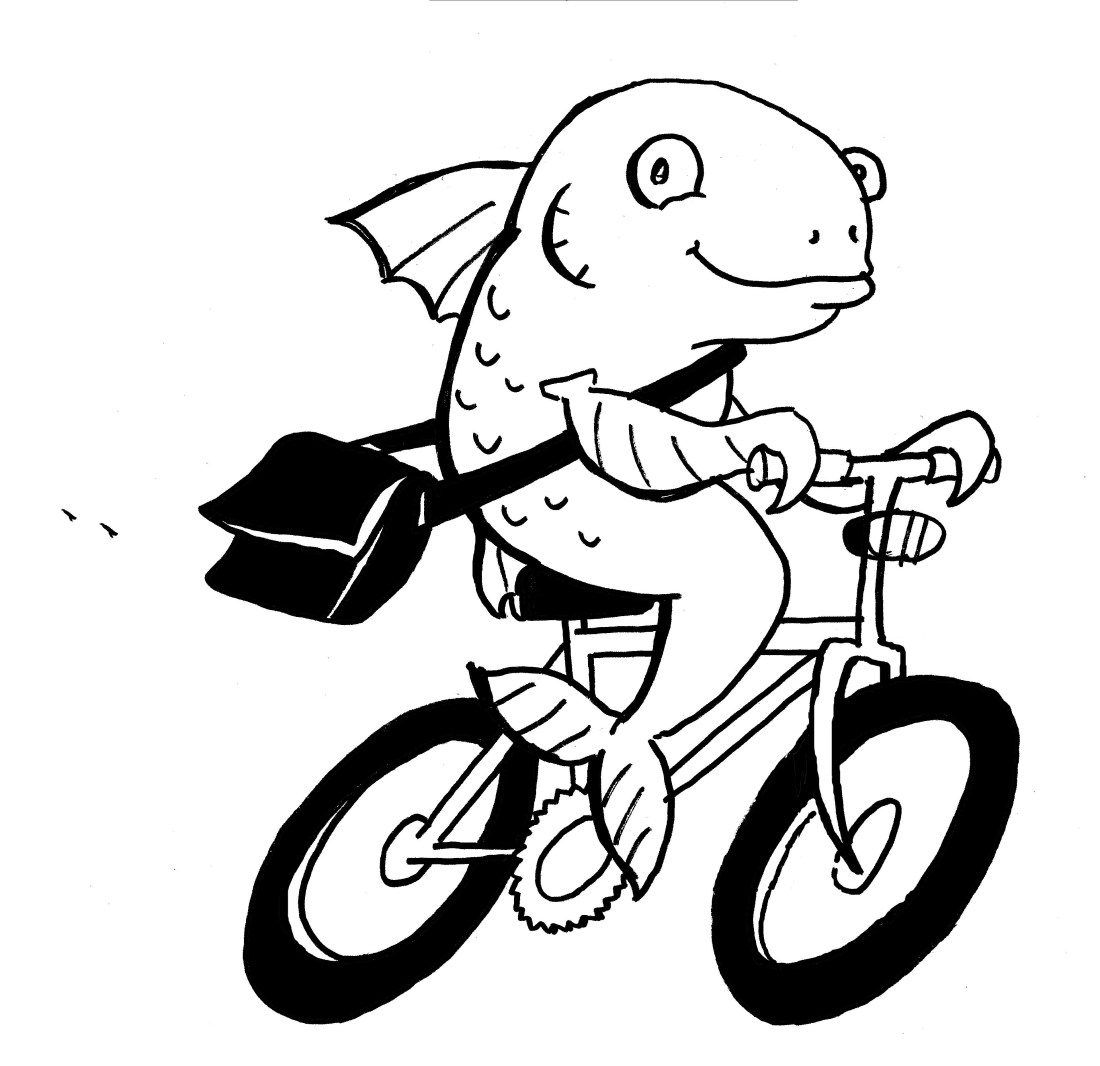
The Tale of the Fish and the Bicycle – Part 2

[In Part 1 we heard about how Frank the fish had started working for a rival company. We pick up the story as he goes home to tell his wife about his pending transfer to the cyclists’ team]

*********

You can’t be serious Frank!!’ His wife was crying; she was frustrated and scared. Her job at the farm had gone and she was only able to get a few hours’ work filling in at another farm.

How are you going to ride a bicycle?? And not just ride it, but ride it fast? What about all the things you’ve told me about the other cyclists. How they don’t like to spend time with the customers?? You’ll never be able to do it. You’ll have to try and get your old job back’

‘I can’t‘ said Frank ‘I saw one of the old guys after work. They’ve trained up a new fish and he seems to be doing well. They don’t need anyone else. Let me give it a go…it may be good for me. Maybe I can ride a bicycle after all. The HR manager said they’d give me all the help I need over the next three months…’

THREE MONTHS!‘ his wife shouted ‘You’ll never master it in three months‘.

Well that’s the time they’ve given me. I’m not thinking about what would happen after that. Met my cycling coach today, he told me it was all in my mind. That if I really put all my positive energy into thinking like a cyclist it would happen…’

**********

It was a harsh autumn on the Island. Hard enough for the regular cyclists who were used to bad weather, but for a fish it was almost impossible.

Frank tried. He tried very hard. He had to change coach after a few weeks as the original one got himself a better assignment with Frank’s old company coaching the fish in customer engagement techniques. He put in a good word for Frank but that door was closed.

Frank’s new coach believed that anyone could achieve anything and spent ages getting Frank to concentrate on the tyres going round. When that didn’t work he got him to focus on the people at the end of the journey ‘if you feel their joy at seeing you it will inspire you‘ he used to say.

But it was all to no avail. The end of Frank’s three months came and he went to see the Regional Director and the HR Manager. They explained to Frank that they had given him all the support that they could but that he hadn’t been able to meet his target to be an operational cyclist. He argued his case that he had met his targets when he was swimming but they said that wasn’t relevant to this assessment meeting.

It’s only four weeks to Christmas‘ he pleaded ‘the busiest time for you. Let me deliver parcels by river. I’ll swim night and day; I won’t stop to talk to the customers. Just let me show what I can do for you‘.

They told him to wait outside whilst they had a short meeting but at the end of it they told him that his position was terminated. It seems that there were also cultural issues; that he didn’t really seem to fit in with the other cyclists.

We’ve invested enough time and money trying to get you up to speed here Frank‘ said the Regional Director ‘we’ve been more than fair to you’

**********

Frank hadn’t realised that because his termination was down to poor performance then his notice period was only 1 week. He hadn’t really read the contract before he joined as the Regional Director had been so persuasive about his vision for a two tier offering. The clause about 3 months’ notice for his role at the premium service, but if that was closed his contract would revert to a traditional cyclists contract had passed him by.

He promised his wife he would move boulder and driftwood to get a new position. He knew that he would have to get a job on the adjacent Island but at least there was work there. Some new village communities had been built and they had just expanded the Port. There were also many more delivery companies than on his own Island.

**********

I don’t understand. You were a swimmer but then you decided to become a cyclist. Why?’ The recruitment consultant who was interviewing Frank seemed very perplexed. Frank had already explained twice about how Parcels4U had changed their business model, and how he wanted to show he was a fighter, a resourceful fish who could overcome any challenge (surely exactly what a new employer would want, he thought) but the recruiter still didn’t seem to get it.

I’ve got jobs for swimmers but they want people who are swimming at the moment, not slow cyclists who want to swim again’ he said.

Can’t you just forget the last few months and explain that I was the top delivery operative at my previous company. That I was headhunted by Parcels4U to head up their new premium service but that they changed their business model and only had a job for a cyclist’ Frank was getting exasperated. This was the fourth of fifth recruiter interview that he had sat through this week and they all went the same way.

Look Frank, I’ll try to explain. It’s a Catch 22 type thing. Most employers are interested in what you’ve been doing most recently, and for you that’s cycling. To get round that we have to say that you tried it as something different but you really want to swim. And they will say to me – Why? Why would a fish want to try to ride a bicycle? If I say that the company made you then they would want to know why you didn’t just leave. If I say that you wanted to take on the challenge then it looks like you wanted to try something new so your commitment to swimming is in question. It’s a very competitive market out there. They want either swimmers or cyclists and you’re, well…you’re kind of in the middle now. Do you understand?’

No, Frank didn’t understand. He couldn’t understand. He was the number one delivery fish on the Island and less than 6 months later he’s a has been. Washed out. Of use to no-one.

Why don’t you freelance?’ said the recruiter in a Eureka moment ‘I may be able to get a client interested in you on a pay as you swim basis’.

Frank was unsure but went for the interview. He got on very well with the interviewer, who happened to know one or two fishes from Frank’s old company. He said that he knew of Frank’s reputation and he felt sure that there was room for someone of Frank’s experience in the company. He even talked about giving Frank a month’s trial after which he would take him on permanently, not on a freelance basis. He said that he would speak to HR and get back to Frank the next day.

But the next day became the next week, and Frank found himself contacting the recruiter every day but was unable to ever get through.

And then he heard from the company. The HR Director wanted to meet Frank. The original interviewer said that he felt it should be a formality but that the HR Director would need to be convinced that Frank was focused on swimming and that he hadn’t tried cycling because he had lost his swimming mojo. It was important to the company that every hire was effective.

By it was now almost Christmas and the interview wouldn’t be taking place until the New Year.

**********

Frank and his wife talked to their children that night and explained that there wouldn’t be any Christmas presents this year, but that if Frank got his new job then there would be New Year presents. The children understood. They had taken it well and had been making things at school to help cheer Frank up. He really liked the Christmas card they made him and their attempt at painting a picture of him holding a ‘Delivery Operative of the Month’ award like he used to win at his old company.

The fishes faced an uncertain few months but were drawing strength from their friends and family who had rallied round and showed support. Some of Frank’s old customers, who really missed his regular visits, had started a collection and they had bought him and his wife a Christmas hamper.

So will Frank be able to overcome objections and prejudices, show that he is a focused delivery operative who can add great value to a new company, and be able to buy his children New Year presents?

That, dear readers who earn a living in HR and Recruitment, is for you to decide……

The Tale of the Fish and the Bicycle – Part 1

Once upon a time, on a distant Island, there lived a fish called Frank. He was a very sociable fish, who loved swimming and meeting people.

The Island was a lovely place to live. It was self-sustaining and had a small number of village communities all situated at one end. In the middle was a large hill, and on the other side a port where all the nice things that the Islanders couldn’t grow or make for themselves were delivered.

If you didn’t have a particular craft yourself then there was work delivering the parcels and packages that came into the port.

Frank worked for a small business that delivered parcels. As they only employed fish, they had to use the river that meandered its way around the hill. To compensate for not having the fastest delivery service (the river did meander quite a bit) they made sure that they employed people who took pride in spreading happiness. You see, the fish that started the business had realised that these parcels bought something good and happy into people’s lives and he wanted delivery fish who could be part of that experience.

Frank loved this part of his job. People were so happy when they saw him swim up to their homes or businesses, as they knew that he would be bringing with him something they wanted. It could be a DVD, book or CD, some clothes, or even a voucher to try out a new restaurant in the village.

When he was small, Frank had watched lots of episodes of Postman Pat and he now saw himself as a similar character, an important member of the community, enjoying his work, and bringing happiness in to people’s lives.

The biggest rivals to Frank’s company were called Parcels4U. They were a very different kind of business, hiring the strongest and fastest cyclists to do the deliveries.

Whilst Frank’s company were able to charge more money per delivery, as they believed they were offering much more than just the delivery, Parcels4U charged much less. They believed that the important part was getting the parcels there quickly, so they employed cyclists who could navigate their way around the hill as fast as possible.

**********

The Regional Director of Parcels4U who looked after their operation on the Island was not happy. His bonus had been reduced as he had missed one of his key metrics. One of the findings from the annual customer satisfaction survey that his company conducted in every region was that, whilst Parcels4U were praised for the speed of their deliveries they came out very low in the ‘service you would recommend to a friend‘ category.

He was in a meeting with his Delivery Operatives Manager for the Island. Neither was happy, as neither could see quite why the company had placed so much importance on this metric. After all, their company statement, which was pinned to the wall of every room, clearly stated ‘The Fastest Service You Can Get. No Hill Too Big‘ – nowhere did it mention being nice to the customers. If the customers were too lazy to go to the port and pick it up for themselves then what did they expect.

If we give them a bonus for being nice to people instead of how many deliveries they complete in a day then they will all leave‘ said the Delivery Operatives Manager. ‘They’re athletes who train hard to be fast cyclists and like to be rewarded for that.

The Regional Director was staring out the window, ironically at the River which ran past their offices. ‘OK, we don’t want to unsettle them. I’ve got a bit of flexibility in the budget so why don’t we hire one of the fishes and set up a bespoke service? It will pay for itself. I’m sure we’ll be able to charge a lot for it. If they want a slow service with a smile at the end then they can pay for it

And so the plan was hatched. Find out who the best delivery operative fish was and make them an offer.

**********

Frank was quite flattered, and more than a little excited, to get the call. He swam home quickly to tell his wife and children.

‘I’ll get more money, my own team, and a real challenge to make a difference. Just think..‘ he was talking quickly and enthusiastically ‘…how great it would be for me if I was the fish that got Parcels4U known for a giving a great service‘.

His wife wasn’t so sure, but with her job at the neighbouring farm looking in jeopardy the extra money would come in useful ‘OK then‘ she said ‘if you think you can make it work, why not go for it!

She gave him a big hug and they made plans for a short family holiday during the time off he would have between jobs. Continue reading “The Tale of the Fish and the Bicycle – Part 1”

HR, Social Media & Punk Rock

I’m chairing the CIPDs Social Media in HR conference next week and so I’ve been thinking about how the conversations around social have grown and developed in the space at the apex of social networking, HR and recruitment – pretty much the bubble I live and work in.

I wrote in one of my blogs about CIPD12 of how the questions have clearly been moving from ‘why‘ to ‘how‘ and this is clearly a shift which informs much of the writing and speaking that I see and hear. Sure, there will be many who are going to need some evidence before taking teams and businesses on the social journey, and rather than stamp off in a strop I think more of those who do ‘get it’ need to raise the conversation away from statistics on usage and reach, and talk more of outcomes.

The more I think about the rise of ‘social‘ the more I seem to think about punk rock. Not sure why, but there are similarities.

Punk wasn’t enabled by technology but by attitude. Coming at a time when you needed an ology to be in a rock band it was a clear shout by a ‘forgotten’ generation who felt they had no voice.

The link here is that it started with a younger generation but quickly became more widely adopted. Just as with today’s social media consultants, gurus and evangelists who climbed on the bandwagon quite early, back in 76/77 you had many journeymen rockers getting a spiky haircut, skinny jeans and a few tattoos and ripping out some three chord thrashes to sudden acclaim.

Of course you had the doubters, those who thought it was a fad and would never really catch on. In music broadcasting, for every John Peel you had a Nicky Horne.

Nicky H was the serious ‘rock’ DJ on Capital Radio. He broadcast regular shows that we’re ironically called ‘Your Mother Wouldn’t Like It’ – ironic because it featured just the type of corporate rock music that most people’s mothers WOULD like.

He was quick to rubbish punk, famously and proudly proclaiming that his shows would be punk free, that you wouldn’t hear any punk music on them.

And guess what. Less than a year later you couldn’t move for the punk and reggae that he was playing on his shows!!

How many social engagement naysayers and doom mongers are now evangelising? Even the PM (he of the ‘tweeters are a bunch of twits‘ sound bite) now has an official account. Though I accept he may not have much input!

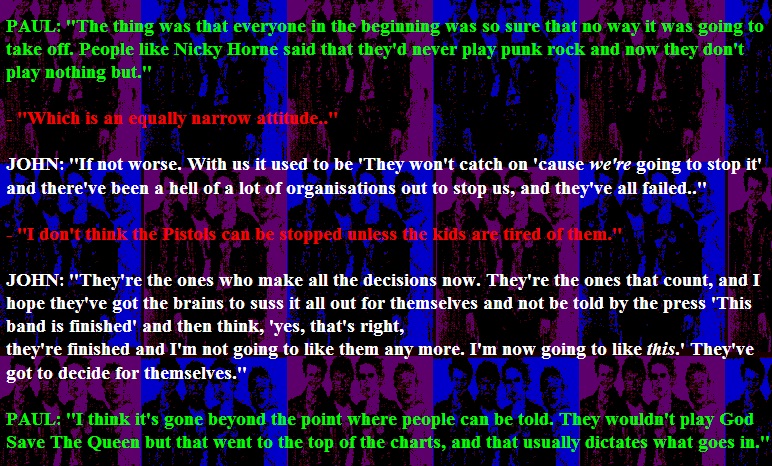
And just to square the Punk circle, here is part of an interview that the Sex Pistols gave to NME in the summer of 77. You can read more of the interview on this website – complete with the famous Sid Vicious ‘The definition of a grown-up is someone who catches on just as something becomes redundant”

Just read though this excerpt and substitute mentions and references to ‘punk rock’ with ‘social media’….

…uncanny!


Punk Rock

If You’re Not on The List…

I’ve written before of my love of lists, mainly from the perspective of my own life and experience – favourite albums, movies, books, goals, holidays etc. I am also an avid reader of end of year media lists in magazines, papers and online that chart the best moments and cultural artefacts of the previous 12 months. I’m often dubious as to how they rank them but always glad of the chance to check out something that I may have missed.

My journey on Twitter was kick started by a list. It was one from Louise Triance in March 2009 entitled something like ‘Recruiters who Tweet’. Up until that point I was a bit of a lurker, looking for conversations around politics, football and music, but this list helped me see that there was a work angle to what social networking could offer.

I didn’t know if these were the best recruitment tweeters, or the most insightful, but I followed them all and started following who they spoke to and began to build the network that I have today.

So, where’s this going?

Well, earlier this week the re-launched People Management magazine published their list of the Top 20 ‘HR Power Tweeters’ – in their words the ‘HR Twitteratti who are must-follows if you want to stay at the forefront of HR news and views on the microblogging site’.

There are many such lists published all the time and I usually treat them as a bit of fun. Journals and blogs are always highlighting the people they think their readers should follow. Twitter positively encourages anyone with an account to create lists and share them – apparently I appear in 309 Twitter lists, Lord knows who and why but I do. The People Management list seems to have caused offence though. There was much angst on my timeline last week.

I don’t think it was just thrown together as they have taken the trouble to offer their readers a description of each person’s engagement style. But once you commit to producing a list such as this, and rank it, then critique becomes more about who isn’t included then about who is.

As part of the day job I sometimes have to produce similar content – in this case bringing to the attention of digital newbies some of the people that they should follow – and a bit like the list I first followed nearly 4 years ago the focus should always be to highlight a spread of opinions and tweeting styles, enough to raise the curiosity of a new tweeter and encourage them to investigate further.

This, after all, is what we really want. Right?

To get more people using social networking platforms for business – linking, following, engaging, sharing, commenting and generally participating in the conversation that never sleeps.

In my view there were some notable exceptions on this PM list – but then there will be on any list. My ConnectingHR tweeters list runs to well over 100 and it would be difficult to recommend just 20 from it. But the PM piece does include the line…

“Is there anyone we have left out who you think deserves a place in PM’s top tweeters power list, then let us know who and why on Twitter @peoplemgt”

…so whilst it may be a bit of a disclaimer they also give you the opportunity to interact with them over it.

Here are my thoughts on the niggles that this particular article seems to have created…

Should HR sharer par excellence Michael Carty (also the ‘nicest person on Twitter’ I should add) have been on the list?

Yes, of course he should be on any list of top HR sharers but then let’s get real and accept that he works for a business that has a rival online publication to the one that drew up the list. Anyone who follows the people on PM’s list will inevitably also be following Michael within a few hours…he is pivotal to the daily engagement of almost everyone else on the list. Continue reading “If You’re Not on The List…”

5 Challenges Organisations Have to Face Before they Evolve

Much is written and debated about the future of organisations. Many approach this by talking about organisational structures, internal communications and how we get the best out of people, but what most of the discussions about flatter, collaborative organisations tend to ignore are the many basic challenges that businesses increasingly face now, and will over the next few years, and which will either have to be dealt with before evolving or else will have to be part of the evolution, probably driving it.

The way we get business, transact and fulfil that business is changing, and no debate about the future of organisations can overlook these changes.

So here are my five challenges that will need to be solved by any future organisation that wants to embrace a vision of more open, flatter hierarchy, collaborative and self-directed strategies. It’s really a question of skills, training, space, engagement and communication.

Knowledge Drain

The recent McKinsey Global Institute Report on Work predicts that by 2020 the global economy will be short of 38-40,000,000 degree educated workers. Primarily as they leave the workforce, taking their skills and knowledge with them, this shortfall accounts for 13% of workers needed at this level. How will companies replace this knowledge and capability?

Skill Shortages – Are we Training the Next Generation Properly?

It seems not. Alarmingly the recent UK Commission for Employment & Skills report on youth employment found that in the UK 32.7% of degree educated 25-29 year olds were working in jobs below their skill levels. The US figure was 25.8% and the OECD average 22.8% (chart below). When we talk about underemployment we usually mean people not working enough hours… the concept of under-utilisation of abilities, knowledge and education is rarely discussed. Continue reading “5 Challenges Organisations Have to Face Before they Evolve”

reasons to be cHeeRful

It’s time for another Carnival of HR. If you’ve not dipped in before then you should…it’s a fortnightly collection of blogs from some of the top HR and Recruitment bloggers in the US, UK and farther afield – sometimes around a theme and other times simply a collection of the best writing of the last two weeks.

I’ve been a little remiss with my submissions lately but have been sparked into action by 6th June edition. It’s curated by a really great guy in Steve Browne – a good, and giving, friend of the UK HR community and someone whose weekly HR Net newsletters provide a regular highlight in my otherwise burgeoning e-mail inbox of money saving vouchers, LinkedIn spam messages and offers of financial gifts from East Africa.

Steve wants us to look at what’s good about HR. Most bloggers are able to pinpoint what’s wrong and what needs to change but maybe can be slower to champion what works and what makes us proud to work in the sector.

As a non-practitioner (more of a vicarious practitioner) it’s sometimes easier to take a more holistic view – which I know may infuriate those at the coalface – but things do look in fairly good shape. Sure there are those who would prefer to get back to basics, others who use strategy as a reason for overlooking the basics and many who participate in a regular kvetch fest about seats at the table and how to get taken seriously, but overall everyone I meet is passionate, committed and determined to do the best they can. In tough economic times, and with traditional employment patterns undergoing significant shifts, it’s easy to lose sight of the importance of HR in keeping employers and businesses productive, harmonious and engaged.

And there are two things about the future that really excite me the most – Social Connectivity and Sharing. Continue reading “reasons to be cHeeRful”

HR and the Socially Connected Organisation


“I don’t know what I was expecting
But I’m sure I am detecting
The sounds of human beings connecting
And some pretty deep reflecting”

(Anon, previous ConnectingHR attendee)


It’s only 19 months since the very first ConnectingHR Unconference, and on 16th May we will be running our fourth. It has certainly been a revelation seeing the community come together, grow and develop in that time and how what could easily have been a one-off has become a regular event that inspires, challenges and entertains.

Looking back at my blog HR and the Social World, which previewed the very first event in 2010, it struck me how far the conversation has come…and how far we can still go.

The early discussions were around social media, the how and the why it should be used, the potential to change the way we work and shape the future of how we will be working. Subsequent events moved the debate on to people strategies and eventually to what the future of work may look like.

For #CHRU4 our theme is ‘The Power of a Socially Engaged Organisation’ and there are five key questions that we’ll be looking at:

  • How can organisations embrace social media/strategies internally to increase engagement?
  • What are the positive benefits and opportunities of embracing social and community strategies in organisations?
  • What tools are there to help increase collaboration and conversation in organisations?
  • Can a more social business create commercial value and increase engagement?
  • What alternatives are there to the traditional employee survey?

As always the actual agenda on the day will be attendee driven, yet there will be something new at the very start. To get the creative thinking juices flowing we’ll be seeing a series of 5 minute presentations which will combine a mixture of short case studies and think pieces aimed at challenging the way we see everything from workplace design to HR metrics! Continue reading “HR and the Socially Connected Organisation”