Creating Better Outcomes for Our People by Embracing Remote & Flexible Working Opportunities

Hybrid work models have emerged as a focal point in most of the post-Covid discussions about how we can successfully integrate remote, flexible and asynchronous approaches to help our workforce achieve their best work. And they are also now play a key part in employee engagement and retention. 

As organisations try to make sense of the nuances and complexities of different approaches to hybrid work, the key is to understand its impact on the workforce. A few months ago I had an enlightening podcast chat with Matthew Davis, Associate Professor in Organizational Psychology at University of Leeds, about findings from their groundbreaking research project ‘Where is Your Office Today’. The research was multifaceted, involving interviews, surveys, diary studies, and data collection around interactions within people’s professional and social networks, as well as external observers such as real estate experts.

What really interested me was that the kind of data they were collecting rarely shows up in the regular debates about preferred working models so it was an opportunity to take a fresh look at how HR can help create better outcomes.

I see the key points from the research as:

1. Empowering Choice and Control

It’s impossible to overlook the significance of employee choice and control in shaping the hybrid work experience. Contrary to many opinions, it seems that employees value autonomy in choosing where they work. And it is when they feel empowered to decide their work location and style, that they have higher levels of job satisfaction and wellbeing. And are more likely to stay. This highlights how important it is to tailor flexible work arrangements to individual preferences and needs.

2. The Office Advantage

Despite the opportunities offered by the increased adoption of remote working models, the office/working base location retains its relevance as a hub for collaboration, performance and formal and informal learning opportunities. The research showed that spending time in the office correlated with heightened job satisfaction, improved performance and, crucially, increased engagement. However, the optimal mix and frequency of office and remote locations varies strongly amongst individuals, highlighting the need for personalised approaches to hybrid work that are inclusive as well as innovative.

3. Balancing Collaboration and Solitude

Collaborative spaces have gained increasing prominence in modern office design, but the research shows that preserving individual workspaces is equally important. Matthew Davis emphasised the importance of providing environments conducive to focused, high-intensity work. Achieving a balance between collaborative zones and areas for solitude/independent working helps employees to thrive in diverse work settings. Networks can also be important here, as those with smaller internal networks will have less interactions, leading to a reduced feeling of belonging, making them more likely to leave.

4. Addressing Demographic Differences

The research shed light on how demographic factors influence the hybrid work experience. Age, personality, gender, and caregiving responsibilities play significant roles in shaping individual preferences and behaviours. Understanding these variances is essential for designing inclusive work environments that cater to the diverse needs of employees. For example, for those newer to the workforce it’s less about how often they are in office, and more about who they’re in the office with. They can also feel under more pressure because of uncertainty over how they are doing when they are not able to see how others are managing.

5. Nurturing New Talent

For new starters, particularly those who are new to the workforce, office presence goes beyond being a question of mere physical attendance. The research highlighted the importance of strategic networking opportunities and interactions with influential colleagues. There is also an onus on organisations to help facilitate avenues for new employees to build their professional networks, which will also help them integrate into organisational culture effectively.

6. Fostering Diversity and Inclusion

Hybrid work presents both opportunities and challenges for diversity and inclusion efforts. There is a strong need for more inclusive office design and culture, particularly for minority groups and employees with disabilities. Creating accessible, welcoming spaces that promote social interaction, belonging and knowledge sharing is crucial for fostering a diverse and inclusive workforce.

7. Personality Dynamics in Hybrid Settings

Personality traits, such as extroversion and introversion, heavily influence individuals’ preferences around office presence and social interaction. It’s important to find ways to accommodate diverse personality types in office and workspace design, providing options for both collaborative and solitary work environments. Some hybrid approaches are not always flexible and empowering, for example it can be stressful for some people not have control of their time.

I think our conversation on the research research covers some valuable insights into the multifaceted nature of hybrid work. By prioritising employee choice, fostering inclusive environments, and recognising demographic variances, organisations – especially the HR and leadership teams – can support their people through the complexities and nuances of hybrid working more effectively. Understanding and adapting to these insights will be critical for creating thriving, resilient workplaces.

You can listen to my full conversation with Matthew Davis here and follow their research at https://futureworkplace.leeds.ac.uk/report-where-is-your-office-today-part-two/ 

How HR Can Help Unlock and Support Employee Productivity

The US economist Paul Krugman famously said “Productivity isn’t everything, but in the long run, it’s almost everything” when talking about rebuilding the US economy. Certainly in our digitally enabled, always on, modern work culture, productivity is also a priority. In the post pandemic years the focus around how, when and where people work has always had productivity at its heart and research from analysts such as Gartner show a heightened focus on businesses trying to measure employee productivity. And there’s a good reason – productive workers are usually engaged workers – and employee engagement and retention is a key business and HR driver for 2024.

But how can you support employee productivity?

I recently had an enlightening podcast conversation with Zena Everett MSc best-selling author of the book ‘The Crazy Busy Cure’ which was a Business Book of the Year winner in 2022. Zena has done a lot of research into productivity and the systemic factors that reduce productivity and therefore profitability per head within organisations and asks ‘Why is it that we hire the best talent but then waste the time and energy of our talent?

Four key insights emerged from our conversation:

Understanding Productivity Drag

The expression ‘productivity drag’ relates to anything gets in the way of the efficient and effective completion of work tasks. There are a range of drags, from excessive meetings and digital distractions to bureaucratic processes and over-servicing clients. HR needs to identify areas of productivity drag within their organisations and understand the barriers their people face. That way they can implement targeted strategies to streamline processes, minimise distractions, thereby optimising workflow. Common examples of overcoming drag are reducing the number of unnecessary meetings, and implementing digital tools to manage tasks and communication, all of which are shown to significantly improve employee productivity.

The Role of Leadership

Leadership plays a critical role in managing productivity within organisations. Zena emphasises the importance of clarity in organisational purpose and individual roles. HR professionals can work closely with leaders to ensure clear expectations are set, tasks are prioritised effectively, and innovative thinking is encouraged among teams.

Moreover, HR can support leadership development initiatives that empower managers with the skills and tools needed to foster a culture of productivity and accountability. By nurturing strong leadership, organisations can create an environment where employees feel motivated and empowered to excel in their roles.

Practical Strategies

Leaders and managers need to take time out to focus on their priorities and challenges. Zena talked about one of her clients that establishes designated ‘jury service’ periods when they can take a period of time out to focus on something specific that can help the organisation, and their people, improve performance and results. Taking time away from daily commitments to focus on improving an area or areas of operation that could run more smoothly.

Ultimately, it’s about creating a culture that values focused work time – and efficient and effective meetings – enabling HR to help employees stay on track and accomplish their goals more effectively, leveraging technology and automation to streamline processes and eliminate unnecessary tasks, which can further enhance productivity across the organisation.

‘Jury service’ can be a period of days that leaders take away from their day-to-day responsibilities, or shutting off distractions for a period of hours, allowing them to focus on specific areas of operation and how they can become more streamlined.

Future Focused

As workplaces continue to evolve, HR professionals must anticipate future challenges and proactively address them. During the conversation Zena emphasises the importance of continuous adaptation and learning, as well as fostering a culture of innovation within businesses. HR can play a pivotal role in driving this cultural shift by promoting learning and development initiatives, encouraging knowledge sharing, and creating opportunities for employees to contribute ideas and solutions. By staying ahead of emerging trends and technologies, HR can help their organisations navigate change more effectively and position themselves for long-term success.

The roadmap for HR professionals looking to improve employee productivity within their organisations is straightforward. By understanding what productivity drag is and how it can be addressed, by supporting effective leadership and implementing targeted strategies, and by embracing a culture of innovation they can unlock their workers’ full potential and drive business success.

With the business landscape continuing to evolve quickly, HR professionals must remain proactive and adaptable to create thriving workplaces for the future.

You can listen to my full conversation with Zena Everett MSc on this episode the HR Means Business podcast.

(A version of this post originally appeared on my HR Means Business Newsletter. You can subscribe here and follow my latest conversations and insights)

Making the Business Case for Recognition

In today’s competitive talent landscape, retaining top talent and keeping employees, at all levels, engaged is more critical than ever. If 2024 is the year of retention then organisations need to build and maintain a culture of retention – and that starts with the way we recognise and support our people.

One of the memorable keynote observations for me recently came from best selling author on human relationships Esther Perel at Workhuman’s 2023 conference, when she said “We used to leave our jobs because the factory closed. Today, we leave jobs because we aren’t being recognised”. All the research I’ve been involved with in recent years on retention and engagement always comes down to how well recognised and supported our people feel.

The conversation around recognition in the workplace has now evolved from a mere nicety to a strategic imperative for organisations worldwide. However, this often requires an internal culture shift for many HR and business leaders, and it can still be a struggle to have the necessary conversations with the right people.

At Workhuman Live I had a podcast conversation Brenda Pohlman, a practice leader and senior recognition strategist at Workhuman, about how we can shift the dial on internal conversations around recognition and engagement and make the business case for the investing in recognition.

Here are the 5 key points from the conversation:

1. Seeing recognition as the cornerstone of Engagement and Retention

Brenda underscored the undeniable link between recognition and employee engagement and retention. At the time of our conversation there was still a lot of speculation around trends like “great resignation”, which underlined an opportunity for organisations to see that recognising employees for their contributions is not just a feel-good practice, but a strategic necessity. Research consistently demonstrates that employees who feel valued and appreciated are more likely to stay with an organisation and exhibit higher levels of engagement.

2. Leveraging Technology to Facilitate Recognition

While recognition may seem like a straightforward interpersonal interaction, Brenda highlighted the role of technology in driving and facilitating these practices within organisations. Contrary to any concerns that technology may erode human connections, it can be the conduit for bringing back the natural inclination to express gratitude in the workplace. We are used to thanking people digitally in our day to day lives and there’s no reason why technology-enabled recognition platforms at work can’t streamline the process, ensuring consistency and scalability across the whole organisation.

3. Training and Tools for Effective Recognition

One crucial aspect that often gets overlooked is the need to help and support employees with the necessary training and tools to express gratitude effectively. Brenda raised the point that whilst the sentiment of recognition may be natural, the skill to articulate it meaningfully requires guidance and practice. By offering training programs and intuitive tools, businesses can empower their workforce to engage in consistent and impactful recognition practices.

4. The Role of Monetary Rewards in Recognition

Non-monetary recognition is valuable as it’s usually expressed personally (whether in person or through technology) and creates a positive emotion. However there is a strong case to be made for incorporating a monetary component into the recognition experience too. This can enhance the impact and connection of recognition, especially when it’s coupled with specific feedback. Contrary to concerns, research indicates that monetary rewards, when appropriately integrated into the recognition, contributes significantly to the overall recognition experience and wider employee morale.

5. Making the Business Case for Recognition

The imperative of building a robust business case for recognition should resonate well with HR leaders and line mangers. Demonstrating the tangible benefits of recognition initiatives, such as improved employee engagement, retention, and improved organisational performance, is essential for getting support from organisational leaders. By quantifying the ROI of recognition programmes, HR professionals should be able secure the support and resources necessary to embed recognition into the organisational culture.

It’s clear that now, more than ever, recognition isn’t a formality or nicety, but a strategic lever for driving employee engagement and retention. By embracing technology, providing training and tools, integrating monetary rewards, HR leaders should be in a position to build a compelling business case, enabling their organisations to harness the transformative power of recognition to create thriving workplace cultures where employees feel valued, motivated, and inspired to contribute their best.

You can listen to my full conversation with Brenda Pohlman on HR Means BusinessHelping Business Leaders to Understand the Power of Recognition

Improving Culture, Experience, Leadership, Opportunity and Flexibility in 2024

One of my favourite HR events each year is Influence Greatness. Hosted near Salt Lake City by O.C. Tanner the event brings together leaders, analysts, researchers, practitioners, tech experts and consultants for a 3 day exploration of the latest trends in Global Workplace Culture centred around the O.C. Tanner Institute’s research and latest Global Culture Report.

The report always offers insights on evolving employee priorities and preferences, as well as guidance on the key elements of a thriving corporate culture and the 2024 Global Culture Report (published in September 2023) highlighted a number of actionable insights, people-centric solutions and common sense interventions whilst also sharing insights on some of the key aspects that are impacting workplaces globally. 

I’ve recently hosted an HR Means Business podcast chat with Robert Ordever (Managing Director O.C. Tanner Europe) and Stuart Cheeseman (European Strategies O.C. Tanner) about some of the key findings and opportunities. To accompany the podcast, I’ve tried to summarise what I think are some of the key messages from the research. I’ve chosen three of the six categories – you can read about all of them by downloading the report at https://www.octanner.com/global-culture-report

Practical Empathy

A major revelation from the research is the concept of practical empathy in leadership, and how it is falling short. 41% of employees feel that leaders’ expressions of empathy are basically empty gestures, lacking meaning. Yet a survey of 150 CEOs by Harvard Business Review found 80% of them saying empathy was a key to success. O.C. Tanner’s data showed that people working for empathetic leaders tend to be more fulfilled, have a sense of belonging in their workplace and feel a stronger connection to the organisation

The 6 components of practical empathy at work they identified were: 

Focus on the Person – prioritising individual’s needs, challenges and potential

Seek Understanding – getting proper input and feedback on policies and programmes, and a real understanding ding of the day-to-day employee experience. 

Listen to Learn – active listening to our people and their concerns  

Embrace Perspectives – leaders and mangers need to be open to, and accepting of, different perspectives and experiences

Take Supportive Action – showing concern is one thing, but can be an empty gesture if not backed up with real action

Respecting Boundaries – resources for support need to be in place, not reliant on leaders’ intervention

Practical Empathy is about listening, understanding, and empowering leaders to make meaningful contributions to their teams’ well-being. It can improve the sense of belonging and connection employees have, improving business outcomes too.

Skill Building vs. Skill Development

The emphasis on “skill building” instead of traditional “skill development” signifies a shift in perspective. Employees increasingly perceive learning and skill enhancement as self-driven contributions rather than imposed obligations. This shift acknowledges the evolving nature of jobs and encourages individuals to proactively enhance their skills for better contributions and adaptability within their roles.

Employees know their roles are changing and want access to the knowledge and learning necessary to help them. Research from the Global Culture Report shows that they are happier and more productive when they have skill building opportunities, in fact 83% look for these opportunities when changing jobs. For organisations, this is also a solution to addressing talent and knowledge shortages. Giving employees options and integrating some form of recognition for those who embrace can help hardwire this into culture.

Experience of the 80%

80% of the Global workforce don’t work at a desk. It’s sometimes hard for those who are white collar knowledge workers, whose daily conversations around technology and work location fill the digital narratives online, to grasp just how many of the global workforce are frontline workers, deskless and often offline, and usually removed from corporate culture. The Global Culture Report research found half of frontline employees feeling expendable at work, ignored and undervalued, lacking opportunity, technology and autonomy in the vital jobs they do.

During the Covid pandemic, this segment received unprecedented acknowledgment and support. However, research indicates a gradual fading of recognition for these workers, emphasising a need to address this disparity, underscoring the importance of acknowledging and celebrating the part of the workforce that keeps essential operations running.

The research also found the 80% less likely to think their employers care about them, and also less likely to

Trust their leaders

Have a strong sense of connection to the organisation

Feel seen and valued

Have a positive employee experience.

The saddest indictment was the finding that only 1 in 10 believe they have access to the tools, technology and opportunities necessary for advancement, or to have any kind of influence or voice over their work.

The key to improving engagement, belonging, connection and a sense of community and fulfilment is to help them feel seen. The data indicates that improving access and enablement, providing meaningful recognition, and understanding and addressing what matters to them can help the 80% have a sense of belonging, feel a connection to their leaders and the organisation, and foster a strong desire to remain with the organisation in the longer term.

Creating a Resilient Culture of Equitable Flexibility and Empathetic Leadership

To understand more about the research, and the potential opportunities for embracing a more enlightened and inclusive approach to improving our workplaces, listen my podcast conversation with Robert and Stuart……

Under New Management

This weekend sees the start of the new Premier League football season and I, for one, can’t wait. Regular readers will know that I’m an Arsenal fan, who’s been following them home and away since my early teens. But this weekend is a little more unique. For only the 4th time in all my years of watching Arsenal they will be starting the season with a brand new manager. A couple of times they have changed manager during a season, but I have to say that during my years of support they haven’t had that many managers.

I’m not usually one for waxing lyrical about what business/HR/recruitment can learn from sport, but having done some writing and research around leadership and management recently I’m interested in the rituals and actions by which new managers establish their style and vision, and differentiate themselves from their predecessors.

Most people want to work for leaders who are accountable and honest. In the UK we also like them to be decisive. Football managers will always be accountable – to the fans and the Board who hired them. Our new manager seems like an honest guy, and has a decent record of winning at other clubs, so what’s he done so far to make an impression?

He has a plan and strategy.

He knew what had been going wrong. The new managers that I’ve seen have all come in at a time of stagnation. The team hadn’t evolved or developed over the previous few seasons. Earlier glories had not been matched. Outgoing managers hadn’t refreshed the squad, or been coaching existing players to improve performance. Individuals have been allowed to make mistakes, and abandon their responsibilities to others in their team. This summer was no exception.

For the new guy though, it seems he had already done his homework. At his interview he showed a deep knowledge of not just the more senior and experienced players, but also the younger up and coming ones. He had a plan to help experienced players improve their performance and a strategy for developing the less experienced ones. He’s let the group know what he expects from them and how he wants them to achieve it.

Previous new managers haven’t always done this. Maybe this time was a more rigorous approach to interviewing – previous newcomers had their own ideas and style, and maybe there was little focus on how they were going to improve what was already there.

He believes he can coach them and make training fun. Lots of pictures have been shared by the club of training sessions. Players are laughing. The other coaches are joining in. Everyone looks like they’re enjoying themselves. Can’t say that’s been seen in pictures from training sessions over the last few years.

Expectations are raised but not heightened to something that’s unachievable. There haven’t been any ‘statement signings’. A couple of previous new managers have gone out and broken the club’s transfer record before they’ve even managed their first game. If you take over a team, and immediately make a high profile hire – a bigger name than anyone else in the team – then you are setting expectations very high.

And it might not be you that reaps the benefit. Over a ten year period one of those statement hires (Denis Bergkamp) went on to be come one of club’s greatest ever players – but the manager who signed him only lasted a year and barely gets a mention when previous managers are discussed.

In the case of this new manager, expectations are sensible and no supporters are expecting immediate miracles. They know it may well take a couple of years or more to begin to properly move forward. They would be very mistrustful if he had came in and promised immediate results and success. Few managers are able to achieve that.

He acts like he knows what he’s doing. Actions speak louder than words. As I wrote earlier, he looks like he has a plan, and he seems confident. Often with a new manager you hear a lot about what they are going to do – this time around he seems to be just getting on with it. Individuals in the team are making the right noises about how positive they feel.

Of course in the world of football, unlike business, these things can also be short lived, and fans can be fickle. A few poor results – not uncommon with a new manager who wants his team to play differently to how they have before – coupled with some underwhelming individual performances, and I might by holding up my own #EmeryOut banner!

10 Emerging HR Trends

A lot of the HR and Recruitment commentary I see focuses on skills shortages and hiring difficulties, with concerns over attraction, retention and development. This often overlooks some of the many nuanced changes and developments in a number of HR processes that impact the day-to-day employment experience, all encouraging a shift in mindset and behaviours. Technology is often at the heart of these, either enabling and facilitating, or encouraging much of the evolution.

During the last twelve months or so I’ve written about many new recruitment and HR trends in reports and on other sites. These are 10 in particular that I think important:

  • Performance Management becoming a richer, more agile process focusing on continual development and coaching rather than annual reviews and school report style grades and assessments; moving from measurement to improvement
  • Leadership Development not restricted to early identified high potentials or specific job titles but becoming open to all employees with aspiration who can display influence and performance; individuals take responsibility for their own development
  • Talent Management less about linear progression and job titles and more about lateral moves and the gaining of a diverse range of skills, experiences and knowledge; progression isn’t only an upwards trajectory
  • Rewards becoming less about legacy entitlements and more about offering a varied and holistic package of initiatives and offerings that suit a range of employee preferences
  • Engagement at last being seen not as an initiative that a company does but an outcome of treating people right; commitment and loyalty earned
  • Retention becoming an ongoing process of continuous attraction with organisations using many channels to try and differentiate the way they are perceived externally and the way their purpose and values are defined internally
  • Most organisations now recognising that they are digital businesses that need employees and collaborators with digital skills and a digital mindset
  • Reactive recruitment now identified as a problem; skills are short and people have more options – the hiring process can’t wait until someone resigns, or worse leaves, before starting; there is a need for an ‘always be recruiting’ mindset
  • Leaders beginning to talk more about hiring for attitude and culture and not purely on past performance or against a checklist of perceived duties and achievements
  • Your workforce is no longer only the people on your permanent payroll; there is a rich mix of temps, freelancers, consultants, interims and collaborators that contribute to business processes and outputs, and their needs and expectations also have to be satisfied; they are potential advocates or detractors, same as everyone else connected with the business

There is much going on around the organisation that is both shaping these trends and creating new expectations. Employees don’t want to be overwhelmed and overburdened. They want technology that works, and makes their life easier not harder, and communication that is clear and concise, not filled with buzzwords and jargon.

Our businesses are now more transparent than they’ve ever been. Information is available freely and publicly on what we do and say, what our employees, alumni, collaborators and customers say. Internal processes are often laid bare without us realising. Our people are looking for an organisational soul, something that can encourage a sense of belonging and identification. And pride.

Speed is the new normal and leaders need to be change agents. Top down, autocratic, individualistic managers are losing their key staff. Employees want inclusion and collaboration, transparency and authenticity. The emerging trends that I’ve already mentioned, plus many more that are still evolving, require leaders who are agile and collaborative, able to offer constructive and insightful feedback…and take it too. Their goals are becoming visible to everyone in their team and they need to develop and mentor their people. Talent management is fluid so managers can no longer expect to always hold on to best performers looking for development elsewhere in the organisation. They need to be talent producers not talent hoarders.

Recruitment is becoming more driven by connectivity, reputation and culture. Information on individual experiences of your recruitment process – from the length of time to acknowledge an application through the interview questions you ask to the packages you offer – is publicly available on sites like Glassdoor. Companies need to embrace it and own it.

Your next hire could be a customer or someone in their personal networks, or from the networks of employees, alumni, collaborators and partners. People who leave are a great source of referrals, and may have gained new skills elsewhere so could return. We need to get better at exiting people from the business. Too often they are poorly managed out. Performance discussions become about the person and not the performance.

Whilst a number of businesses, particularly in the SME market, will not have embraced many of these changes as yet, the chances are they will. The transparency I mentioned earlier, coupled with the availability of information and insight on all of these topics, means that workers in all companies have access to what other businesses are doing. And if they like what they see elsewhere, then the chances are they’ll expect it where they are…or else may go out and find it for themselves.

What We’ve Been Talking About at #HRVision14

During the afternoon sessions on Day 1 at HRVision I mainly went to presentations on talent management and engagement. There were some case studies and one or two supplier tracks. I don’t mind those as long as they share some insight rather than pitch – the ones I attended thankfully did the former.

Here are some of the things I heard:


‘If you think someone’s worth talking to then they must be worth listening to

This came from Emmajane Varley of HSBC during a presentation on their employee comms, the team that she runs.. It was an interesting session as she co-presented with her sister Jenny who runs the video channel HSBC Now TV (here’s a review from Rachel Miller a few months ago). She opened with “our leaders had done 148 years and we had had enough. There were too many people with their fingers on the talk button of the walkie talkie“. We had examples of employee involvement and talk of how leaders had embraced the shift from talking to openness and listening. Employee feedback showed an increase in being valued and many felt they had a say in management decisions – probably more the ear of leadership than a seat at the table.


‘Leaders need to be enablers’

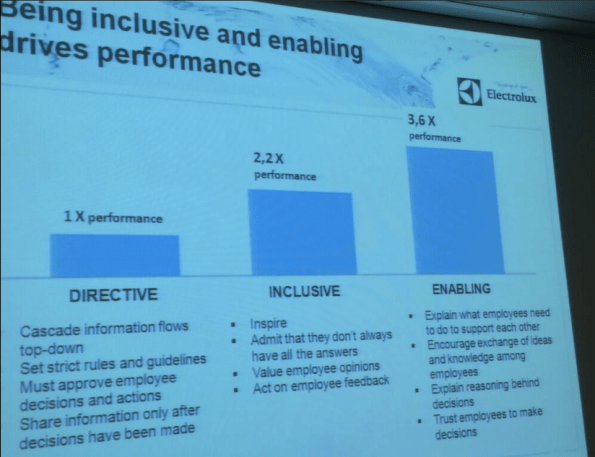
During Ralf Larsson’s run through of the Electrolux employee engagement overhaul we heard of how managers had embraced blogging as a way of communication through the social intranet and also how having a mobile interface had driven more use. He talked of the positive impact of moving leadership away from being directive to being inclusive and from taking the role of enablers:

  • explains what employees need to do to support each other
  • encourage exchange of ideas and knowledge among employees
  • explain reasonoing behind decisions
  • trust employees to make decisions


‘You can also find out where to get a coffee’

One of the most impressive tech applications was from Accenture and their Candidate Interview Preparation App. There’s also one for the interviewer to help make sure that they are prepared too. Watch this video explaining more about the candidate app…they even let you know where the nearest coffee shops are…


‘Don’t just focus on your perm workers, understand your contingent workforce too, their passion and value for the organisation’

One of the supplier presentations was from Sally Hunter of Kelly OCG. She looked at various aspects of strategic workforce planning and also talked of the candidate experience, raising the difference between the way we treat consumers and job applicants even though the latter may also be the former. It’s a message we often discuss, but with different audiences at each event it’s one that needs to be repeated.

The main part for me though was about the expectations and needs of contingent workers. In my event preview I raised the point about engaging people who work for you, and represent you, but may not be employed by you. Many presentations around talent and recruitment feature examples from businesses that outsourcer some of their workforce – maybe we need to hear more about the worker/collaborator experience as well as the employee experience.


‘Diversity means nothing without inclusion’

The topic of diversity has been raised a few times. The point being strongly made is that without Inclusion it means nothing.

During the HSBC session we saw videos from employes talking about issues that they behave had with weight and mental health and support that they received. They also shared this video from Antonio Simoes, Head of HSBC UK, on diversity and inclusion…


Leadership and Legacy Under The Spotlight at #HRVision14

Three hours in to HRVison14 and we’ve been hearing a lot about leadership. In amongst the presentations on culture change and learning, and during the almost complete silence as people listened, spellbound to Tim Macartney, the underlying theme is leadership.

Tim said:

Leadership is a choice.
An invitation to become truly courageous.
Explore what would make a beautiful life.

He captivated the 200+ delegates with a passionate plea to create a greater purpose, to challenge the notions of wealth accumulation, competition and streamlining by having business purpose & values centred around being proud of what have achieved in this lifetime.

He channeled the native American Indians “no product or service, no manner in the way we do business, should be allowed to impact the children for seven generations to come“. In their eyes he believed that today’s core leadership focuses of competition, market share and being top in their field may ultimately seem like hollow victories.

Before Tim we had heard from Frans van Houten, Global CEO of Phillips, on their global culture transformation. Bringing about change within a traditional, established global business, with embedded organisational structures and inevitable silo mentalities, takes time and a fresh approach – “it’s easy for established businesses to work in silos that create a survivor mentality, inevitably leading to people ducking decision rather than taking risk

A few of his messages that I noted were:

  • Focus on innovation and entrepreneurship, bringing value to customers that makes them smile and makes them happy
  • Always act with integrity
  • It’s not about working harder but about working differently
  • Equip people with new tools, it will help them solve different problems
  • You need to make sure that change doesn’t just happen on the surface
  • Courageous conversations break the cycle of victim mentality and complaining mindset
  • Make the purpose your ‘north star’, the guiding principle that everyone wants to follow

Clearly all this requires a huge shift of mindset from leadership, particularly those used to meeting challenges by shuffling the org structures. Frans was particularly scathing of those who change structures expecting an uplift in performance; his preference was for agile teams created around a problem or project operating across functions.

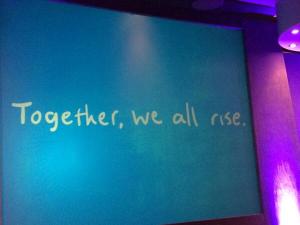
The session after Phillips was from GE who spoke of strong leaders having a confident humility and learning agility. Their philosophy – Together, we all rise.

Starwood Hotels later spoke of leaders needing to embrace individualism, identity and inclusion within their teams (diversity is nothing without inclusion) whilst at the same time supporting them in making emotional intelligence, continuous feedback and management by objectives core leadership skills to meet developing workforce expectations.

Leaders usually take the plaudits when business performance is strong, when share price and profits are unceasing, so it’s probably right that they are under the spotlight when things need to change.

The words vision, value and opportunity have been heard quite a lot this morning but it was the concepts of legacy and sustainability – most notably from Tim Macartney’s session – that have probably really got most of the HR professionals here talking and thinking.


What Type of Leaders do we Really Want?

‘You choose your leaders and place your trust/As their lies wash you down and their promises rust’ (Paul Weller)

What do we expect from our managers and leaders? Judgement and insight, or conviction and ideology?

It’s a question raised in Jonathan Freedland’s weekend piece Chris Huhne, David Cameron and the RBS boss don’t have it, but Al Gore did – asking whether we prefer jaw-jutting certainty to thoughtful judgement in our business and political leaders.

A weighty question. I guess most of us want decisive leaders and managers, the kind of people who know how to sort things out and get things done. And people who can read the signs and adapt. Yet is that what we get? Continue reading “What Type of Leaders do we Really Want?”

The Wisdom of Herbert : Management Insights 80 Years On

‘The anxiety which is felt in some cases when teams are threatened with the loss of their status must be almost beyond bearing. I know of one club who in their plight insisted on their star players being in their homes every Friday night at nine o’clock, and officials visited them to see that the rule is observed. Recently I have heard of the complaints of players who declare that every Friday night they are spied on, and that they are threatened with all sorts of penalties if they do not observe the club curfew. I have no patience with such supervision. If I were unable to trust a player I would not retain him. In my experience I have found that the man who is treated fairly, and in whom confidence is placed, will not let you down.’

Wise words.

If you changed the word ‘club’ to ‘company’ and ‘players’ to ‘employees’ and said that at a conference or unconference in relation to employer brand and social media you’d be a guru. It would be tweeted and re-tweeted, blogged about and quoted.

And it’s true. If you can’t trust your employees then you shouldn’t have them working for you…likewise if you treat them fairly, and with respect, you will get the best out of them.

But this quote isn’t recent. It’s not from this week, this year or this century. It was written in 1932!

It was written by Herbert Chapman, a man who was named Greatest British Football Manager of all time in a Sunday Times poll in 2004 and is widely regarded as the father of modern football. His revolutionary and pioneering legacy is long and impressive: Continue reading “The Wisdom of Herbert : Management Insights 80 Years On”