The Rise of the Career Situationship: Why Gen Z Is Redefining Commitment at Work

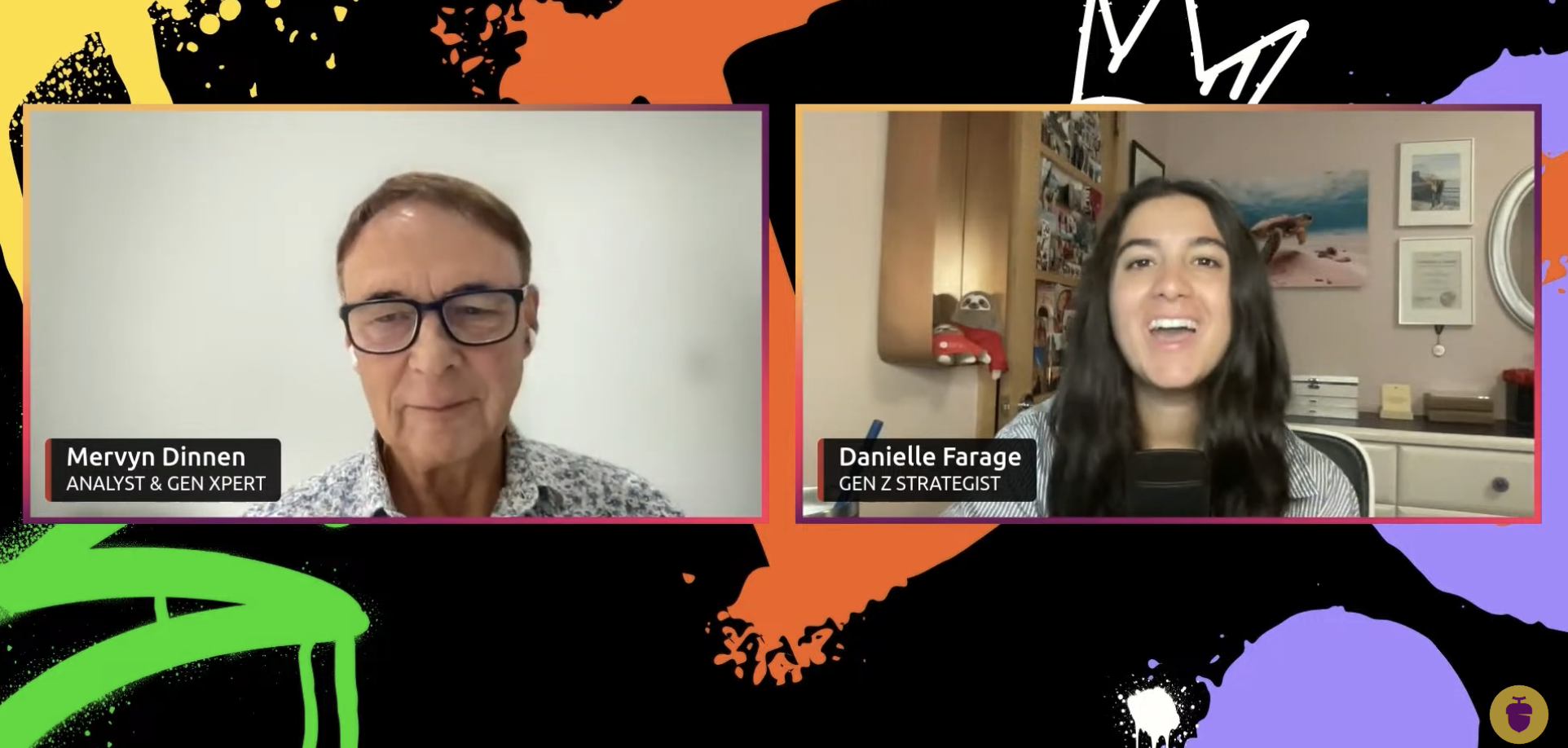
A recent survey claimed that nearly half of Gen Z plan to leave their jobs within a year, and more than half admit they took their current role knowing it would be temporary. The headline is designed to shock – a generation with “commitment issues.” And a headline that myself and Danielle Farage recently explored on our From X to Z podcast. This isn’t about a lack of loyalty. It’s about a new understanding of work itself.

Every generation has gone through periods of restlessness at work. When the economy is uncertain and the world feels unstable, people naturally think short-term. From my perspective, this has always been cyclical – periods of growth bring career ambition, whilst instability sparks pragmatism. The difference today is that the traditional reasons to stay in a job – home ownership, pensions, predictable progression – have all but disappeared for many younger workers. In their place instead is a simple question: “Does this job give me something meaningful right now?

For many of Gen Z, the answer often changes – and that’s not a sign of flakiness, but of realism. They are navigating a volatile economy, rising living costs, and a job market transformed by AI and automation. It’s hardly surprising that their focus is on the present, not the promise of a distant reward that may never materialise.

Danielle framed this shift as a broader redefinition of success. For Gen Z, money is a means to an end – a tool to support a life that feels authentic – and not necessarily a goal in itself. They’ve grown up watching countless models of success play out on social media: creators, entrepreneurs, activists, freelancers. The lesson they’ve absorbed is that there isn’t one consistent, right career path. Their 20s are for exploration, not lifelong contracts. Stability is less important than learning, autonomy, and purpose.

This mindset is giving rise to what Danielle calls the “career situationship” – a term borrowed from the language of dating – to describe a relationship where neither side is fully committed. The employer offers just enough reward or recognition to keep someone around, and the employee gives just enough engagement to get the job done – all the while scanning for better options. It’s a fragile dynamic, and one that’s becoming increasingly common.

The root cause isn’t entitlement or impatience; it’s disconnection. Many younger employees simply don’t feel recognised or valued in their roles. They crave feedback, development, and honest conversations about growth – but too often encounter bureaucracy or indifference. Without that sense of progress and belonging, even a well-paid job starts to feel hollow.

Management is a skill – not a title – and one that’s often overlooked. It seems too many managers are being promoted without necessarily having the right tools – or skills – to lead, connect and inspire their teams. Leadership today requires empathy, curiosity, and communication – qualities that build trust and make people want to stay. It’s not about enforcing loyalty, but about earning it through genuine care and clarity.

Ultimately, Gen Z’s attitude to career commitment is not a rejection of work; it’s more of a demand for meaning. They want work to fit into a life that feels purposeful, rather than the other way around. That may look like job-hopping on the surface, but beneath it is a search for belonging, respect, and growth.

The challenge for organisations is to meet that search with authenticity. Recognition, dialogue, and development aren’t “nice to haves” – they’re the foundation of modern retention. Because whether in careers or relationships, people stay where they feel valued. Which is something that every generation can understand.

Check out our full conversation here – https://www.youtube.com/watch?v=BbZmlkDq9RI – or through the image below, and you can also visit Purple Acorn From X to Z to check out all our intergenerational podcast chats.


Why Are Gen Z the Most Miserable Generation?

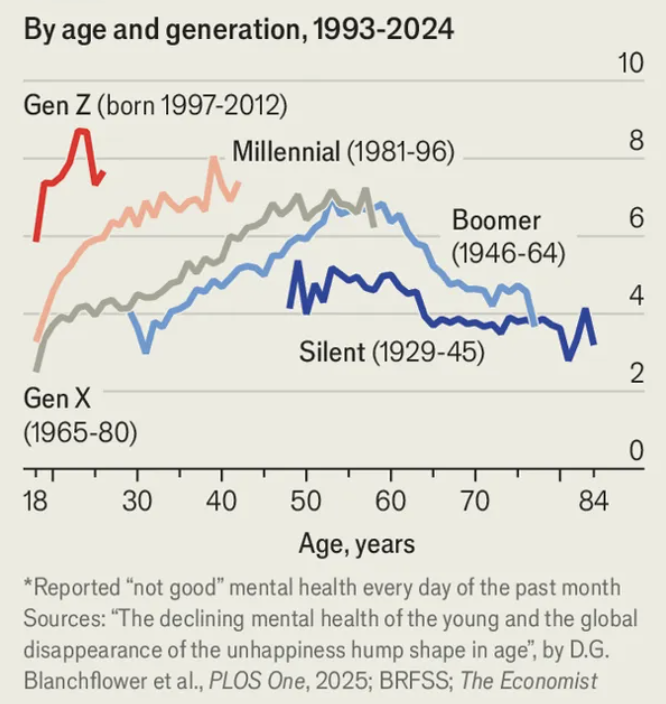
For decades, research around happiness has suggested a predictable pattern: life satisfaction followed a “U-bend.” Young adults begin relatively optimistic, hit a slump in middle age, and then rebounded later in life. While the precise age of peak misery varied from country to country, the overall shape was remarkably consistent.

But new research published in PLOS research journal by economists David Blanchflower, Alex Bryson, and Xiaowei Xu reveals that this curve has shifted in a striking – and potentially troubling – way.

Across much of the world, it is no longer middle-aged adults who are the most miserable. Instead, young people, especially Gen Z, are reporting the highest levels of unhappiness of any age group.

A “Ski Slope” of Misery

The researchers analysed large-scale surveys in the United States, United Kingdom, and 44 other countries. Historically, data such as the Behavioural Risk Factor Surveillance System (BRFSS) in the US showed unhappiness peaking in middle age between 2009 and 2018.

Yet between 2019 and 2024, the familiar “hump” disappeared. Mental health among older groups remained stable, while despair amongst younger people climbed rapidly. A similar pattern emerged in Britain, where rates of anxiety and poor mental health surged among under-40s after 2016. The global picture is no different: across Africa, Asia, Latin America, Europe, and the Middle East, young people consistently report worse mental health than their elders.

This generational shift is profound. Older adults, once seen as the most vulnerable to despair, now appear more resilient than the youngest members of the workforce.

Why Are Younger People So Unhappy?

The causes are complex, and there is no real single explanation that fits across countries. But the research did highlight several possibilities:

  • Labour market changes. Traditionally, employment was a buffer against poor mental health. Yet for young American workers – particularly the least educated – this effect has weakened. Falling job satisfaction and economic insecurity are probably contributing factors.
  • Technology and social media. The rise of smartphones and social platforms has coincided with declining youth mental health since the early 2010s. Whilst they are usually blamed for this, the research covered a number of studies and found only a weak link between social media use and sustained declines in wellbeing.
  • Generational drift. Each successive generation has entered adulthood more miserable than the last – millennials and Gen X reported midlife malaise earlier than the baby boomers. Gen Z, however, are beginning their adult lives at historically low levels of happiness, raising concerns about how they will cope as they age.

In short, Gen Z are not only starting from a worse position than previous generations – they may also face deeper challenges as they approach midlife.

What This Means for Society and Work

The implications extend way beyond statistics. Rising despair among young people matters because they represent the current and future workforce. If left unaddressed, poor mental health risks affecting productivity, engagement, and social cohesion.

For organisations, this underscores the importance of investing in employee well-being, mental health support, and meaningful work. Younger workers may be the most digitally connected generation, but they also report the highest levels of disconnection, anxiety, and dissatisfaction. Employers who recognise and respond to this reality will not only support their people – they will also secure a competitive advantage in talent attraction and retention.

Cause for Cautious Optimism?

While the findings are sobering, they are not unchanging. Some evidence suggests that the mental health of young Americans has improved modestly in recent years, hinting that today’s “ski slope” of misery may not be permanent.

Still, the shift should serve as a wake-up call: the youngest generations, once assumed to be the happiest, are now struggling most.

Addressing this challenge will require action from policymakers, educators, employers, and communities alike. The “U-bend” of happiness may well return in time, but for now, Gen Z are facing an uphill climb. And organisations, professions and colleges can’t afford to look away.

Intergenerational Harmony: Navigating Multigenerational Workplaces

I’ve always been interested in workplace dynamics. I’ve had, in some respects, an unusual career in that I started off professionally qualifying as an accountant and over the years have been through marketing, sales, HR and writing, and in all the different sectors and organisations I’ve worked in, I’m always most interested in how we collaborate and co-create, the relationships we build, and where there’s things maybe not working in the workplace, what causes friction and internal disruption.

What interests me most at the moment is the number of different generations in the workplace. When I started work, there were very few people in my company who were over the age of 55, let alone 60 or 67 (which is the standard retirement age in Europe) so it was it was quite different. Whereas now we’ve got people working longer –  there was a big piece in the Financial Times in Europe only a few weeks ago where they’re interviewing people in their 80s who are still working, pretty much on a full time basis, because they’re fit and healthy, and they enjoy it.

Something has changed: the structure, dynamics, and meaning of work have transformed. That’s what I explore on a regular basis with Danielle Farage on our From X to Z podcast series – and it’s why intergenerational harmony is more critical (and more possible) than ever.

It was an honour to be invited on to Adam Posner‘s Pozcast recently to talk with Rhona Barnett-Pierce about my thoughts on Intergenerational Harmony. You can listen to the whole conversation here – https://www.thepozcast.com/mervyn-dinnen-understanding-gen-z-the-future-of-work-live-from-unleash-2025/ – and these are the key things I talked about

1. A Lifetime of Learning Workplace Relationships

From ‘humble’ beginnings as a trainee accountant ticking off bank statements to navigating marketing, HR, sales, and writing, my journey has always centred around one question: how do people collaborate within organisations? Friction, alignment, mentorship, and teamwork – these dynamics really define our experience of work. And the more varied your background, the richer your insight into what drives co-operation, or causes a breakdown in internal relationships.

2. Generations: From Homogeneity to Multigenerational Workplaces

When I joined the workforce decades ago, your co-workers typically shared similar stages in life. Now, you routinely find 18 and 80 year-olds on the same Zoom call. That shift reshapes how we learn, mentor, lead – and think about opportunity. The diversity of life stages has created a complex, vibrant workplace with both promise and growing pains

3. Friction Is Nothing New (But a Different Flavour Now)

Young, aspirational hires have always challenged the status quo. I recall reluctantly ticking off bank statements as a trainee – it seemed a fairly menial thing to do after passing my first exams – until I realised (or was helped to realise!) that it was essential for mastering the job. Today’s younger employees bring a sharper dose of self-confidence, often backed by deep digital understanding and fluency. They’re less likely to accept “that’s just how we do it” – and more likely to say, “I can actually help with that.”

4. Gen Z’s Mindset: Driven by Flexibility, Not Just Pay

It wasn’t like this for Gen X. The blueprint was straightforward: work → overtime → promotion → house → family. Indeed, salary growth roughly matched the cost of living back then – meaning real progress was achievable. The maths is broken now: property prices have risen 30x while incomes only 10x. For Gen Z, traditional markers of financial stability are less attainable and are more likely to come from family support/inheritance, so instead they look for purpose, autonomy, and meaning in their roles.

5. When Tech Becomes a Generational Advantage—and a Challenge

Younger generations enter workplaces already fluent in digital tools, often surpassing seasoned managers and leaders. Add AI into the mix, and the resulting power shifts can be jarring if not handles well. Leaders may need help adapting – not because they lack authority, but because the toolkit they rely on has evolved. The trick? Recognise those new dynamics and harness them for innovation.

6. Gen X: The “Sandwich” Generation Under Pressure

If Gen Z is reinventing what work means, Gen X is struggling with identity at work. Often caring for aging parents and facing increased competition (even from freelance boomers staying in the mix), they feel squeezed. Neither at the top nor ready to retire, they’re redefining their place – experimenting with flexible work, consulting, or fractional roles. This volatility can fuel misunderstanding across generations.

7. Redefining Retirement: A Choice, Not a Deadline

Life expectancy keeps climbing, but state retirement ages aren’t keeping up. Many older professionals are choosing – or needing – to continue working well into their 70s and beyond. And if that pushes younger workers out of certain roles? It’s not malice – it’s a symptom of changing life arcs. For Gen Z, this adds competition; for Gen X, it’s both risk and opportunity.

8. Practical Steps for Multigenerational Harmony

  • Respect structure—but question rigidity: Hierarchies exist for a reason, but flexibility can unleash creativity.
  • Balance freedom with clarity: Autonomy works best when expectations and goals are clear.
  • Invest in intergenerational dialogue: Bring diverse voices into strategy and culture conversations.
  • Design flexible career paths: From gig roles to portfolio careers, accommodate evolving life stages.
  • Focus on shared purpose: Work aligned behind meaningful goals unites all ages.

Let me know what you think….and check out the full Pozcast chat here:

Gen Z’s Approach to Work Isn’t the Problem – It’s the Wake-Up Call!

Sensationalist headlines about generational differences in the workplace continue to take up loads of space on social and digital media platforms. I see a lot of it when I’m sifting through the latest articles and research for my weekly podcast chat with Danielle Farage on From X to Z on the Purple Acorn platform.

The episode that I’m writing about this week centred around articles on how Gen Z look for flexibility in their schedules and in the way they structure their working day – effectively challenging traditional work norms and redefining ‘professionalism’ by stretching boundaries such as talking a more flexible approach – also known as “going to the gym during work hours”! Add to this open conversations around mental health, and the questioning of traditional work structures – in particular challenging the ‘that’s the way we’ve always done things here’ narrative which leads to feelings of being  judged, misunderstood, or even dismissed.

The truth is that no generation is the problem. But the work itself is changing – and Gen Z is accelerating that change. Rather than clashing, organisations have a real opportunity to better understand each other, learn from one another, and build a more inclusive and fulfilling future of work.

1. Purpose Over Paycheque Isn’t Entitlement – It’s Evolution

Gen Z aren’t just chasing a salary – they want meaningful work aligned with their values. They want their jobs to have impact – and aren’t shy about saying it. This is often at odds with more experienced workers who usually found purpose after they had established some form of career and skill stability. Gen X and Boomers often had to take what they could get, keep their heads down, and climb the ladder. It was more about resilience and creating a longer term impact.

The Gen Z approach underlines that work is about more than survival – it can be meaningful as well.

2. Mental Health Isn’t a Weakness – It’s a Strength

Gen Z talk openly about anxiety, burnout, and needing time to recharge. They’re setting new standards and boundaries for workplace wellbeing and have a greater understanding of how, when and where they can thrive, and the support and guidance they might need.

This is at odds with Gen X and Boomers who tended to have to ‘push on through’ and leave more personal issues behind when they stepped into the workplace. They might admire Gen Z’s openness but might also see it as a sign of weakness or lack of resilience.

Organisations need to offer space for honest conversations – something that Gen Z expect – so that everyone in the basin less can help with coping strategies and supporting health without sacrificing performance.

3. Challenging Hierarchy Isn’t Disrespect – It’s a Desire to Contribute

Gen Z want to be heard. They want to understand how and why things are done in a certain way, and expect collaboration and support – not command and control. Gen X may see this as pushing back on organisational structures – and also impatience and a lack of respect.

The opportunity here is to support Gen Z with mentorship and context, and to work together to restructure outdated systems and practices. Mutual respect can lead to more successful outcomes.

4. Technology Is a Tool For Smarter Working

Gen Z have grown up in a digital world. They are quick to learn and adopt, and use technology intuitively and efficiently. The rapid development of workplace tech can be overwhelming for more experienced workers and can lead to misconceptions over the quality of Gen Z’s people skills, ability to interact.

The workplace needs a balance. Gen Z can show new ways to work smarter, faster and more effectively whilst older generations can emphasise the importance of real conversation, interpersonal nuance and collaboration.

5. Setting Boundaries Isn’t Laziness

Gen Z have watched older generations burn out – and they aren’t willing to sacrifice health or identity for hustle culture. This is often sharply at odds with older workers who have historically been rewarded for going above and beyond – usually by working long hours and overtime. Whilst there was often a personal cost involved, they are more likely to see Gen Z as slackers.

Another example of mastering the art of learning to work smarter – Gen Z can challenge the concept of extra hours leading to better outcomes with strategies to work smarter and more effectively, whilst more experienced workers can also point to how dedication  and loyalty brings results for everyone

6. All Generations Want the Same Thing: A Better Way to Work

At their core, Gen Z workers aren’t rejecting notions of hard work and dedication – they are trying to redefine it in a way that works for everyone. Asking the questions that older generations may have asked quietly – or never had the opportunity to ask at all.

And Gen X and Boomers aren’t stuck in the past – they’ve adapted through recessions, technology revolutions, and workplace upheaval. They know the value of grit and determination, and they want to pass that on through mentoring opportunities.

The Future of Work Is Intergenerational

Work isn’t just changing. It’s evolving. And we’re all part of the change. Building a workplace that embraces generational differences – and thrives because of them. A workplace where people feel seen, heard, respected, and whole.https://www.youtube.com/watch?v=FIE06FmiFEU&list=PLmQi8Zify99xWaqop_IOTo44aa_X17f4b&index=12

Why Micro-Retirements Might Be the Future of Career Growth

The expression “micro-retirement” has been gaining traction on digital news sites and platforms as a new ‘career trend’ that the Gen Z workforce are readily adopting. And needless to say, Gen X and Boomers are less than impressed – assuming the term refers to young people throwing in the towel after a few months of work to take a break!

The expression “micro-retirement” has been gaining traction on digital news sites and platforms as a new ‘career trend’ that the Gen Z workforce are readily adopting. And needless to say, Gen X and Boomers are less than impressed – assuming the term refers to young people throwing in the towel after a few months of work to take a break!

There is a real rationale behind the concept, and one that I was discussing with Danielle Farage on our latest From X to Z podcast. The phrase “micro-retirement” actually indicates a complete shift and points us toward the future of how we work, learn, and reset, highlighting a fundamental shift in our relationship with work.

Breaking from Tradition

For Boomers, Gen X and Gen Y, the concept of a career break was rare and often problematic. Gaps on CVs – and unexplained periods of apparent worklessness – would raise eyebrows as signalling an apparent lack of commitment or reliability. Of course, for earlier generations in the workforce, it tended to be the employer that owned the responsibility for upskilling their workforce, and helping to train their people on new systems or tools.

Gen Z see it differently. With rapid technological change – for example currently areas like AI and automation – waiting for a company to provide learning opportunities could mean getting left behind. The concept of micro-retirements – or career pauses may be a better expression – are seen by Gen Z as being proactive, not passive. They’re using them to recharge, reflect, and learn new skills.

Danielle shares how a layoff in 2023 turned into a transformative three-month break filled with travel, yoga, and eventually, launching a solo venture. Far from “retirement,” it was a reboot. And I don’t think she’s alone. I hear of increasing numbers in the emerging workforce designing work lives that include intentional pauses to refocus or explore new paths.

The COVID Catalyst

The COVID-19 pandemic definitely seemed to shift the narrative around time off. Suddenly, breaks in employment were understandable. Even expected. Caring for family, facing potential layoffs, or navigating mental health challenges, have increasingly become real reasons for career/CV ‘gaps’. The stigma around taking some time out of work has started to fade.

Language Matters

Still, the term micro-retirement has connotations. Retirement has historically implied stepping away permanently – not taking a purposeful break to learn, recharge, or pivot. Particularly in the modern workplace where people in their 70s and 80s still want to be part of the global workforce.

So maybe it’s time for a rebrand: sabbaticals, mini-breaks, or learning pauses. The language we use shapes how these breaks are perceived – culturally, mentally and particularly when making hiring decisions. The expression ‘micro-retirement’ might read like a clickbait worthy headline — but the concept behind it is legitimate.

Learning in Your Own Time

This is another key generational difference. Who is responsible for the upskilling of the workforce?

Previous generations largely experienced a business world where employers tended to handle learning and development of the skills and knowledge relevant for the role. Gen Z though are used to YouTube, online courses, and talking more of a DIY approach to learning. So, if you want to understand more about AI, automation or master a new tool or skill, you’re expected to figure it out on your own — often in between jobs or projects.

These breaks – or micro-retirements – then become essential career investments, not indulgences.

What Do Organisations Need to Do?

Instead of resisting the trend, organisations will benefit from leaning into it by offering – or supporting:

  • Flexible leave policies: Consider formalising sabbaticals or micro-breaks as part of the employee experience
  • Encourage self-directed learning: Offer stipends/bursaries or access to learning platforms for use during or between roles
  • Recognise the return: Employees often come back from breaks with renewed energy, sharper skills, and clearer goals
  • Rethink time: With AI increasing productivity, do we need to work the same hours to produce the same output?

Ultimately, this isn’t just about taking a break. It’s about redefining how we build sustainable, meaningful careers in a new world of work.

So I think the term “micro-retirement”, whilst clickbait worthy, is misleading. The sentiment behind thought reflects a smarter, more human approach to work. Pausing with purpose, not checking out.

And – if framed and supported properly – a fairly essential retention strategy.

Check out the full From X to Z podcast conversation here

3 Things Millennials Need to Know About Their Bosses

First off…Congratulations! It’s not easy getting hired in this market but well done for showing the skills, capabilities and attitude that an employer was looking for. You can now look forward to start paying off some of that student debt and getting so good at your chosen career that you’ll be able to go freelance in no time.

Now for the first few days in a proper job – very different from the ones that you did to earn some beer and rent money whilst you were studying – and your first proper, corporate boss.

There’s no need to worry though. There are 3 things you need to know about them…

  1. They’ve read a whitepaper/study/report on what you’re like and how they should manage you. They may even have had a day rate consultant come in and educate them on it.
  2. The report has told them that you’re a digital native, have a sense of entitlement, get bored easily, want to spend all day on Facebook and whatsapp, don’t intend to stay with them very long and would much prefer to work the hours that suit you than a regular 9 to 5.
  3. They have kids, or have friends who have kids, who are similar in age to you so they really do know even more about you than the report could tell them.

Your relationship with your boss is important so you need to get off on the right footing. You don’t want to disappoint them or fail to meet their expectations so I suggest the following…

  • Turn up about 10 minutes late on your first morning and make sure that you’re holding a takeaway coffee cup – not from a high street brand. When you meet your boss for the first time just say ‘Hey, didn’t realise it was going to be so difficult to get a decent cup of coffee round here
  • At some stage you’ll be given a tour of the office. Towards the end of the tour be sure to ask where the ping pong table is. If they’ve got one then ask where the pool table is. If they’ve also got one of those then you’ve actually done quite well so quickly move on to point 3. Unless they haven’t got any bean bags, in which case ask where yours is.
  • Once the tour is finished you’ll probably be shown to a desk, work station or open space and given a laptop. Remember to look at the laptop you’re given and tell them that you can only work on an Apple machine. If they’ve given you one then make it known that you can only produce your best work on a top of the range iMac.
  • Once you’re logged in and ready to go make sure you spend the first hour updating your social profiles and sending Facebook friend invites to everyone in your team. Also follow them all on Twitter and be sure to connect with your boss on LinkedIn and ask them for a recommendation.
  • When you get ready to leave at the end of the first day tell your boss that you’re going out with a few college mates to celebrate your new job and ask if it would it be OK if you work from home tomorrow.

Your boss may pull a strange face but remember that they’ve almost certainly spent a lot of money on the whitepaper/study/report/consultant and it’s your duty to make sure that their money isn’t wasted.

Don’t worry that you might be giving the impression that you’re not serious about a career there – the report would have almost certainly told them that 80% of your age group want to work for themselves anyway…


(image via Midland University)