Creating the Future of Talent Acquisition and Hiring

In the rapidly evolving landscape of talent acquisition and hiring, there are a number of key trends emerging that will re-shape how we attract, hire and develop our future talent. Some of these trends could be game-changers for business leaders and HR professionals, as they represent a shift in workforce dynamics, whilst shaping the future of work and potentially leading to a rethink of traditional HR practices.

My close friend, co-author and co-collaborator Matt Alder has been writing and documenting these shifts through our co-authored books, and his research for podcast interviews and online courses, and I recently had a conversation with him on my HR Means Business podcast to better understand how some of these emerging trends will impact the future of hiring and retention.

We identified and discussed five main trends.

1. Skills-Based Hiring

Hardly a brand new development, but skills-based hiring is definitely a growing trend amongst Talent Acquisition and HR teams as organisations increasingly recognise the limitations of traditional hiring practices that prioritise previous experience over potential. Skills-Based hiring focuses on hiring individuals based on their current skills, and on their ability to develop new ones, rather than rely on their past job titles or educational background. There are 3 key benefits to this approach:

  • Broader Talent Pools: By focusing on skills, organisations can tap into a more diverse talent pool, including candidates from different industries and backgrounds
  • Enhanced Diversity: Skills-based hiring promotes diversity by reducing biases associated with traditional hiring criteria
  • Future-Proofing Workforce: This approach aligns closely with the evolving nature of work, which we see as increasingly valuing skills and competencies over specific experiences

2. Total Talent Thinking

Total talent thinking is about breaking down the silos within HR departments and approaching talent management holistically. It involves integrating talent acquisition, talent management, and learning and development, to create a cohesive strategy that comprehensively addresses an organisation’s skills needs. There are certain key components that you need for a Total Talent Thinking approach:

  • Collaborative HR Functions: This approach relies on different HR functions working together seamlessly
  • Strategic Workforce Planning: Identifying and planning for the skills that will be needed across the organisation to achieve commercial goals
  • Flexibility and Adaptability: Building a workforce that can adapt to changing business needs and technologies

3. Impact of Generative AI

Whatever you think about Generative AI there is little doubt that it’s transforming Talent Acquisition by both automating various aspects of the hiring process, and also providing new tools for both employers and job-seekers. Generative AI’s full potential is still developing and unfolding, but its current applications are already making significant impacts:

  • Increased Efficiency: AI can streamline the recruitment process by automating routine tasks such as CV screening and initial candidate assessments
  • Enhanced Decision-Making: AI-powered tools can provide insights and analytics to help HR professionals and hiring managers to make better hiring decisions
  • Job Seeker Empowerment: Candidates are using AI to craft tailored CVs and applications, which can increase their chances of getting noticed, provided they use it as a tool to help support their job applications, rather than rely on it to be the application

4. Future-Casting and Strategic Foresight

Matt and I have been talking about Future-casting for a few years. Basically it involves anticipating and planning for future trends and disruptions in the workforce. It requires HR and Talent professionals to adopt more strategic foresight tools and methodologies to try and predict – and so be prepared for – changes that might shape their organisation’s future talent strategies. There are 3 component parts:

  • Trend Analysis: Identifying and analysing the macro and the micro forces that are driving change in the workforce
  • Scenario Planning: This calls for HR and Talent professionals to develop – and prepare for – multiple future scenarios so they can remain agile and responsive
  • Embracing Uncertainty: Recognising and planning for unknowns and uncertainties, such as technological disruptions, economic shifts or – as in the case of Covid – factoring unforeseen epidemics

5. Smart Automation

Automation, powered by AI and other technologies, is set to redefine many aspects of work – not least in the attraction, hiring and onboarding of talent. Smart automation goes beyond simple task automation and includes more complex processes and decision-making functions:

  • Redefining Job Roles: Automation will change the nature of many jobs, requiring employees to adapt and develop new skills, and HR to develop enhanced role profiles
  • Efficiency Gains: Automated processes can lead to significant efficiency improvements and cost savings
  • A Focus on Higher-Value Work: As routine tasks are automated, employees can focus on more strategic, creative, and value-added activities and processes.

You can find out more about how we see the future of Talent Acquisition – and our approach to Total Talent Thinking – on this episode off the HR Means Business podcast

Can The MagicOfFit Help Improve Quality of Hire and Candidate Experience?

Talent challenges remain high on the corporate agenda. From my research and conversations with stakeholders I can see that identifying, assessing, hiring and retaining the people and skills we need to help our businesses thrive and grow is no longer simply about reviewing CVs and applications, with a standard set of experience and knowledge based interview questions to follow.

Instead it is more about getting a better understanding of a candidate’s unique competencies – their fit and suitability – and discovering as much as we can about the core competencies and traits of the people we are assessing. Too many interview processes can be generic, asking a series of candidates the same questions whilst hoping for a range of illuminating answers.

But what if we could personalise our interviews? Ask our candidates questions that are tailored to their own competencies and unique traits? And leverage the power of AI to get real insights into those competencies and workplace traits? And to find out who would really fit with our business? Find out more about their positive personality traits and workplace competencies like creativity, innovation, and problem solving?

That would certainly improve the candidate experience – and there’s a lot of data that shows a great candidate experience is key to hiring the right people. How they are treated during the application and interview stages will usually determine whether or not they accept an offer. Were they able to showcase their knowledge and capabilities? Did they feel treated well?

The keys to giving a great candidate experience are to empower them, give value, allow candidates to showcase their skills, knowledge and capabilities, and to make the process informative and authentic. Historical data shows that up to 87% say a great candidate experience can change their mind about a company or role they weren’t sure of.

Which is why I’m really interested by Instant Fit! It’s a new candidate screening solution from Fama Technologies Inc. that uses online signals to identify candidate fit by highlighting positive personality traits and workplace competencies like creativity, innovation, and problem solving.

It also generates personalised, science-backed interview questions to help hiring teams understand which candidates will be an Instant Fit. It’s a compliant and frictionless process – there are no tests, and no candidate drop off, just screening with questions that are relevant to the candidate’s own skills, knowledge and competencies.

Looking forward to finding out more on their upcoming webinar hosted by CEO Ben Mones on 26th June – you can join me and the Fama Technologies Inc. team by signing up here – https://fama.io/resource/be-an-ai-superhero-with-instant-fit – and all attendees will get a free Instant Fit report!

Choosing a finalist from a handful of candidates is the most human part of hiring and in this webinar, I’m hoping to find out Instant Fit can help evolve the Talent Acquisition team’s toolkit:

  • How the evaluation of workplace traits and competencies is evolving
  • With the power of AI, understanding how we can get insight into a candidates workplace traits and competencies frictionlessly and compliantly. No tests, so no drop-off.
  • Increase candidate quality by unlocking online language to get valuable insights on how a candidate may interact in the workplace

Preserving the Humanity in Human Resources

The growing presence of AI in our day to day working lives may be creating an increased range of opportunities for the world of work, but is also triggering a number of shifts in how we think and act. In 2023 there was a lot of consternation over the potential impact of ‘Recruiterless Recruiting’ and how it might change the way we attract and hire the talent we need. For Human Resources I think it’s less a case of ‘Humanless’ Human Resources and more about increased humanity within ‘Human Resources’, acknowledging and supporting personal choices, preferences and goals.

Looking at the emerging HR trends currently shaping the employee lifecycle in 2024 I see a number of areas where a compassionate, supportive approach to the employer/worker relationship is evolving. The debate around remote, flexible, hybrid and asynchronous working which has overwhelmed us for a couple of years now, will continue to play out – although as far back as 2017 I was involved in a research study that found these flexible approaches to working was what our people wanted, and would inform their decisions over which organisations to join.

We live increasingly busy lives in which the digital, commercial and personal elements need to be juggled and prioritised. Personalisation – a trend myself and co-author Matt Alder have been writing and talking about for a couple of years now – is key to how our people manage to juggle and prioritise, at work as well as in their leisure time.

Managers are feeling the strain. Research from Gartner last year found 77% of employees placing increased importance on manager support, with  51% of the managers themselves saying they now have more responsibilities than they can manage.

For me, there are 5 key areas for organisations – particularly their HR and Talent Acquisition teams, and leaders and managers – to focus on in 2024 and beyond as we move towards adopting a more human, compassionate and supportive approach to work that should be very much on the corporate agenda.

From Management and Direction to Support and Enablement

Our historic approach to our workforce has been what I often refer to as management and direction. We manage processes, people, their careers, their performance and day to day involvement. We direct people. In fact, we have ‘directors’ for most parts of their career lifecycle. It’s all a bit autocratic. Yet our digital talent are keen to learn and figure things out for themselves. A phrase I often use is ‘Digital talent has intellectual curiosity’.

They know their roles are evolving and changing and want the opportunity to discover and explore the opportunities. They don’t want training courses, but access to self-directed learning. Our role is to support them, to create an environment where our people feel empowered to perform, learn, develop and achieve their best results.

Multifaceted Nature of Engagement

Engagement is a much used term for a myriad of things. Engagement isn’t something we can create. It isn’t a management directive. It’s the outcome of treating people well and with respect, recognising them, giving them opportunities to learn, grow and reach their full potential. Helping to create positive work experiences.

Key to this is recognising the importance of our workforce’s wellbeing. All of it. Mental, physical, intellectual, emotional, physical, digital and,  particularly in 2024, financial. Is ours a culture where people can ask for help? Without being judged? Do we have managers and leaders trained to help and understand when they might be needed? Can people raise a concern in private and know that it will remain private?

Flexibility and Recognition

Our people want agency in how, when and where they work. As I mentioned earlier, this isn’t really new – but it’s something that is now top of mind. For many, whose job is location specific or are part of our frontline workforce, this will manifest itself in flexibility of hours and communication, balancing personal needs and career priorities. These workers can often feel left out of engagement initiatives.

For others, it will centre on the flexible, remote, hybrid and asynchronous working debate. Flexibility itself is a crucial aspect of supporting employees in the modern workplace.

Managers need to perfect a number of different approaches that can give their people access to what they need, and input to the way they work. Not least when it comes to support and recognition – the latter playing a key role in creating a positive, diverse, engaged, happy and productive workforce. Personalised recognition, at an individual level, fosters a positive work environment for everyone.

Evolution of the Employee Lifecycle

I write and talk about the evolving nature of the employee lifecycle, which is now accelerated by technological advancement. Anyone familiar with my co-authored books – Digital Talent and Exceptional Talent – will know I believe in the growing concept of a seamless talent journey. This journey emphasises the need for positive experiences all the way through the key touchpoints – from recruitment, through onboarding, development and right throughout the employee journey. The emergence of career experience managers and talent experience managers within organisations highlights a growing focus on overseeing the holistic career experience for all employees.

Delivering a Personalised Candidate Experience

Central to a successful attraction and recruitment strategy is delivering a personalised candidate experience that resonates with individuals on a personal level. This relies on consistency in interactions and information flow throughout the recruitment journey. By understanding candidates’ preferences and needs, organisations can create engaging experiences that leave a lasting impression.

Social media continues to a powerful tool for employer branding and candidate engagement. By using this to share authentic stories from existing (and former) employees, and also showcasing positive experiences that illustrate culture, organisations can attract top talent more effectively.

A common challenge in attraction and hiring is being able to align the efforts of talent acquisition and recruitment teams with the experience candidates get from hiring managers. This can be addressed by educating hiring managers about market trends, best practices and candidate expectations to ensure a seamless recruitment process. By fostering collaboration and communication between recruitment and hiring teams, organisations can enhance the overall candidate experience and drive successful hires.

As all HR and Talent professionals embrace these opportunities in 2024 and beyond, I hope these insights can provide a compass for navigating the evolving landscape. I believe that by prioritising a human-centric approach, embracing technological advancements, and ensuring continuous support and enablement throughout the employee lifecycle, we can foster a thriving, profitable workplace for years to come.

(You can hear me talk more about these ideas on podcast interviews with Adam WeberKeeping the Humanity in a Humanless HR World – and Bill BanhamThe Impact of AI on HR – and I try to explore them on my own HR Means Business podcast too)

8 Ways to Improve Hiring and Retention

Almost every piece of research covering the priorities of business leaders and senior HR professionals will conclude that recruiting and retaining the people they need is the top priority and main challenge. Research covering aspirations of employees and jobseekers will usually find opportunities for personal growth and professional development as the main drivers behind the decisions on whether to join a company and if to stay.

Over the last two years – whilst researching the book Exceptional Talent, and collaborating with HR and recruitment technology businesses and suppliers on a range of qualitative and quantitative research projects – myself and co-collaborator Matt Alder have seen how many of the traditional ways we approach hiring, development and retention are being overhauled.

Not by every business, obviously. The lived work and job hunting experiences of most employees can still leave a lot to be desired. However with more jobseekers now basing their application and joining decisions on what they perceive a company is like to work for, how they are treated during the hiring process, and what opportunities they have for growth, it will become increasingly important for every business to look at the way they approach hiring and development.

There are 8 areas that we particularly need to transform:

Workforce planning and skills forecasting

Businesses must know the skills and capabilities they will need. HR and recruitment teams should think like curators of skills, not just acquirers and developers of skills, and to do that they must understand what skills are likely to be needed and when. This calls for a more integrated approach to forecasting and planning with each area of the business encouraged to look at what they will need over future business periods. Without this it will be hard to break away from a reactive, transactional approach to hiring. This will involve looking at potential contingent solutions too — a common observation we hear from procurement and strategic workforce professionals is that HR show little or no interest in this area.

Define what you mean by talent

What makes for a successful person within the business? Forget job descriptions that are no more than lists of skills and duties that someone thought necessary years ago. Find the answers to questions like, what is the job? What will someone do? What support will they have? Is there another way for the role to be covered within the organisation? What is the growth potential?

And then look at what ‘potential’ means within the organisation. Attraction and assessment approaches need to reflect the type of business you are, and be able to identify the people who can grow within the business.

Be a place where people want to work

One thing that recent research has shown us is that over 90% jobseekers look for some form online validation of what you are like to work for. This mainly comes from looking at what employees have said on sites like Glassdoor or more general searching through Google and Facebook. Over half said the main factor in deciding if to apply for role is how the business treats its staff, which ranked higher than any other factor.

This means looking at your employee experience. Are you a place where people want to be? This is more important than engagement initiatives and having an active social scene, it’s how people feel about working for you. Do they feel supported and valued? No employee demographic is hardwired to change jobs on a regular basis. Increasingly though they do want be in organisations that are good companies to work for, and that treat them well.

Improve your recruitment process

Whether the design of your application and interview process was based on the Labours of Hercules or a less violent version of Game of Thrones, it should be a way of identifying potential rather than finding the last person standing.

Lack of feedback, too many steps, and under-prepared or disinterested interviewers all registered highly in recent research on jobseekers’ biggest frustrations. As did a feeling of being undervalued and not having their experience recognised. Three quarters drop out of application processes either because of the way they are treated, or it is too long. How a business hires is the first key component in its approach to employee experience, so design an approach that really reflects the values and culture that the business does.

Integrate effectively

Probably the most important part of the employee cycle is the on-boarding phase. Some find the expression clunky, but whatever you call it, the journey from interested applicant to successful and productive employee is one that businesses are increasingly investing in.

The main reasons why people leave jobs within first 6 to 12 months can all be traced back to how they are on-boarded or integrated. Some of it is quite simple, and again should be the outcome of treating people well rather than trying to test them. Start early, make sure that everyone has all the information they need so they don’t feel either overwhelmed or uninformed when they start, give them clear goals and milestones in their first few months, and make sure managers spend time talking to them and talking through how they are settling in.

The period between accepting a role and starting is often the time when a new hire feels they get the least information, yet it’s also the time when they need most reassurance.

Enable people to grow and develop

Increasingly becoming the most important part of employee experience, 70% of employees say that learning opportunities are essential when choosing where to work and 98% that they’re key in deciding if to stay. Many also say they need more learning to help them do their jobs. And a third don’t think they skills they already have are being utilised properly!  Business leaders are regularly worried about the skills base and knowledge in their organisation, in fact two-thirds say learning is key for business performance, so it stands to reason that supporting employee growth should be a major priority.

One way to help people develop is through internal mobility. The best new hire that one of your teams may make is likely to be someone already in the business. Help the people you already have to find new roles within the business. Futurestep found 87% of companies believing that having a strong internal mobility programme helps with attraction and retention, and OC Tanner’s research showed 3 out of 4 employees who work on special projects, outside their core role and teams, feel they grow in ways that their day to day jobs cannot offer.

Create a learning culture

A learning culture is essential. Employees expect to be able to access information and knowledge as and when they need it, to help them do their jobs well, and reach performance expectations. Make learning available across platforms and at all times – only 1 in 6 favour face to face learning with a tutor. 60% want to learn in company time, at their own direction, and 24% in their own time. Different approaches to performance management are well documented, though its apparent that outside of the case studies, conference presentations and business magazine articles, many organisations still struggle to do this effectively, leaving employees feeling that their employers don’t value employee development. 25% of employees see no value in performance reviews in the format their employers conduct them.

Rethink retention

There are several reasons why retaining relationships with ex-employees makes good sense for the business, but none of them will happen unless we get better at exiting people from the business. If it’s a performance issue then address performance and don’t make it about the person. If we don’t want to lose them then we need to leave the door open rather than sour the relationship.

Ex-employees are validators and ambassadors of the employee experience, advocates for the business itself and part of our extended knowledge network. Alumni networks play a key role in sharing product information and company news, referring and recommending prospective employees and future customers, and may well return to work for us in some capacity again.

Many companies now look to formalise these relationships through what is increasingly known as off-boarding* with tech solutions to support managing the relationship and sharing information.

More than three quarters of employees say the reputation of the company where they work impacts their job satisfaction, and 85% that how they were treated during the application and interview process determines if they decide to accept an offer.

The way you attract, hire and develop people will go a long way to determining if you retain them. Workers believe they need more learning to help them perform their jobs better. This boost to performance will help improve rewards, satisfaction and engagement. Which means they are more likely to stay, and their managers better placed to achieve successful commercial results

(Our two most recent research projects, which provided many of the statistics quoted, were with Kelly Services – involving 14,100 job seekers across 10 European countries – and with Bridge, with whom we researched a population of both HR and Learning & Development professionals, and employees)

*(and yes, I know, if you don’t like the term on-boarding you won’t like this one either)


Thoughts From Jobseekers on How Work is Changing

It seems that barely an hour passes on digital communication channels without predictions, opinions and discussions appearing about the future of work. Those last three words alone now appear on bios and as individual specialisms. The battle is often between a dystopian view of the future where AI-powered robots have made all jobs obsolete and a more optimistic view where technology creates huge opportunities to bring more meaning, fulfilment and improved well-being to working lives. And amongst the unknown there are many commentators, bloggers and analysts who see certainty.

But how is work changing now, and what issues do employees face? We need to look more closely at the world of work as it is now and understand the trends, attitudes, and, behaviours that are currently driving change and that will continue to drive change.

To find out more about this reality, and rely less on the myth, Matt Alder and I partnered with Kelly Services to research more than 14,000 jobseekers across 10 European countries, capturing their experiences, hopes and opinions. The findings from this extensive quantitive research will be captured in a series of reports.

The first one has just been published. There were three key topics that jobseekers seem focused on – the quality of their work experience, the capabilities of their leaders, and the opportunity for some flexibility within their work.

A few of our findings:

  • How a company treats their employees is the main factor influencing someone on whether to apply for a job.
  • How they are treated during the application process will impact the decision on whether to join for 86%.
  • The number one thing people are looking for from their employers is the opportunity to learn new skills, which is ranked more important than salary increases.
  • There are no clear cut preferences on flexibility. For some it is location and for others hours. Whilst 58% felt working from home would improve their work/life balance, 48% believe that working from an office helps to keep work and home life separate.
  • The option to work from home wasn’t available to 61% in our survey, although 70% believed they had the technology to enable it.
  • The most important leadership qualities are accountability and honesty (except the UK where its awareness and decisiveness)
  • 53% of respondents had considered self-employment, but only 18% have any plans to become self-employed

One of our main conclusions was that for employees and jobseekers the reality is more about how they do their day to day job, and the ways technology may make their daily routines easier and more engaging whilst offering greater choice over how and where they work. Certainly the way they are treated and supported is much more important to them than working for businesses who embrace the latest fads and trends.

You can download a copy of the report here – hope you find it interesting.

I’ll write about some more findings when the next report is available.

Technology, People, Recruitment and The Tipping Point

The recruitment ecosystem is constantly shifting shapes and dynamics, and ameliorating in new and different ways. Technology is driving much of this. The simple days of agencies, internal and advertising platforms (be they print or digital) have changed. Consolidation and collaboration is now happening on an almost weekly basis. Recruit Holdings can buy Indeed and Glassdoor, and have a significant foothold in the way people search for jobs. Although the search more often than not starts on Google.

How are we responding to jobseeker behaviour? Research I have recently been involved with from 14,000 European jobseekers showed 63% saying that online reviews are influential when deciding to apply for a job, 55% that the main thing they want to know about a company when applying is how it treats its staff, and 24% dropping out of an interview process after the first interview because they saw negative online reviews.

External reviews are now an integral part of the job hunt. So is automation. And after years of debate about whether recruiters should think and act like marketers, or be a part of marketing, how do we now connect and engage with potential candidates? How do we find, develop  and retain the people we need? Will technology replace people in the recruitment process?  And is it conceivable that data will replace people as an organisation’s ‘greatest asset’?

I’m looking forward to finding out more on June 20th when I’ll be co-chairing the first Talent Tipping Point Conference.

Across 8 hours internal talent teams, recruitment agencies, HR, tech suppliers and RPOs will come together from all corners of the Talent Acquisition and Recruitment community, to talk and debate about the impact of technology on talent acquisition. How are we responding, how are we collaborating and how can technology help us to create better talent outcomes for businesses, workers and jobseekers. Opening keynote is from Lord Chris Holmes and during the day we’ll have views and insight from many industry leaders including Robert Walters, Fleur Bothwick, Kelly Griffith, Kevin Blair, Adrian Thomas and Janine Chidlow.

As part of the event preparation, research was conducted across a large range of employers, recruitment agencies, RPOs and hr/recruitment tech companies to gain an overall feel for how they felt about technology, employment models, diversity and whether the future was in collaboration. There were some interesting findings:

  • 44% of in-house recruiters think that technology will become more important than people in recruitment within the next 5 years; for agency recruiters and RPO the figure is 27%
  • Half of all recruiters do not see permanent employment as the default option for workers in future
  • 53% believe technology to be more effective than humans in the unbiased assessment of candidate’s, although only 7% think it more effective for determining culture fit
  • Almost 40% don’t believe that their current recruitment (whether direct, though agency or RPO) is as effective as it should be, with over two thirds believing that recruitment suppliers (tech vendors, agency, RPO) need to be better at collaborating

The pace of digitisation in recruitment is quite varied, governed by size, needs, budget and management capability. Yet cognitive solutions and AI are now being used all the way through the hiring process. With technology becoming increasingly integral to how we live, and the way we consume and do business, its impact on the way we attract, hire, develop and retain our people can’t be denied.

Want to join me at Talent Tipping Point? Recruitment International UK has a limited number of half-price tickets remaining for the event. Simply enter the code RITP when you register to save £250 on the regular price. Order yours today – https://lnkd.in/eUdSjNG

3 Ways to Begin Better Hiring

The way we recruit and onboard has to change. A run through of some recent research* tells us that:

  • 85% of HR decision makers admitting that their business had hired someone who proved to be a bad fit for the job
  • 1 in 5 of HR decision makers say that they don’t know how much a bad hire has cost them
  • Up to 25% of new starters leave within their first six months
  • 90% use their first 6 months experience to determine longer term commitment
  • Only 19% see a strong alignment between what their employer says about itself and their actual experience working there
  • 55% would consider changing jobs this year – 74% of them would stay for interesting work, 69% for recognition
  • 70% of unsuccessful senior hires give a poor grasp of how an organisation works as the main reason for their failure
  • Nearly half of experienced hires admit they failed to fully grasp the business model they were joining

Meanwhile qualitative research tells us that new hires are more likely to leave early if they don’t like the job or find that it wasn’t what they expected from the recruitment process. One senior manager from a large hospitality and leisure sector employer recently told me that almost half of their new trainee intake for this year had already left because the job wasn’t what they expected – not in terms of the actual duties but in the hours, dedication and working structures.

We need to get better at how we attract, hire and develop people. This all points towards the need for different approaches to the way that work is organised, employees are managed or directed, how retention is viewed and how we go about hiring. I can think of three ways we can immediately start changing. There are plenty more but these will do for a start…

Firstly, how we market jobs. I use the word market because I think we can accept that recruiters need to think like marketers. Rather than advertise for a perfect fit, or list a series of notional achievements and duties that we want someone to have already achieved, lets start talking to people who might be interested in our company and the type of role we are looking to fill. This requires an understanding of what the role is, the skills and knowledge that would help the role to be performed effectively, and the way that a new hire can grow and develop with us. And some proper market knowledge of how and where to connect potential candidates and of the kind of conversations we should be having with them and the content we should share.

Secondly, how we select the best person. Find out about the real person, what their strengths are, their character, durability and agility. Approaches to learning and development and how they tackle challenges and situations that might be new. This won’t be found by series of Q&A interviews, peppered with set-piece situational questions, trick questions or asking them to run through their CV for the umpteenth time. They all point to a lack of preparation from the hiring manager which can indicate a real lack of commitment to finding the best fit person or understanding of the role and how it can develop.

Thirdly, how we bring someone in to the business. Start the induction early, make them feel part of the organisation with clear objectives and timelines around roles and responsibilities. Make it a social experience, new hires who establish early social connections with their colleagues are more likely to settle quickly and feel part of a team. No one should start doing a new role and be unclear about what the job is, what it will take to be successful, who has input to the role and the formal and informal internal networks that will help support them in getting their work done.

There’s plenty more we can do to make hiring better but these will make a good start.

(* Findings taken from recent research published by REC, Korn Ferry, Egon Zehnder, IBM, Achievers, Weber Shandwick)

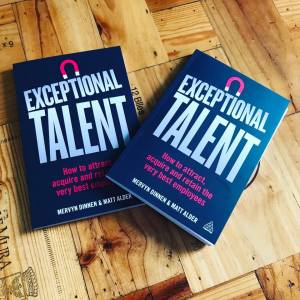
Exceptional Talent – the book I co-wrote with Matt Alder – is available now, published by Kogan Page. In it we look at the New Talent Journey and offer examples and case studies of how, and why, businesses are evolving the way they attract, hire, retain and develop the people they need. You can hear me talking about it on this podcast 

Time to Redefine What we Mean by Talent

The way we attract, hire, retain and develop the people our businesses need is changing. And so are the roles we want them to do and the way we operate. Yet too many organisations continue recruit as they always have, reporting skills shortages and costly unfilled vacancies. This needs to change.

Firstly we need to start redefining exactly what we mean by the word ‘talent’ – for too long the most overused and misleading word in the modern labour market. Many HR and recruitment professionals use it to describe a high skilled, high potential candidate who is in some way special. This narrow definition leads to poor recruitment practice, with recruiters chasing mythical candidates who tick all their boxes and seem ready made for their vacancy.

These people rarely exist, nor are they likely to be successful. When they are hired and identified as high potential they can fall into a ‘talent curse trap’, feeling trapped by others’ expectations and feeling a need to prove themselves worthy, attempting to live up to a perception of what a high performer should be like. This is rarely successful.

In an evolving commercial world where new jobs will often require skills that have not been hired before, these narrow definitions also fail to take into account the many ways that employees can develop and use their initiative and capabilities to help companies meet business challenges.

Most successful specialist hires step in to a role that will stretch them and help them grow and realise potential. Everyone has talent. It is finding the people right for the business and the role, irrespective of background and work trajectory, that organisations need to focus on.

Redefining what we mean by ‘talent’ also means we should select people for what they can achieve in the future rather than what they have done in the past. Previous performance is often an unreliable predictor of future potential and nowhere is this more prevalent than when looking at emerging roles and digital skills, which evolve and change at a rapid pace.

Selection processes have to change from a gladiatorial approach that resembles the Labours of Hercules, and seem designed to trip people up and exclude them from selection. These should only be used if they reflect what your culture is really like. Instead we should create opportunities for people to show what they can do and how they can contribute to the organisation’s future success.

Rip up job descriptions based around a previous incumbent’s profile, and stop drawing up wish-lists of ready made capabilities and achievements. Break vacancies down into tasks and rebuild them around what actually needs to be done. Some of these actions can probably be covered by people already in the organisation by either having their own roles re-imagined, or through secondments or stretch assignments.

Internal mobility – often the last resort for recruiters and HR practitioners – should to be the first strategy before trying to fill externally. The opportunities for development and skill enhancement is an important differentiator for talent looking to join, or remain, with a business, so lets start showing what we can offer.

Whilst retaining and retraining existing employees is valuable in helping to diversify the talent pool available, it is a focus on diversity itself when recruiting new people to the organisation that will help businesses really succeed in redefining talent.

Increasing the number of women in the workplace, attracting and supporting people with disabilities, finding a way to capitalise on the talents of neurodiverse people, and giving greater opportunities to graduates, apprentices and ex-offenders, will all help diversify and enrich the talent pool. And overcome those supposed skills gaps.


Exceptional Talent – the book I co-wrote with Matt Alder – is available now, published by Kogan Page. In it we look at the New Talent Journey and offer examples and case studies of how, and why, businesses are evolving the way they attract, hire, retain and develop the people they need.

5 Ways to Deal With Skill Mismatches

72% of Directors and business leaders are worried about their skills pipeline. Permanent candidate availability is at an all time low. Skills gaps are reaching crisis proportions. 740,000 more people with digital skills will be needed in the workforce this year alone. Half of recent graduates are working in non-graduate jobs. 66% of engineering graduates don’t work in engineering. 1 in 4 vacancies are going unfilled.

Barely a week goes by without statistics like these being used to demonstrate an acute skill shortage. And for recruiters, there’s more. Time to hire is rising. Cost per hire increasing. Interview processes getting longer. Recruiters have more open requisitions than ever. Quality of hire is going unmeasured but, anecdotally, could be better. Productivity is affected.

What can be done? To rely on bringing in developed skills and finding the ready made, perfect fit candidate from outside isn’t the answer. Waiting for a magical piece of sourcing code to help identify candidates with perfect skill sets from across different platforms isn’t the answer either. Even if you could find them, how do you they would join you? What have you got to offer them?

Your vacancy isn’t always the holy grail for a job seeker. Sure, some of the positions you are trying to fill might present interesting challenges for them, but then so might other vacancies in other companies. Even if you had a steady stream of candidates, how many would come and work for you?

In times of heightened hiring challenges, you need to be a place where people want to work. If you’re not, then no amount of sourcing, searching, advertising and referring is going to produce successful results in the long term. Here’s what you need to be doing first…

Consult with hiring managers

You are the recruitment professional, and the labour market – where the skills are – is your specialist area. When you take a briefing from a hiring manager be armed with all the data and manage their expectations. Know what the market is like for candidates with the skills you need. Educate the hiring manager in where the candidates are, what the pool looks like. Use data from REC, FIRM, ONS, job boards and sites like Indeed and Broadbean to make your case and let them understand where there are candidate shortages and what roles create the most competition.

Don’t just accept a job description, particularly one that replicates what the last incumbent did, but rip it up and find out what the role really needs – skills, competencies, capabilities. Begin to build a profile of what you will be looking for and how to assess it. Re-design the role if needs be around the kind of skills and experience available and help the hiring manager to understand the candidates they will be getting.

And test the hiring manager. Can they sell the company or vacancy? Are they a credible interviewer? Candidates always say that the key interview is the one with the manager they’ll be working for, so what impression will they get?

Understand the internal market

Know the talent pool inside your organisation – what skills people have and who is ready for a new challenge and an internal move, or stretch assignment, to help with their development. Make sure your managers are talent producers, not talent hoarders, and encourage them to support employees with internal moves. Identify the people who could develop with some training or input, and convert those you have into the candidates you need. Remember, people want to work for an organisation that helps them grow, develop and realise their potential, so play your part in making the company a place where that happens.

Research the external market

Do you know what candidates look for when they change jobs? How to make your company and open roles attractive? Well find out! There’s plenty of content out there about what job seekers really want, or why not do your own research amongst candidates and people who have applied previously.

What three things are most important to them? Do you market your roles to show that your organisation can provide them with what they want? People with the skills you need might be out there but not responding to your messaging or not perceiving you as a place where they would want to work.

Leverage all the networks you can. Previous candidates, alumni, clients, customers, suppliers and collaborators all have a relationship with your organisation, and all of them have connections. Somewhere in those extended networks might be the person you need. Find a way to reach them and get your message across.

EVP & Employer Brand

What are you like to work for? How does the employee experience shape up? The way you hire, orientate, develop, engage and retain people counts. The way you treat people and support them in reaching their own goals and fulfilling their potential will mark you out as a great place to work. What is your external brand? Does it align with internal values? The early period of employment is when someone reaffirms their decision to join you. If you don’t have an experience that underlines they have made the right choice in joining you – they’ll leave.

Candidate Experience and Recruitment Process

Have you applied for your own jobs? Do you know what the experience is like? Take feedback from candidates going through your hiring process and act upon what you hear. And don’t just take feedback at the end as it will be affected by the outcome.

You can’t expect there to be a pool of skilled and work ready candidates waiting to jump through hoops, endure long absences of communication and non-existent feedback, and work their may through a selection and interview process resembling the labours of Hercules, just to join you. So ditch the gladiatorial approach to hiring.

Make it easy to apply. Give information and let people show you what they can do. The technology is there so why not let people take video interviews at a time to suit them. Find out how they can perform when they are relaxed, rather than trying to find the perfect fit by seeing how they react under pressure.

You can tell a lot about a company by the way they go about recruiting and enabling their people. Stop waiting for the perfect match to come along and start sending out the right messages about the kind of place you are for people who want to learn, grow, develop and reach their potential.

Challenges Facing Executive Search

I was recently invited to attend the World Executive Search Congress in London. It’s a two-day conference with a variety of speakers covering techniques, marketing, relationship building and perspectives on where the sector is and where it is going. It is sponsored by recruitment software firm Dillistone Systems, and was well organised and attended. Previous commitments meant that I could only attend the first day.

I’ve written and researched a lot recently about the challenges and opportunities for contingency recruiters so was keen to hear about the concerns from the retained market.

First impression was that there is little difference between the challenges facing the two. The triple business threats of better skilled in-house teams doing more senior hiring for themselves, client ambiguity and hesitancy on making an appointment, and how to build better working relationships with clients, are common to the staffing sector whether you are working on a retained basis or contingent. In times of perceived candidate shortages, it wasn’t a great surprise to see a number of breakout sessions around sourcing and researching. However, the focus on LinkedIn and how to get the best out of it, many approaches for searching through Google, and general tips for sourcing, produced very similar learnings to those that are usually delivered to in-house and agency recruiters.

With retained work there is a commitment to completing projects, yet keynote speaker Simon Mullins, from the US Executive Search Information Exchange, shared research indicating that up to 40% do fail. This high failure rate primarily happens because projects aren’t properly managed. Often it isn’t the fault of the search consultancy’s own process but in the way they partner with their client. The three key areas where a client shoulders the blame are a lack of clarity on the hiring need, little understanding of the realities of the market and poor timing of the search request. These seem to be common occurrences however the recruitment supply chain supports a hiring business.

Hiring executives and corporate leaders should be held accountable for the recruitment and on-boarding process, properly identifying competencies and key capabilities, and accept that the search process can be risky, particularly if incomplete information is passed on to the search partner and the candidates identified. The search firm similarly needs to be honest with clients. One problem flagged up during the day was around boutique and smaller search firms who might be telling clients what they want to hear, not fully clarifying the brief and not pushing back enough through fear of losing future business.

Many of the top priorities for search firms in 2016 concern better integration with broader talent management processes, particularly those around internal mobility and retention, talent pipelining and supporting clients with better information, and helping diversity. The latter is a key concern and several suggestions were aired, including helping with unconscious bias awareness, coaching hiring managers, understanding exactly what is being communicated about the role and, for gender diversity, interviewing only women in the first round.

Search firms do have a role to play in supporting their clients’ talent processes. Simon Mullins spoke of them as being ‘stewards of the next generation of leadership for our clients’. They have market intelligence and should be trusted advisors, supporting clients and offering the best approach. The way successful searches are measured also needs to be refined. As one speaker said “Quality of hire isn’t about length of time someone stays but what they produce and achieve whilst there. Measure what’s important”.

Measurement was mentioned a number of times and some firms are starting to use Net Promoter Score. In most cases though it is still client metrics that are collected and not those for candidates, with too many firms seeing client testimonials as the only meaningful way of measuring service excellence. However, there is some change in the air with panelists talking about the need for candidate advocacy – one said “don’t commoditise candidates, their experience is important”, whilst another concurred with “metrics on how you treat candidates as important as how you treat clients”.

The need to position as a partner and not a supplier was also a key message. Much like some of their contingency cousins, it seems search firms can too often sell rather than listen, quote fees instead of discussing budgets, offer discounts before justifying value, and focus on delivery rather than bringing fresh insights and perspectives to clients. Keynote speaker John Niland took delegates through the journey of doing higher value work, getting them to focus client conversations on the choice of approach rather than which supplier to use, shape the project requirements as opposed to meeting preset ones, and to create the approach and deliverables with their clients.

The challenges for recruiters of all backgrounds and disciplines are similar. Differentiation, positioning, the need to give value and fresh insights, and support corporate employee initiatives are common to all. Many of the topics discussed and points raised at this event were not that different to those at many other recruitment conferences, although it might be that for this audience some are not considered as often.

The challenge for the permanent recruitment supply chain is relevance. And, in a world of increasing transparency and information availability, to offer clients a service and outcome that they can’t find themselves. As John Niland illustrated, too often the focus is on which suppler to choose rather than finding the best approach to solve the client’s needs, and add value to their recruitment processes.