Loving Cake and Award Winning Social Recruiting at #HREvent13

I’ve been at #HREvent13 and particularly enjoyed one of the closing sessions on day one – a fun and informative presentation from Social Housing group Bromford.

When we think of social media oriented recruitment campaigns we tend to think of the creative industries, or funky brands trying to attract graduates, but here was a 1200 strong group, in a not particularly sexy area, who were able to find people through the twitter campaign #gottalovecake.

I was right to be impressed…hours after the presentation ended they picked up the Award for Distinction in Recruitment and Employee Branding!

As you would expect, the story is one of a socially engaged company looking to try and do something different and coming up with a campaign that ended up trending on twitter. It was made possible by having a number of their employees collaborating with local and industry social connections in a ‘tweet off’ that ended up getting the hashtag #gottalovecake trending.

I won’t go through the mechanics of the campaign – you can read it here on their own blog – but here are 5 things that stood out for me:

  • When looking for talent, find someone who will love your loves. Trying to identify what bound them all together they arrived at a love of cake! Hence the campaign #gottalovecake. How many recruitment campaigns focus on being the best, sharing the passion, talking about the business objective and not the individual?
  • Let them see the real you. They uploaded videos explaining what the jobs were and what someone whould be doing. Including outtakes and bloopers. Do job descriptions really work?
  • If you’re going to run a twitter campaign for recruitment you’ve got to have good content to put out there. ‘nuff said really. Make it different, descriptive, something that reflects you but lets people engage with you.
  • Let candidates express themselves. Applications could be by any format. If you wanted to send a CV you could, but we saw a self-made video and heard a song that someone had written and recorded especially for their application. (And no, I don’t know how the ATS would have parsed that!)
  • Make a noise! Having so many employees socially active gave them a head start when it came to building momentum on social media channels, particularly the way that they were able to engage other Twitter users to help spread the word

The results were impressive – 19% fewer applications than through other advertised media, but the key was in quality. After a traditional campaign 38% of applicants got through to the second (assessment) stage but none were hired. Following this campaign 87% of applicants got through to the second stage and 4 were hired.

And here are two of the key reasons they were able to pull it off.

You don’t need to be big to make a big noise. The message to businesses considering social recruiting has long been that size isn’t everything. A smaller, agile business can respond quickly and build momentum. Large organisation rarely have that flexibility.

You do need a socially connected organisation. Key was having a business in which so many employees have a social profile and communicate through an internal channel – in this case Yammer. It’s not by accident – the MD positively encourages the recruitment of people with a digital footprint. The final word was ‘all future leaders will need a positive digital footprint…without the ability to communicate across all platforms they won’t survive as credible leaders

Food for thought.

Do Graduate Recruiters Know What They’re Looking For?

New research now tells us that state school educated graduates get better grades than their private school counterparts but they come off worse when it comes to job opportunities and salaries.

Sadly I’m not surprised.

I saw this recent piece in the Telegraph which purports to enlighten graduates as to what companies look for when recruiting them. Here are four quotes…I’ve left out the name of the recruiter and company. They were all sizeable service sector businesses:

“We are after people with a can-do attitude, enthusiasm, interpersonal skills and the drive and ambition to make an impact. Softer skills such as collaboration are also valued, especially as employees often have to work with a variety of people outside their immediate team. For us, it’s less about what you’ve studied and more about why you want to work for us and what you can bring.”

“We want to employ bright, intelligent students with inquisitive minds. We are totally non-specific in terms of the degree taken. We are also keen to see candidates who have gained work experience in industry and are able to demonstrate a real intent to pursue a career in research, marketing and communications.”

“Some of our most successful employees have captained a rugby team or been president of the students’ union. One of the biggest frustrations we have is meeting students with the same CVs and answers — as if they have all been prepped in the same way. At interview we try to assess behaviour as much as any work experience to give us a sense of the future a candidate might have with our company.”

“We’re looking for exceptional, rounded, ambitious individuals who can show sustained involvement in activities other than the purely academic, such as work experience, industrial placements and voluntary work in the UK or abroad.”

Are you any the wiser as to what they’re looking for? If you were making your first foray into the jobs market would you know which one was for you?

They clearly have access to a thesaurus (exceptional, rounded, bright, intelligent, can-do, interpersonal…you get the picture) and seem to have no interest in offering any insight into what  may set them apart.

And beyond that it’s just bland, colourless words.

Remember the findings shared at CIPD12 about youth employment ‘Too often entry level roles fail to stimulate or engage them, and give them a poor experience of the workplace. They need variety, challenge, teamwork and customer interaction – try to give it to them; it will bring out their best’

The two tiered approach I mentioned at the start is entirely consistent with research I did about 18 months ago into PWCs new initiative to get non grads into their business. Read it here – 50% of people don’t go to university yet only 7.7% of trainee positions are for non-grads.

So we really now have a three tiered approach with many of our major businesses. Alas there are no stats for how the grad positions at PWC split between state and private school educated kids….though given that the one professional services firm quoted above talked about looking for rugby captains and student union presidents I think we can make an educated guess….

Barely a day goes by without someone in my timeline moaning about graduates and their sense of entitlement in the job market. Some readers will know that I usually side with the graduate!

The ‘in my day we took any job‘ hirers are right. They did! Except now they are hiring they aren’t looking for someone who wants ‘any‘ job. They want someone who wants their job, in their company, in their sector. And they want someone who will prove that commitment in interview. And if successful will then start a 3 month probation period, after which time if they’re lucky they will get KPIs, targets, appraisals and performance reviews.

The ‘in my day we took any job‘ brigade rarely ever had that. Smart and eager was often enough.

As in so many areas of business at the moment, we have an uncertain future with fewer openings. Maybe graduate recruiters are getting too used to finding reasons to reject rather than looking for reasons to hire.

After all, with 32.7% of degree educated 25-29 year olds working in jobs below their skill levels we’re almost world leaders in under-utilising the skills of our graduates.

There’s talent everywhere. There’s an abundance of talent, a million or so of it are under 25 – young, hungry and keen.

Open your eyes and go get it. Develop it. Nurture it. Invest in it. Stop talking it down, blaming it and making it grateful for 20 – 40 hours a week work. And stop hiding behind bland, colourless words…

…and if you’re obsessing about graduates then heed the words of US HR Blogger China Gorman:

“Four-year college degrees have long been a proxy for base level of skills—that a person can write, work with numbers, and think through difficult questions.  Except that’s probably not true any more.  Not only are there many ways to get those skills these days, there are many ways to get them that don’t include an over-priced experience that saddles the student with tens of thousands of dollars of debt.  Additionally, most employers will argue that a four-year degree isn’t a proxy for anything any more:  they provide no guarantee that the holder will actually be able to write, speak, think or do the most basic math”

80% of Temporary Workers want a Permanent Job!

I keep hearing that flexible working is here to stay and I keep getting told that most people choose to work this way. Which is funny, as most of the newly temporary/part time/self-employed that I come across DON’T seem to want to work that way. They are fearful of finding enough hours, and earning enough to meet commitments.

Interim and temporary recruiters that I spoke to before Christmas said that one of their biggest challenges was that their candidates were now mainly looking for permanent work.

And these are people who are earning professional pay rates – not the low-pay part timers who make up today’s underemployed (as blogged here by Michael Carty).

So, do they want to work this way?? I’ve looked at the official figures…

In the most recent ONS Labour Market report the number of temporary workers is 1,620,000. Look further along the line below and you see reasons for temporary working, and under ‘Do not want a permanent job’ the figure is 325,000. That’s right…only 20% of temporary workers DON’T want a permanent job.

Unsurprisingly this has worsened during the recession. If we look at the figures for September 2008 (average of May – July 2008) there were 1,404,000 temporary workers, of which 405,000 didn’t want a permanent job.

So in the 4 years since the market turned we’ve added 216,000 temporary jobs, yet the number of people not wanting a permanent job has fallen by 80,000.

If we compare the comparative figures for part time work then you get a higher proportion who say that they don’t want fulltime work, which is understandable – these numbers will include people who are working parents, carers, semi-retirees and independently wealthy so will include a higher proportion who choose that arrangement.

Even here though there has been a similar change between 2008 and 2012. Now 5,273,000 out of 7,935,000 don’t want full time work whereas in 2008 it was 5,238,000 out of 7,353,000.

So since the market turned we’ve gained 582,000 part time workers…but the number of those not wanting full time work has only increased by 35,000.

This isn’t a surprise to me.

When the recession started I was placing HR interims. I worked with a pool of day rate interims that had chosen to work that way. Few wanted to work that way forever though, some were doing it for a few years – usually until the kids were older, or until they completed another project (often a second business or property development). Most said they wouldn’t rule out a permanent job.

And then the recession started and a whole bunch of newly unemployed HR specialists, at all levels, suddenly had to set themselves up as self-employed. Overnight they went from being an employee to becoming their own sales manager, marketing manager, accounts manager, credit control manager, procurement manager and IT manager.

As FlipChartRick says, self-employment isn’t for everyone.

So flexible working may be inevitable, and I happen to believe it is, and we all know a few people who now work that way – but that doesn’t mean that they all want to or can afford to.

The Year of Recruiting Sensibly

Thumbs_up

I had a lot of fun putting together my last two blogs – an allegorical fable about impulse recruitment, poor on-boarding, weak management and blinkered selection criteria – which drew from many scenarios encountered during my years as an agency recruiter, and from my current day to day interactions with job seekers.

There were some serious points to be made about mistakes and frustrations in the recruitment process, which I wanted to cover in an illustrative way. I’ve now listed some of them below…they may bring a bit of context to the story of Frank the Fish.

So as we begin a new recruiting year, let’s be sensible. This is what I want to see more of…and I know that every job seeker would like to see more of it too:

  • Properly defined recruitment brief. The why, the how, and the who of a perceived vacancy should be carefully thought out, budgeted and planned for. Knee jerk hiring decisions rarely produce long term beneficial results.
  • Robust on-boarding and assimilation. Once you’ve identified the person then how are you going to bring them in and get the best out of them?
  • Effective management. Who will manage them? Do they fully understand what the business wants from the new recruit? And can they incorporate them in a team or division that may not understand the rationale for the hire?
  • A proper plan for success. How will you measure whether it’s working out? Have you managed the new employee’s expectations…do they know how you will assess, manage and monitor them, and what is expected of them. And what will happen if they don’t measure up, or if something unforeseen happens to casts doubt on whether you need them.
  • Consider an ex-employee. So many companies close the door to re-hiring even when one of their alumni may be the most suitable candidate available. I tried to put a few clues in the story to show that Frank’s company hadn’t properly replaced him. Humility can be more potent than pride…on both sides.
  • Look at the person, not just the CV. This is not a new problem, but it seems to cause the most frustration. It may have seemed a stretch in my story to infer that companies wouldn’t consider Frank because of the previous 3 months, but unfortunately it isn’t. It’s a familiar tale. Look at what someone can bring in to a business, don’t try and second guess their current mind-set or skill-set based on recent events.

And one last thing.

Every person you hire is part of another network – friends, family, alumni and online connections. This network plays an important part in the decision and they will be affected by the decisions that you make about the employee. Each candidate will have their own motivations, commitments, concerns and goals.

I’m not absolving them of their obligations in a new role, nor suggesting that a poor hire is kept on for the sake of their kids, but suggesting a little sensitivity about someone’s situation before the decision to hire – particularly if there is some doubt over fit or the long term viability of a role. The ramifications of unsuccessful recruitment are felt by many, so maybe more care is needed to get the match right.

Let’s recruit sensibly this year…and get the best results for everyone.

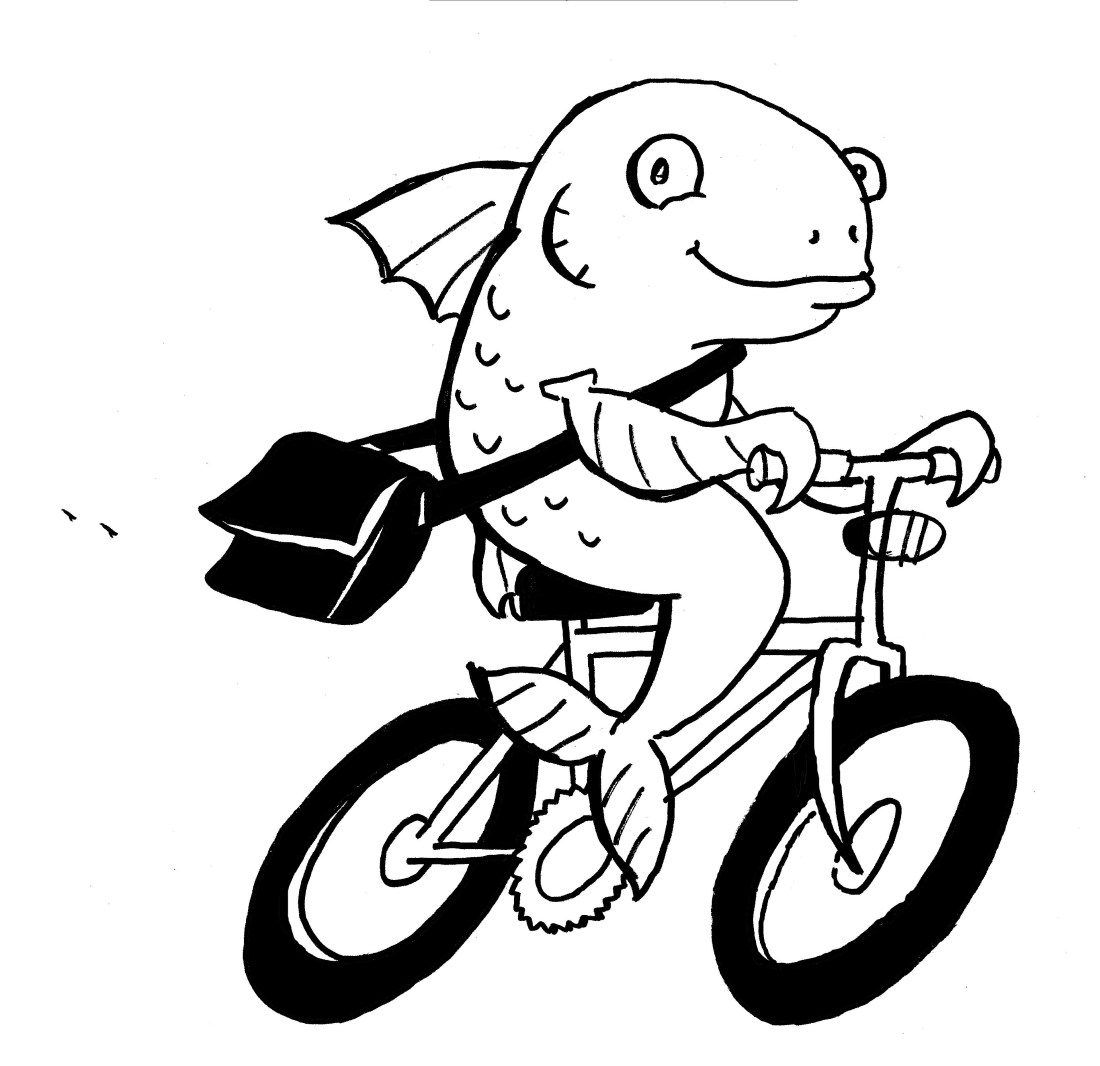
The Tale of the Fish and the Bicycle – Part 2

[In Part 1 we heard about how Frank the fish had started working for a rival company. We pick up the story as he goes home to tell his wife about his pending transfer to the cyclists’ team]

*********

You can’t be serious Frank!!’ His wife was crying; she was frustrated and scared. Her job at the farm had gone and she was only able to get a few hours’ work filling in at another farm.

How are you going to ride a bicycle?? And not just ride it, but ride it fast? What about all the things you’ve told me about the other cyclists. How they don’t like to spend time with the customers?? You’ll never be able to do it. You’ll have to try and get your old job back’

‘I can’t‘ said Frank ‘I saw one of the old guys after work. They’ve trained up a new fish and he seems to be doing well. They don’t need anyone else. Let me give it a go…it may be good for me. Maybe I can ride a bicycle after all. The HR manager said they’d give me all the help I need over the next three months…’

THREE MONTHS!‘ his wife shouted ‘You’ll never master it in three months‘.

Well that’s the time they’ve given me. I’m not thinking about what would happen after that. Met my cycling coach today, he told me it was all in my mind. That if I really put all my positive energy into thinking like a cyclist it would happen…’

**********

It was a harsh autumn on the Island. Hard enough for the regular cyclists who were used to bad weather, but for a fish it was almost impossible.

Frank tried. He tried very hard. He had to change coach after a few weeks as the original one got himself a better assignment with Frank’s old company coaching the fish in customer engagement techniques. He put in a good word for Frank but that door was closed.

Frank’s new coach believed that anyone could achieve anything and spent ages getting Frank to concentrate on the tyres going round. When that didn’t work he got him to focus on the people at the end of the journey ‘if you feel their joy at seeing you it will inspire you‘ he used to say.

But it was all to no avail. The end of Frank’s three months came and he went to see the Regional Director and the HR Manager. They explained to Frank that they had given him all the support that they could but that he hadn’t been able to meet his target to be an operational cyclist. He argued his case that he had met his targets when he was swimming but they said that wasn’t relevant to this assessment meeting.

It’s only four weeks to Christmas‘ he pleaded ‘the busiest time for you. Let me deliver parcels by river. I’ll swim night and day; I won’t stop to talk to the customers. Just let me show what I can do for you‘.

They told him to wait outside whilst they had a short meeting but at the end of it they told him that his position was terminated. It seems that there were also cultural issues; that he didn’t really seem to fit in with the other cyclists.

We’ve invested enough time and money trying to get you up to speed here Frank‘ said the Regional Director ‘we’ve been more than fair to you’

**********

Frank hadn’t realised that because his termination was down to poor performance then his notice period was only 1 week. He hadn’t really read the contract before he joined as the Regional Director had been so persuasive about his vision for a two tier offering. The clause about 3 months’ notice for his role at the premium service, but if that was closed his contract would revert to a traditional cyclists contract had passed him by.

He promised his wife he would move boulder and driftwood to get a new position. He knew that he would have to get a job on the adjacent Island but at least there was work there. Some new village communities had been built and they had just expanded the Port. There were also many more delivery companies than on his own Island.

**********

I don’t understand. You were a swimmer but then you decided to become a cyclist. Why?’ The recruitment consultant who was interviewing Frank seemed very perplexed. Frank had already explained twice about how Parcels4U had changed their business model, and how he wanted to show he was a fighter, a resourceful fish who could overcome any challenge (surely exactly what a new employer would want, he thought) but the recruiter still didn’t seem to get it.

I’ve got jobs for swimmers but they want people who are swimming at the moment, not slow cyclists who want to swim again’ he said.

Can’t you just forget the last few months and explain that I was the top delivery operative at my previous company. That I was headhunted by Parcels4U to head up their new premium service but that they changed their business model and only had a job for a cyclist’ Frank was getting exasperated. This was the fourth of fifth recruiter interview that he had sat through this week and they all went the same way.

Look Frank, I’ll try to explain. It’s a Catch 22 type thing. Most employers are interested in what you’ve been doing most recently, and for you that’s cycling. To get round that we have to say that you tried it as something different but you really want to swim. And they will say to me – Why? Why would a fish want to try to ride a bicycle? If I say that the company made you then they would want to know why you didn’t just leave. If I say that you wanted to take on the challenge then it looks like you wanted to try something new so your commitment to swimming is in question. It’s a very competitive market out there. They want either swimmers or cyclists and you’re, well…you’re kind of in the middle now. Do you understand?’

No, Frank didn’t understand. He couldn’t understand. He was the number one delivery fish on the Island and less than 6 months later he’s a has been. Washed out. Of use to no-one.

Why don’t you freelance?’ said the recruiter in a Eureka moment ‘I may be able to get a client interested in you on a pay as you swim basis’.

Frank was unsure but went for the interview. He got on very well with the interviewer, who happened to know one or two fishes from Frank’s old company. He said that he knew of Frank’s reputation and he felt sure that there was room for someone of Frank’s experience in the company. He even talked about giving Frank a month’s trial after which he would take him on permanently, not on a freelance basis. He said that he would speak to HR and get back to Frank the next day.

But the next day became the next week, and Frank found himself contacting the recruiter every day but was unable to ever get through.

And then he heard from the company. The HR Director wanted to meet Frank. The original interviewer said that he felt it should be a formality but that the HR Director would need to be convinced that Frank was focused on swimming and that he hadn’t tried cycling because he had lost his swimming mojo. It was important to the company that every hire was effective.

By it was now almost Christmas and the interview wouldn’t be taking place until the New Year.

**********

Frank and his wife talked to their children that night and explained that there wouldn’t be any Christmas presents this year, but that if Frank got his new job then there would be New Year presents. The children understood. They had taken it well and had been making things at school to help cheer Frank up. He really liked the Christmas card they made him and their attempt at painting a picture of him holding a ‘Delivery Operative of the Month’ award like he used to win at his old company.

The fishes faced an uncertain few months but were drawing strength from their friends and family who had rallied round and showed support. Some of Frank’s old customers, who really missed his regular visits, had started a collection and they had bought him and his wife a Christmas hamper.

So will Frank be able to overcome objections and prejudices, show that he is a focused delivery operative who can add great value to a new company, and be able to buy his children New Year presents?

That, dear readers who earn a living in HR and Recruitment, is for you to decide……

The Tale of the Fish and the Bicycle – Part 1

Once upon a time, on a distant Island, there lived a fish called Frank. He was a very sociable fish, who loved swimming and meeting people.

The Island was a lovely place to live. It was self-sustaining and had a small number of village communities all situated at one end. In the middle was a large hill, and on the other side a port where all the nice things that the Islanders couldn’t grow or make for themselves were delivered.

If you didn’t have a particular craft yourself then there was work delivering the parcels and packages that came into the port.

Frank worked for a small business that delivered parcels. As they only employed fish, they had to use the river that meandered its way around the hill. To compensate for not having the fastest delivery service (the river did meander quite a bit) they made sure that they employed people who took pride in spreading happiness. You see, the fish that started the business had realised that these parcels bought something good and happy into people’s lives and he wanted delivery fish who could be part of that experience.

Frank loved this part of his job. People were so happy when they saw him swim up to their homes or businesses, as they knew that he would be bringing with him something they wanted. It could be a DVD, book or CD, some clothes, or even a voucher to try out a new restaurant in the village.

When he was small, Frank had watched lots of episodes of Postman Pat and he now saw himself as a similar character, an important member of the community, enjoying his work, and bringing happiness in to people’s lives.

The biggest rivals to Frank’s company were called Parcels4U. They were a very different kind of business, hiring the strongest and fastest cyclists to do the deliveries.

Whilst Frank’s company were able to charge more money per delivery, as they believed they were offering much more than just the delivery, Parcels4U charged much less. They believed that the important part was getting the parcels there quickly, so they employed cyclists who could navigate their way around the hill as fast as possible.

**********

The Regional Director of Parcels4U who looked after their operation on the Island was not happy. His bonus had been reduced as he had missed one of his key metrics. One of the findings from the annual customer satisfaction survey that his company conducted in every region was that, whilst Parcels4U were praised for the speed of their deliveries they came out very low in the ‘service you would recommend to a friend‘ category.

He was in a meeting with his Delivery Operatives Manager for the Island. Neither was happy, as neither could see quite why the company had placed so much importance on this metric. After all, their company statement, which was pinned to the wall of every room, clearly stated ‘The Fastest Service You Can Get. No Hill Too Big‘ – nowhere did it mention being nice to the customers. If the customers were too lazy to go to the port and pick it up for themselves then what did they expect.

If we give them a bonus for being nice to people instead of how many deliveries they complete in a day then they will all leave‘ said the Delivery Operatives Manager. ‘They’re athletes who train hard to be fast cyclists and like to be rewarded for that.

The Regional Director was staring out the window, ironically at the River which ran past their offices. ‘OK, we don’t want to unsettle them. I’ve got a bit of flexibility in the budget so why don’t we hire one of the fishes and set up a bespoke service? It will pay for itself. I’m sure we’ll be able to charge a lot for it. If they want a slow service with a smile at the end then they can pay for it

And so the plan was hatched. Find out who the best delivery operative fish was and make them an offer.

**********

Frank was quite flattered, and more than a little excited, to get the call. He swam home quickly to tell his wife and children.

‘I’ll get more money, my own team, and a real challenge to make a difference. Just think..‘ he was talking quickly and enthusiastically ‘…how great it would be for me if I was the fish that got Parcels4U known for a giving a great service‘.

His wife wasn’t so sure, but with her job at the neighbouring farm looking in jeopardy the extra money would come in useful ‘OK then‘ she said ‘if you think you can make it work, why not go for it!

She gave him a big hug and they made plans for a short family holiday during the time off he would have between jobs. Continue reading “The Tale of the Fish and the Bicycle – Part 1”

HR, Social Media & Punk Rock

I’m chairing the CIPDs Social Media in HR conference next week and so I’ve been thinking about how the conversations around social have grown and developed in the space at the apex of social networking, HR and recruitment – pretty much the bubble I live and work in.

I wrote in one of my blogs about CIPD12 of how the questions have clearly been moving from ‘why‘ to ‘how‘ and this is clearly a shift which informs much of the writing and speaking that I see and hear. Sure, there will be many who are going to need some evidence before taking teams and businesses on the social journey, and rather than stamp off in a strop I think more of those who do ‘get it’ need to raise the conversation away from statistics on usage and reach, and talk more of outcomes.

The more I think about the rise of ‘social‘ the more I seem to think about punk rock. Not sure why, but there are similarities.

Punk wasn’t enabled by technology but by attitude. Coming at a time when you needed an ology to be in a rock band it was a clear shout by a ‘forgotten’ generation who felt they had no voice.

The link here is that it started with a younger generation but quickly became more widely adopted. Just as with today’s social media consultants, gurus and evangelists who climbed on the bandwagon quite early, back in 76/77 you had many journeymen rockers getting a spiky haircut, skinny jeans and a few tattoos and ripping out some three chord thrashes to sudden acclaim.

Of course you had the doubters, those who thought it was a fad and would never really catch on. In music broadcasting, for every John Peel you had a Nicky Horne.

Nicky H was the serious ‘rock’ DJ on Capital Radio. He broadcast regular shows that we’re ironically called ‘Your Mother Wouldn’t Like It’ – ironic because it featured just the type of corporate rock music that most people’s mothers WOULD like.

He was quick to rubbish punk, famously and proudly proclaiming that his shows would be punk free, that you wouldn’t hear any punk music on them.

And guess what. Less than a year later you couldn’t move for the punk and reggae that he was playing on his shows!!

How many social engagement naysayers and doom mongers are now evangelising? Even the PM (he of the ‘tweeters are a bunch of twits‘ sound bite) now has an official account. Though I accept he may not have much input!

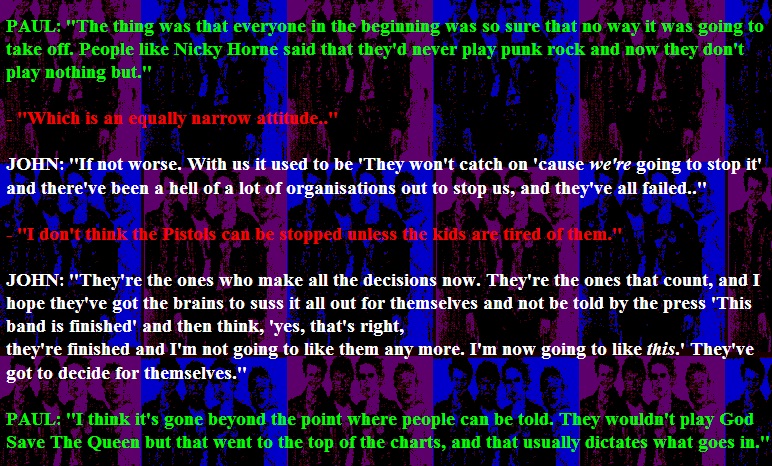
And just to square the Punk circle, here is part of an interview that the Sex Pistols gave to NME in the summer of 77. You can read more of the interview on this website – complete with the famous Sid Vicious ‘The definition of a grown-up is someone who catches on just as something becomes redundant”

Just read though this excerpt and substitute mentions and references to ‘punk rock’ with ‘social media’….

…uncanny!


Punk Rock

A Question of Ambition


“Being ambitious is like being thin. It’s nice to have in your youth — but hold on to it into middle-age and you’re going to end up with a sour little face. Let yourself go — it’s later than you think” (Julie Burchill)

Ambition makes you look pretty ugly” (Radiohead)
 

We talk a lot about ambition.

We write a lot about ambition.

We look for it in our children, colleagues, leaders and friends.

We want to work for businesses that show it.

We sometimes confuse it with aspiration.

Politicians and business leaders talk about it a lot.

Coaches, commentators and career advisors also talk about it a lot.

But there’s a big difference between Having Ambition and Being Ambitious.

The first is about talk and the second is about action.

So next time you hear someone speak of ‘ambition’ look at what they do not what they say. Do they live it or talk about it? Do they aspire to it or achieve it?

Do they mean it?

The Elephant in the Room for Tomorrow’s Workforce

As you may have gathered from my previous blog I was impressed with CIPD12s first day session on unlocking the potential of tomorrow’s workforce. On the afternoon of day 2 I was at a keynote panel session on a similar theme – Building the Workforces of Tomorrow. This one left me feeling a little flatter.

Don’t get me wrong, the panel was good – Peter Cheese, CEO of the CIPD, Michael Davis, CEO of the UK Commission for Employment and Skills, Anne Pickering, HR Director for O2, Toby Peyton-Jones Director of HR for Siemens UK & North West Europe and Jo Swinson, Minister for Employment Relations and Consumer Affairs – and the right noises were made early on about the need to train and utilise the skills of the new generation. O2 look for digital savvy people, Siemens believe that apprentices stay with you for life and big businesses should get involved in training their supply chain.

There was also some good insight from UKCES – I like their work, and used some of their research in a previous blog.

If I’m honest it was Jo Swinson who first gave me an uneasy moment which set a train of though off in my mind. Initially it felt like watching Question Time and she made the right noises about government concerns. Then she made an important point about workplace mindset not keeping pace with technological change…but then, almost as an aside, she referred to people applying for jobs and starting their cover letter with ‘hi’ instead of ‘Hi’. This was the reason they were getting nowhere in their job search she said, somewhat (in my mind) dismissively.

And then I thought about the previous half hour and the good intentioned comment from UKCES about the need for companies to invest 15 minutes in giving their rejected candidates feedback – as it would help them in their search if they knew where they were going wrong.

Jo’s comment was another instance for me of the up and coming generation being judged against standards of an older time (though Jo is almost still Gen Y herself)

  • Does the applicant need to write in their role?
  • With so many speakers across the two days talking of a shift from e-mail to social platforms does this grammar matter?
  • Given that no-one seems to write letters in business any more, and anything that is written will have been spellchecked, will anyone know that the original note started with h instead of H?

On the first day we heard of the positives of the Google Generation, how smart and savvy they were, but they are also the Spellcheck Generation – maybe some people see this as a negative.

We need to take their enthusiasm and encourage them, not dismiss them.

This wasn’t the only thing troubling me though. Laurie Ruettiman’s tweet – ‘I chuckle when a bunch of older white people attempt to deconstruct youth unemployment’ – also indicated something else about the conversation.

The panel were talking around the edges ignoring the elephant that was taking up a lot of the room.

The aren’t enough entry level jobs. There is a generation growing up who will probably never know proper full time work, never be truly economically viable.

We talk about skills and attitudes but the youth unemployment rate was rising long before current economic difficulties – and it’s a stubborn statistic that won’t reverse. Low skilled jobs that a 17 year old with precious few qualifications and social skills could do in a service sector dominated economy – stacking shelves, making sandwiches – are now done by unemployed graduates.

Kudos to CIPD for getting the conversations in the open and on to the keynote list. But I don’t think you can truly talk about building tomorrows workforce without also talking into account those who may never be part if it. And working out how you can use their abilities.

Whether they start a sentence in upper case or lower case really shouldn’t matter.

(For an interesting take on the discussion, including a proposal that many may think a bit radical, see Neil Morrison’s blog)

CIPD12 – Unlocking the Potential of Our Future Workforce

Day one at the CIPD Conference and I attended a really strong presentation from David Fairhurst of McDonalds. It seems that understanding the future workforce and unlocking their potential will be a key theme over the course of the three days with several sessions linked to it.

It’s something that I’ve been particularly interested over the past year, and I’ve written about education, youth unemployment and the problems that we may be storing up by under-utilising skills and cutting back on training.

Today’s session was engagingly delivered and rich in soundbites and tweetable phrases. The use of video clips of Gen Y and millennial workers talking about their experiences, hopes and fears provided powerful evidence. This had been put together by engaging them through the @OurYoungPeople twitter account – an attempt to find out what young people are saying and why HR needs to listen to them.

Here are 5 key points that lend themselves to further thought and discussion…I’m looking forward to adding to this list over the next 2 days…

  • This is the ‘Google Generation’ – they are used to getting instant answers at their fingertips. They are confident and know how to find things out.
  • They’ve been raised in an age of scams and fakes and are more adept than older generations at spotting them and avoiding. Loyalty therefore has to be earned – they won’t buy it just because you say it. They need to experience it.
  • Too often entry level roles fail to stimulate or engage them, and give them a poor experience of the workplace. They need variety, challenge, teamwork and customer interaction – try to give it to them; it will bring out their best.
  • Young people remember how you treat them for their whole lives, as customers, consumers and employees. In particular many spoke at their frustrations at not getting any replies or acknowledgements to job applications…seeing it as rude and damaging to confidence and aspiration.
  • They thrive on collaboration and co-creation and gain most benefit from learning that is collaborative, visual and uses information to solve problems. Yet we often ignore these and offer learning through memorising.

I always leave these sessions energised by the potential of the future workforce…I only hope that their enthusuasm and appetite for contributing isn’t strangled bya a failure to understand what motivates and them.