Can We Talk About People Please?

Today started with a business leader on breakfast TV talking of how they had ‘tidied up’ a subsidiary that had made losses. There was something almost Hitlerian about this – part of this tidying up would have been restructuring and redundancies. That’s people – their expectations and ambitions, their commitments and responsibilities – being cleared away in the tidying up.

Then there were a couple of recruitment commentators in my timeline promoting the fact that more businesses were talking about increasing their use of flexible resources in the next 3 months. That’s people they’re talking about, now a flexible resource. People with dependants and responsibilities, plans and hopes, expectations and ambitions, people with full time commitments but now getting part time, flexible income.

A ray of sunshine appeared when Tim Oldman of Leesman Index talked of workplace design being a people business not a buildings business.

The language of business seems seriously skewed at the moment. It’s depersonalising and dehumanising jobs, driving a race to the bottom for the value and self-worth of those who do the work. And it’s self-defeating as those with precarious incomes live precarious lives, which benefits no-one in the long run.

Tomorrow I’ll be joining a bunch of fine HR folk in London for the 5th ConnectingHR unconference. The topic is Brave HR.

Maybe re-humanising and re-personalising the language of business would be a brave start.

Brave


(Image courtesy of Lessons From Fantasy)

Convincing the C-Suite

Following my recent blog on the barriers to embedding social media within an organisation, I made the offer that anyone who wanted to share their story, and maybe give a different view, could do so anonymously on this blog.

Here’s a guest post from an HR professional telling a slightly different story to the one that I did…

********************
‘It’s just so superficial’.  Said the MD to the HR type.  ‘I don’t see how it is relevant to us’.

Yes, you’ve got it; this conversation was about social media.  I’m writing this blog anonymously, mainly to avoid being fired.  I have a big mortgage you see.

This is the story of my so far futile attempts to convince our C Suite of the benefits of social media to them as leaders, to them as individuals, to our business.  So far, I have heard every dumb reason why we don’t need or want social.  (Klaxon alert).

  • It’s only going to interest younger employers.
  • I haven’t got time for it.
  • It’s intrusive.
  • I don’t see it as a main part of our internal communications.  Newsletters and roadshows are better for our sort of employees.
  • Yammer is a security risk.
  • If we give people access to social media sites then they will time waste.
  • Social networking is for personal not work.  If it is social that is what it means.
  • I wrote a blog once before and it didn’t work.
  • If we give people access to twitter then they may tweet inappropriate material about our company.  Said by our IT DIRECTOR.

And here is my current personal fave:

  • It’s irritating.

So I think that is pretty much the complete list, don’t you?

I’m guessing that the readers of Meryvn’s blog won’t need to have the benefits of social media explained to them.  If you’re reading blogs and tweets you get it already.  But how do we get other people to see it?  Right now I am taking some inspiration from Doug Shaw.  I am proceeding until apprehended.

We got Yammer up and running by just launching it, although the IT department aren’t speaking to me because we didn’t ask their permission.  Everyone now has access to Twitter and LinkedIn, although Facebook is a battle for another day.  And yes, I did have to throw my teddy out of my pram to get this.  I had to point out the absolute obvious.  If you want to tweet something rude about your employer, you can do it on your smartphone.  If you want to go on Facebook you can do it from your smartphone.  If you want to time waste you can do it on your smartphone.  At your desk, in the canteen…even in the toilet if you want to. Deal with it.  Or deal with the individual.  You think your employees don’t want it? So why did we get 200 of our employees joining Yammer in a matter of days? Perhaps you should go over and take a look at what they are talking about.

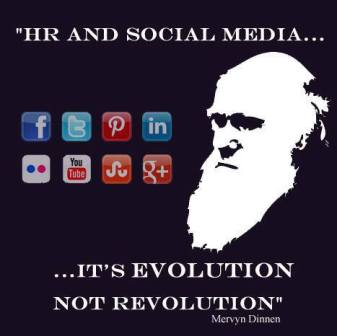
We now have a blog too, and a Pinterest page, and a twitter account. No one has actually contributed to the blog yet, and the twitter account only has 63 followers.  But we are getting there, we will get there, one new Yammer comment at a time.  As Mervyn himself said in a recent blog, it’s evolution not revolution.

So here is the rest of my rant to the C Suite.  You don’t have time not to do it.  You are missing a massive opportunity to talk directly to the people that work for you.  Turning up twice a year with a PowerPoint presentation with the great strategy from on high isn’t internal communications.  It is talking at people.  Communication implies dialogue.  You want to know what your people think? Get on twitter, write a blog, post on Yammer.  It will give you a little bit more real time information than that annual survey you get your wallet out for every year.  If none of those interest you?  What about staying in touch with your industry, making contacts, your personal brand, improving your job prospects?

Or maybe I’ll just do what Perry Timms does when they say they don’t have the time for it.  Just wish people well in keeping up to date in their careers without it.

********************

 …Is this similar to your experience?? Share in the comments…or offer your own guest post, either named or anonymously…
Here are some comments from Twitter…
CSuite tweet1
CSuite tweet2
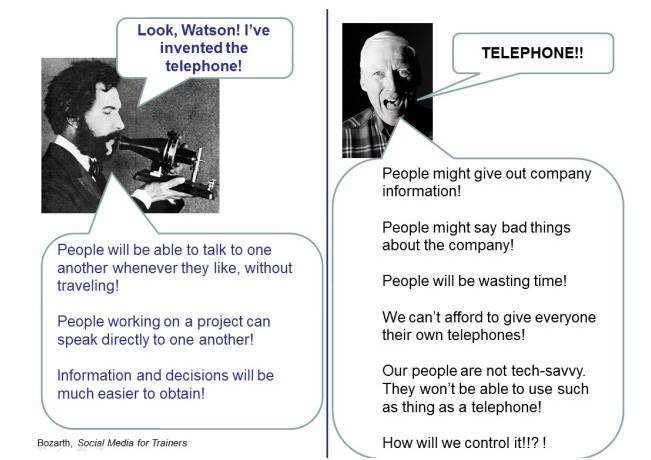
..and try this excellent graphic about Alexander Graham Bell from Jane Bozarth, author of Social Media for Trainers, if they still need convincing…
.
Bell

MIND’S EYE – Please Support Simon’s Initiative

Merv pointing


The above is a piece of artwork that the wonderful Simon Heath created for me. I’ve been lucky enough to have recently been the subject of 3 pieces created by him…the other two are below. It was created in response to some joshing on Twitter between myself and Perry Timms about my ‘pointing’ avatars and Rodin’s The Thinker.

The three pieces I’m using here just scratch the surface of the range of artwork he can produce – you can see a lot more of his work, both the professional and the fun reactive pieces, on his blog Work Musing.

He is a very talented illustrator, animator and cartoonist who works with businesses on communications artworking. I have met him once and found him to be warm, considerate, intelligent and very giving of his time, and I want to bring to your attention something that he is doing to help raise money for the mental health charity MIND.

You can read the full background on his own blog here – inspired by Jon Bartlett he is going to create a piece of unique artwork for a blind auction. Jon has recently blogged for MIND and his January post for Alison Chisnell’s guest blog series started the HR for Mental Health initiative.

Here is Simon’s offer, in his own words…

“I have been inspired by Jon to create something unique to raise money for this wonderful charity and I want someone to have the chance to determine what that is and to own the result. You can find examples of my cartoon work elsewhere on this blog. The premise is simple. If you would like a bespoke cartoon (no larger than A4 in size) created to your specification, you should email me at sjheath@live.co.uk with your bid. The auction is blind so you will not be aware of the value of other bids. The bidding period will last from the moment this post is published until midnight (British Summer Time) on Friday 14th June 2013. On Saturday 15th June, I will contact the highest bidder to notify them that they have submitted the winning bid and to find out what subject matter they would like the cartoon to cover. With their permission I will announce their name and chosen topic both here and on Twitter on the same day and also to publish the final artwork here for you all to see. I will of course need to see proof of donation”

I urge all regular readers to get involved with this initiative.

I’m not joining the auction as Simon has kindly already created these pieces of bespoke artwork about me…in recognition of which I will make my own donation to MIND.

Can’t wait to seeing the winning artwork in a couple of weeks!

Evolution


Merv Recruiting poster

The Bank That Doesn’t Like to Say NatYes

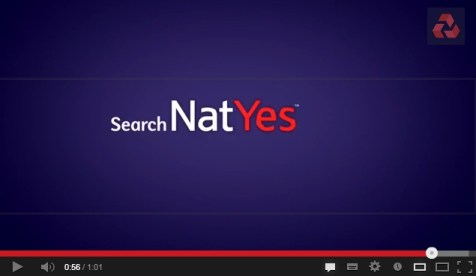
You may have picked up some of the online chatter around the new NatWest advert. If you’ve not seen it then it’s quite a nice ad, you can watch it here…and it ends with the call to action

NatYes2


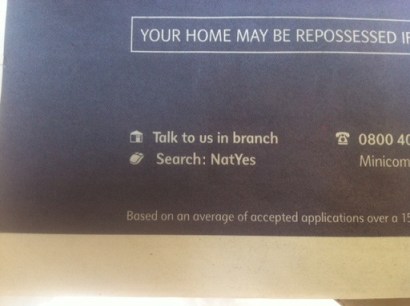
The main message is that they say yes to 9 out of 10 mortgage applications (based on applications submitted over the last 15 months and excluding buy to let). And if you want to find out more you just ‘Search NatYes’

Clever, huh! Simple and punchy.

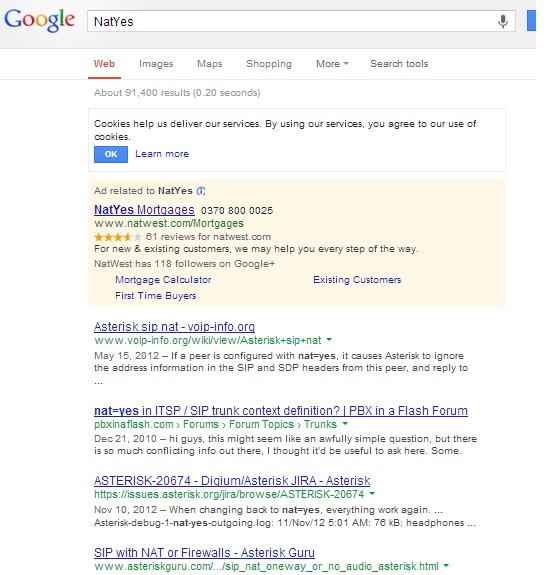
Except in 2013 if you tell people to search NatYes that’s exactly what they’ll do. On Google, Bing or whatever their search engine of choice is. And when you do you get…

NatYes


That’s right, one paid adwords ad. Try the domain names natyes.com and natyes.co.uk – and they’re available! D’oh! So no real further information. Nothing in the general listings.

At this stage I refer you to Gary Robinson’s excellent blog NatYes or NatLess: NatWest Campaign Lacking TV & Digital Integration – a great analysis from an experienced digital marketer on the missed opportunities.

I noticed something else about it too. The print ads show a graphic of a mouse with NatYes next to it….so they are telling you to search it from a computer as a way of connecting with the campaign. Except that all you’ll get is a Google ad, which I suspect is quite expensive. No other form of digital or social engagement to back up the campaign.

When I blogged about HMV earlier this year it was to highlight their failure to grasp the evolving digital and social landscape, and tellingly the failure to understand changes in consumer behaviours, and with NatWest here’s another case of a large brand failing to do the same. Or maybe it’s their advisers who are being remiss. I’m sure NatWest have a digital marketing team…were they consulted?

You see, the image of the mouse gave the game away for me…they are thinking of office desktop computers. How many people will ‘search NatYes’ using a mouse? Very few I would think.

If the call to action is at the end of a TV ad, and on newspaper ads, then the device for doing the searching is likely to be a smartphone, tablet or laptop. In fact they didn’t need a symbol at all! Merely the word ‘Search’ tells people what they want to know. The ad is aimed at a demographic that don’t need to be told to search.

Mouse


So is the mouse a giveaway? Millions spent on a campaign, but a telling failure to understand consumer behaviour in the most important call to action.

The message is you’ve got a 90% chance of getting your mortgage approved…the call to action of ‘Search NatYes’ appears a gratuitous, or ill thought out and planned, one.

In the way that ‘Go to work on an egg’ was probably pitched with the sentiment ‘Look, no-one is literally going to believe you can travel to work on an egg’ maybe ‘Search NatYes’ was pitched with ‘Look, very few are literally going to do a search for it

Be Social to Get Your People Social – The 3 E’s and Pizza

Clearly the readers of this blog like social media – my last post became my most viewed of the year within 48 hours, and the second most viewed is this one on social media judging.

I did get messages from those who wanted to agree with me but couldn’t publicly, and I also had some DM conversations with people who felt that it was the C-suite who were the barrier in their organisations – again they were unable to say so publicly. If anyone is up for it, I would be really keen to publish anonymously from any guest who wanted to write about their experiences.

One question that I’m often asked at conferences and events is how to get employees using social channels for business. It’s one thing getting buy in at either C or management level and sometimes another to get people using it effectively.

I gave a presentation at the recent Social Media Results Conference on some of the ways to get user generated content, with a particular emphasis on internal involvement.

My advice is to keep it simple and keep to the 3 E’s…Empower, Enable and Encourage.

Empower

Pretty much everyone in your organisation has some kind of digital footprint. Without going generationalisationist I think you can pretty much guarantee that any Millenial, Gen Y, Gen X type (and older ones too, now) will have a Facebook page as a minimum. Anyone in a client facing role or a specialist area – sales, marketing, finance, technology, HR, customer service – will almost certainly have a LinkedIn profile too. So don’t tell me that there’s no social capability in the company!

They know the tools to use; they just need the green light to use them. So let them! Remember its guidelines not policies, and conversations not targeted conversions.  And make twitter accessible too.

Enable

Of course, there’s a big difference between posting a picture from this morning’s dog walk, or adding something to your key skills section, and sharing something about what your company does. So in addition to giving people the green light to use social channels you need to up-skill them too. In a way that makes it easy and fun, not a chore.

The last thing you want is for people to get the impression you’re increasing their workload so this has to be natural, let them have the tools and have some fun with it.

Encourage

It’s not a test with a right and wrong answer. People won’t always get it right at first, which is why you need to encourage. Most early tweets can be embarrassing, so let people develop their own voice and style. Nothing will turn someone off quicker than being told they’re not doing it right…immediately it will feel like a measurable task , and if it isn’t in their job description then they won’t want to do it!

And, finally…

Be social to get social

I hold a monthly lunch – the Social Lunch – and get a group of colleagues together who want to find out more about social networks and how they can use them. I get some pizzas in and we talk about social, particularly how the can use it for themselves. Everyone is keen to know more about Twitter, so that’s where much of the focus has been. Some months we get someone else along from the business to talk about how they use the networks. We’re creating a blog too that everyone will contribute to.

It’s been going for a year and we have a loyal group that, crucially, keeps getting added to. People are talking about being the twitter champions for their teams, and more people from their teams want to find out what’s happening.

The pizza element is important. It needs to be fun and social, and there needs to be something in it for them, else it becomes a missable training session. Remember…

‘Is that cheese, tomato and lettuce on malted brown? I’ll have one of those please’. Said. No-one. Ever.

‘Is that a Chicken Supreme with extra mushrooms? I’ve never tried that before, I must have a slice’. Says. Everyone.

So make it fun and sociable and everyone will be keen to help share your message.

After all, your employer brand is what your past and present employees say about you, so why give them a bad experience of using the channels through which you need them to communicate it?

SMR2

SMR1